
Forty years ago, Walt Disney World introduced an Epcot pavilion known as the Living Seas. In 1986, the company reportedly spent $90 million on the project, which the Orlando Sentinel called “its most ambitious and expensive pavilion to date.”
Disney publicists referred to it as “the world’s sixth ocean.”
This all happened before a short-attention-span fish hit big screens and park visitors knew nothing of something called a “clamobile.” Things change, and in 2006 – half its lifetime ago – the area was rethemed and renamed The Seas With Nemo & Friends.
Other things stay the same, including the 5.7-million-gallon saltwater tank, said to have enough volume to hold Epcot’s iconic Spaceship Earth and then some. The emphasis on animal care and conservation continues.
Disney World recently invited the Sentinel and other members of the media to see the latest version of the Seas from both the visitor side and behind the scenes. Here are a few takeaways.
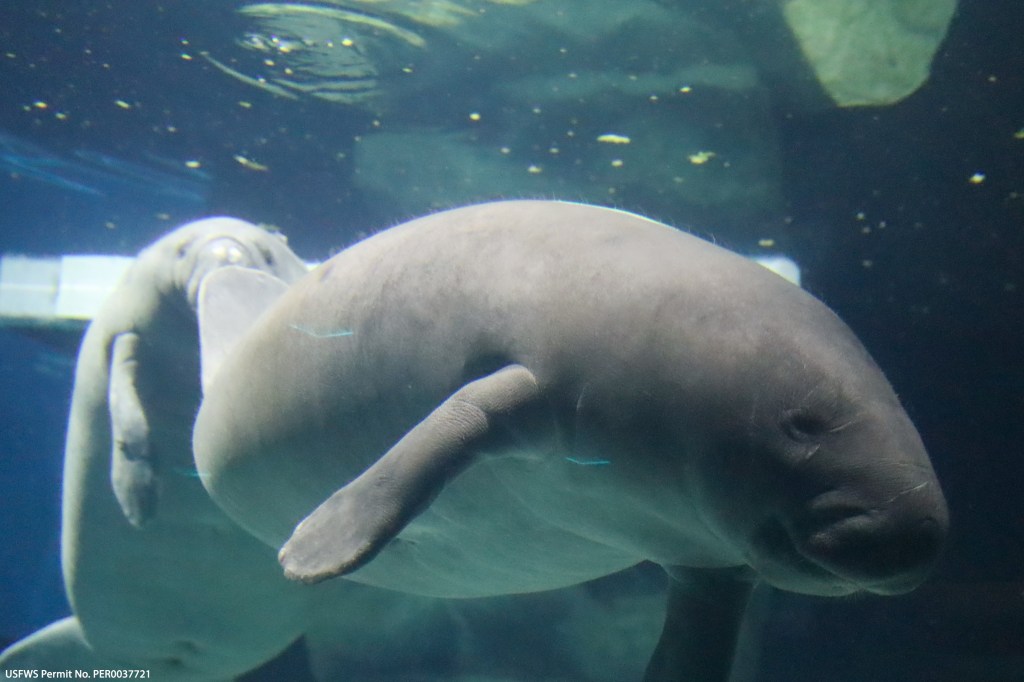
Minding the manatees
The Seas visitors can see two manatees on the ground floor, but they aren’t Little Joe and Inigo, long-term residents who were moved to another Florida facility last year.
“We’ve pivoted the program to only short-term rehab animals, and that’s been going remarkably well,” said Dr. Geoff Pye, animal operations director.
“We’re getting them in a lot smaller and then kind of growing them out until they’re the right weight for us to be able to go ahead and release them back to the wild,” he said.
Disney parade, SeaWorld campaigns among Brass Ring Award finalists
Three more manatees are in the backstage area, one of which had major surgery for an infection last year. She had to be transported to Disney’s Animal Kingdom, which has a larger medical operation. There’s a hefty task.
Coming soon: Sea dragons
Change in looming on the second level of The Seas. The attraction is adding a space for weedy sea dragons, Pye said. Thirteen of the animals have been transferred from an Ohio aquarium.
“When they got here, they were only 2 inches long. They just looked like little twigs in the water. They’re about 7 to 8 inches now, and ultimately they get to about 18 inches in length,” he said.
“As they age, they start taking on individual characteristics, and when they’re fully grown, they will take on quite impressive coloration. So you can get yellows and greens and purples and browns and black,” Pye said. “It’s all about creating camouflage for them in the wild.”
He anticipates that visitors will be able to see the new creatures within a couple of weeks. There’s some physical work being done to the habitat to accommodate that, which includes cooling down the water.
Disney offers theme park ticket deals for Florida residents
“They come from southern Australia, so the water is coming off the Antarctic so they live in much colder water than any other animal here,” said Pye, who also comes from Australia.
They’ll be living in temps of about 54 degrees; the other tanks in the Seas are typically around 74, he said.
Exam goes swimmingly
Behind-the-scenes details included a routine wellness exam of Apollo, a bowmouth guitarfish. (“He’s a ray that looks like a shark,” Pye said.)
To get Apollo’s vitals, the animal care team gets him to swim to a target where he is usually fed. From the big tank, he glides into a partially inflated pool within that pool. After it’s fully inflated, anesthesia is added to the water. It takes a wetsuited village, more than 20 cast members to wrangle pools, medical equipment and Apollo.
“He’ll get ultrasound and blood collection and an exam from our veterinarians and some other sampling there,” Pye said. “We use all that information to try and understand the species better, so that we can take better care of them, and then, hopefully, at some point, be able to breed.”
“There are highly endangered species that we are just learning more and more about every day,” he said.
“They are threatened by fishing. They’re threatened by ocean plastics, the same things that we’re seeing facing a lot of different species in the ocean,” said Claire Martin, senior manager of biodiversity conservation with the Disney Conservation Fund.
The guitarfish is a cool species, she said.
“It’s like this dinosaur on Earth.”
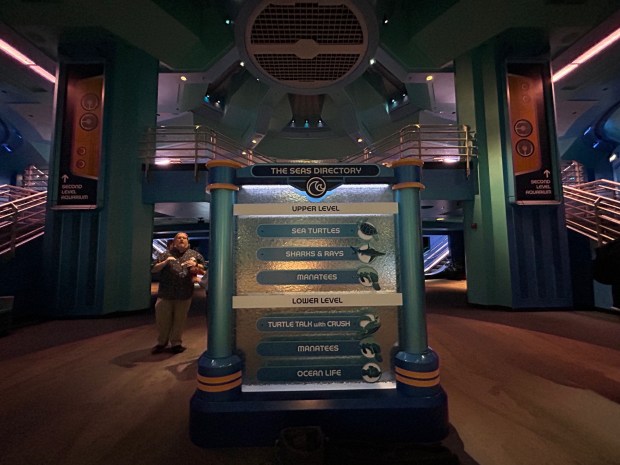 The Seas With Nemo & Friends features an enormous aquarium and many species of marine life at Epcot. (Dewayne Bevil/Orlando Sentinel)
Animal attractions
The Seas is a kid magnet at Epcot. Manatees and sharks are crowd pleasers, said Dario Silva, education manager.
Young visitors “learn so much,” Silva said. “A lot of times it’s animal behavior. Why are fish swimming the way they’re swimming? Why do the rays eat the way they eat? What our main goal is is whatever they’re learning, they have some kind of emotional attachment, emotional connection to these animals and inspires them to take action once they go home.”
One takeaway involves rescue.
“We’ve got our vet and animal-care teams working on rehabilitating sea turtles right now,” Martin said. “We’ve rehabilitated 350 of them, have gotten them out in the wild.”
He also touted DiveQuest, an in-tank experience available to certified divers.
“The goal is really to get more people to come to the aquarium. So can more people get scuba certified? Can more people know we even exist?” Silva said. “It’s shocking that everyone comes to Epcot not knowing that there’s an aquarium here, and it’s actually the second-largest mixed environment aquarium in North America.”
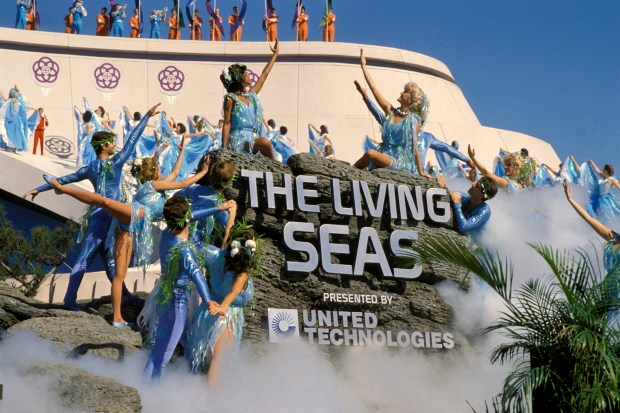 The 1986 grand opening of The Seas was a major moment at Epcot. Walt Disney Co. reportedly spent $90 million on the area. (Walt Disney Co.)
Picture it: Epcot, 1986
Step into the Orlando Sentinel wayback machine, which is set for opening day in 1986.
Frank Wells, then-president of Walt Disney Co., swam into the tank on opening day to cut the ribbon, as did Mickey Mouse (with a custom-made face mask) and 15 divers in sequin-covered wetsuits.
Michael Eisner, who was chairman and CEO, stayed on dry land.
Disney ads said to expect 200 varieties of coral reef sea life, “real marine biologists,” educational video games and an underwater robot at work. The aquarium was listed as 27-foot deep and the capacity of the seafood restaurant was 260 diners.
Also on the scene: “hydrolators,” an elevator-like contraption that magically/allegedly moved visitors to another level in the Sea Base.
Later, an hourlong special aired on NBC (this was about a decade before ABC became part of the Disney folk). The host of the show was John Ritter. He was joined by singers Laura Branigan (“Gloria”) and Simon Le Bon, lead singer of Duran Duran.
Email me at dbevil@orlandosentinel.com. BlueSky: @themeparksdb. Threads account: @dbevil. X account: @themeparks. Subscribe to the Theme Park Rangers newsletter at orlandosentinel.com/newsletters.