
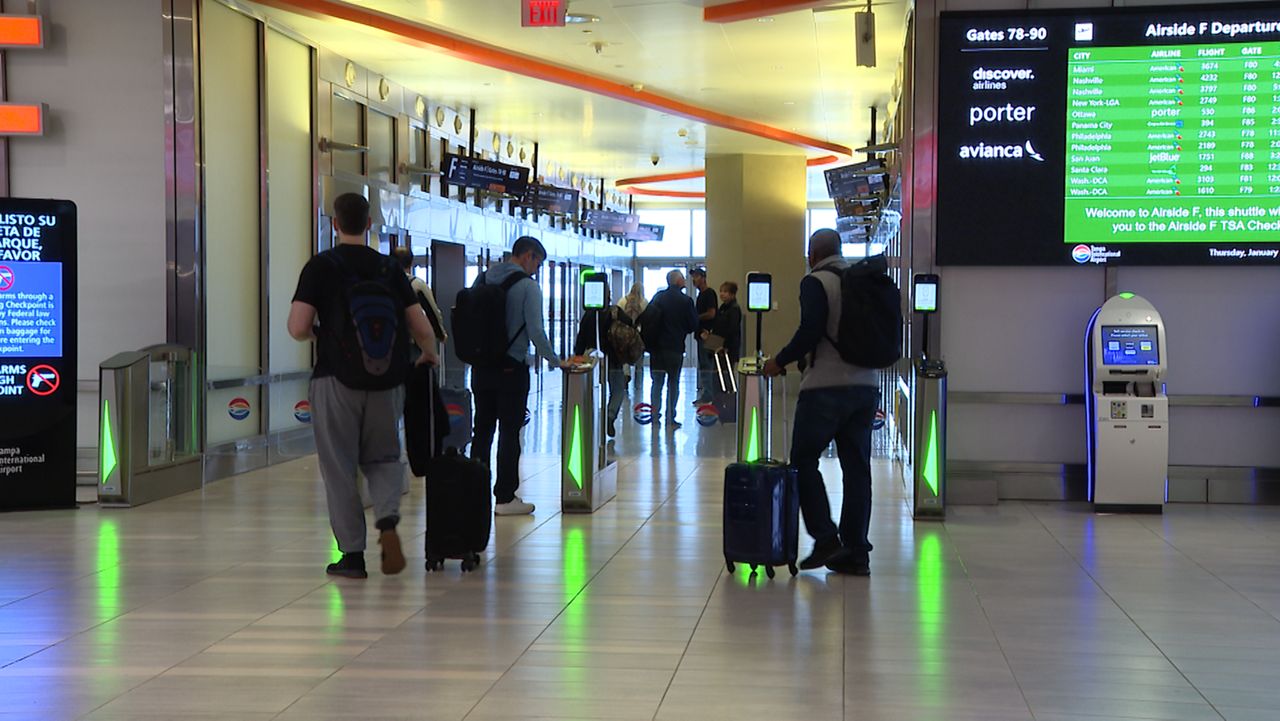
TAMPA, Fla. — According to the 2024 state report on human trafficking, prepared by the University of South Florida, an estimated 200,000 people were victims of human trafficking and another 500,000 were exploited in labor trafficking. Many of them cross through places like airports.
What You Need To Know
Florida ranks third in the nation for human trafficking, according to the National Human Trafficking Hotline
A USF study estimates that last year over 700,000 Floridians were victims of some form of trafficking
Tampa International Airport police say they’re proactively patrolling and training airport staff to spot signs of trafficking victims
The biggest takeaway from police is simple: see something, say something. With as many as 80,000 people arriving and departing Tampa International Airport daily, police are working with everyone at the airport to find victims.
“So when you see that person that’s kind of timid, or there’s something that’s just sticking out, someone’s behaving a little differently, it just maybe warrants a second look,” said Sgt. Daniel Jones, with Tampa Airport police.
Police say the airport can be a prime location for transporting trafficking victims.
“If somebody is carrying somebody else’s ID, or not letting somebody speak, or there’s some weird behavior, looks controlling,” Jones said. “It’s that general, ‘Hey, my gut is telling me that something isn’t right here.’ Let’s look into that just a little bit more and see what’s going on.”
Men, women, young, old, there is no one type of trafficking victim, nor is it all about sex. Trafficking, police say, is when someone is forced to do something without the freedom to stop.
That’s why airport police trains its cops and other airport staff on the signs to spot and what to do when they think they’ve found a victim.
“This is their community. The airport is their community. They love where they work, they love what they do, so nine times out of 10, they’re invested. When we ask for something in terms of being part of this community, they’re willing to step up, they’re willing to train, they’re willing to learn, they ask questions. They want to know all those details because they want to help,” said Jones.
Kristin Taylor leads Stop the Movement, a Tampa-based anti-human trafficking organization focused on prevention.
“It really is hidden in the shadows, yet it’s also in plain sight,” said Taylor.
Their work has led to over 1,000 encounters with 200 women, saving several from the grips of traffickers.
She, and police say, when big events come to town like the Super Bowl, Gasparilla, even business conventions, demand for these illicit acts spikes.
“We think that they’re going up to us and going, ‘Help me, help me,’ and take our hands and go to the police station. That very rarely happens,” Taylor said.
That’s why it’s so critical for everyone: police, advocates or everyday citizens, to know the signs.
“If you’re travelling through this airport, you’re still a member of this community. You might be laser focused on getting to your gate, or doing what you need to do, but there’s a lot to see and there’s a lot of folks here. If you happen to see something that doesn’t really line up with what you think is going well or good, say something to us and we’d be happy to take a look at it,” said Jones.
Stop the Movement said that number, 700,000 trafficking victims, can be startling, but they believe that number is far higher as many cases just don’t get reported.
If you are a victim of trafficking, resources and statistics on the issue can be found here.