
Experts share tips on how to protect your plants during Central Florida freeze
STRAIGHT AHEAD. ALL RIGHT. AS TONY JUST SHOWED US TONIGHT AND WELL INTO TOMORROW MORNING, MARION COUNTY WILL BE FEELING SOME OF THE COLDEST WEATHER IN OUR AREA. WESH TWO LUANA MUNOZ IS JOINING US LIVE FROM MARION COUNTY, LUANA. WHAT ARE THEY DOING THERE TO TRY AND STAY SAFE? YOU KNOW, THE BIG CONCERN, OF COURSE, IS GOING TO BE LIVESTOCK, HORSES. YOU HAVE A LOT OF THAT IN MARION COUNTY, BUT THEY ALSO HAVE A LOT OF NURSERIES OUT HERE. SO THE BIG PUSH RIGHT NOW IS COVERING UP THOSE PLANTS. WE JUST KIND OF MISSED THE ACTION WITH SOME OF THE MASTER GARDENERS OUT HERE COVERING UP THE LAST OF THE PLANTS. AND GET THIS, A LOT OF US HAVEN’T BEEN DOING IT THE RIGHT WAY. SO YOU JUST WANT TO MAKE SURE THAT THEY’RE, WELL, SECURE. SO YOU WANT TO MAKE SURE THAT YOUR LANDSCAPE FABRIC OR YOUR GROUND OR EXCUSE ME, YOUR SHADE CLOTH IS GOING OVER YOUR PLANTS COMPLETELY, THAT YOU’RE NOT JUST COVERING THE FOLIAGE. JEREMY RHODEN IS COVERING PLANTS AND VEGETABLES AT THIS MASTER GARDEN IN MARION COUNTY. THE COUNTY IS EXPECTING TEMPERATURES IN THE MID 20S, LASTING 6 TO 8 HOURS. IT’S NOT BREAKING RECORDS, BUT THE TEMPERATURES AND DURATION IS OUT OF THEIR SEASONAL NORM. AND WHEN IT COMES TO PROTECTING PLANTS, RODENTS SAYS PEOPLE MAY MISS A FEW STEPS. WE LIKE TO USE BUCKETS OR FLOWER POTS LIKE THIS TO KIND OF PUT IN THE CENTER. AND THE REASON WE DO THAT IS THIS KEEPS THE FROST CLOTH FROM LAYING DIRECTLY ON TOP OF THE FOLIAGE. AND WHEN THAT HAPPENS, IF THE FROST CLOTH IS TOUCHING THE FOLIAGE, IT WILL STILL FREEZE THE LEAF MATERIAL AND YOU’LL HAVE FREEZE DAMAGE ON YOUR PLANT, RHODEN SAYS. ANOTHER IMPORTANT STEP IS KEEPING THE FROST CLOTH SECURED ALONG THE EDGES. AND EVEN MORE IMPORTANT, IS COVERING THE ROOTS, BECAUSE THE MOISTURE IN THE SOIL PRODUCES HEAT THAT ELEVATES WITHIN THAT COVERED AREA, WHICH IS WHAT KEEPS YOUR PLANTS HEATED UP, RHODEN SAYS. HE GETS CALLS REGULARLY ABOUT FREEZE DAMAGE TO CITRUS PLANTS AND PALMS. HE SAYS MOST PEOPLE’S REACTION IS TO IMMEDIATELY CUT OUT THE DAMAGE, BUT RHODEN SAYS NOT SO FAST. DO NOT CUT ANYTHING OUT UNTIL EARLY SPRING OR LATE SPRING ACTUALLY WOULD BE BEST KIND OF TOWARDS THE END OF MARCH, MAYBE MID-APRIL, BECAUSE BY THEN YOU CAN SEE NEW GROWTH COMING. IF YOU CUT OUT THAT DAMAGED GROWTH BEFORE, THEN, YOU’RE MAKING YOUR PLANT MORE SUSCEPTIBLE TO DISEASE. AND ALSO, IF THERE’S ANOTHER FREEZE DOWN THE ROAD, YOU HAVE AN OPEN WOUND THAT’S GOING TO DAMAGE THAT STEM EVEN MORE. AND YOU GUYS CAN SEE OUT HERE ONCE AGAIN IN THIS MASTER GARDEN IN MARION COUNTY, ALL OF THE VEGETATION, THE VEGETABLES, THE PLANTS, THEY HAVE BEEN NICELY COVERED UP AND PROPERLY PROTECTED. BUT IF YOU’RE CONCERNED AS WELL ABOUT GETTING OUT OF THE COLD, THEY ARE OPENING UP THE SALVATION ARMY IS GOING TO BE THE COLD WEATHER SHELTER FOR TONIGHT, AND IN ABOUT AN HOUR THEY’RE GETTING READY TO SERVE DINNER. WE’LL HAVE MORE ON THAT DURING THE 5 P.M. HOUR FOR NOW, COVERING MARION COUNTY LIVE IN OCALA. I’M LUANA MUNOZ. WE’LL SEND IT BACK TO YOU. STAY WARM THERE. LUANA. OUR FIRST WARNING WEATHER TEAM IS WORKING AROUND THE CLOCK TO HELP GET YOU READY FOR THE INCOMING COLD SNAP. BE SURE TO DOWNLOAD OUR FREE MOBILE APP AND TURN ON NOTIFICATIONS TO GET WEATHER UPDATES F
Experts share tips on how to protect your plants during Central Florida freeze

Updated: 5:10 PM EST Jan 15, 2026
Marion County is bracing for frigid temperatures Thursday night and into Friday morning, with the area expecting temperatures in the mid-20s that will last for six to eight hours, which is outside the seasonal norm.For people looking to get out of the cold, the Salvation Army in Marion County has opened its doors and will serve dinner at 5 p.m. Jeremy Rhoden is the Urban and Residential Horticulture Agent and Master Gardener Volunteer Coordinator for UF/IFAS Extension Marion County. He helped cover plants and vegetables Friday and emphasized the importance of properly protecting plants from the cold.”You want to make sure that your landscape fabric or your shade cloth is going over your plants completely, that you are not just covering the foliage,” Rhoden said.Rhoden explained that using buckets or flower pots can help prevent frost cloth from touching the foliage, which can still freeze the leaf material and cause damage.”We like to use buckets or flower pots like this to kind of put in the center. The reason we do that is this keeps the frost cloth from laying directly on top of the foliage,” he said.Securing the frost cloth along the edges and covering the roots is also crucial, according to Rhoden. “Because the moisture in the soil produces heat that elevates within that covered area which keeps your plants heated up,” he said.Rhoden noted that he often receives calls about freeze damage to citrus plants and palms. He advised against immediately cutting out damaged growth, suggesting instead to wait until early or late spring.”Do not cut anything out until early spring or late spring would be best kind of toward the end of March, maybe mid-April. By then, you can see new growth coming. If you cut out that damage growth before then, you’re making your plant more susceptible to disease,” Rhoden said.He added that cutting too soon could leave an open wound, making the plant more vulnerable to future freezes.In addition to plant care, the cold weather shelter at the Red Cross is open, offering dinner for anyone needing to escape the cold. More information on this will be available in the next hour.
MARION COUNTY, Fla. —
Marion County is bracing for frigid temperatures Thursday night and into Friday morning, with the area expecting temperatures in the mid-20s that will last for six to eight hours, which is outside the seasonal norm.
For people looking to get out of the cold, the Salvation Army in Marion County has opened its doors and will serve dinner at 5 p.m.
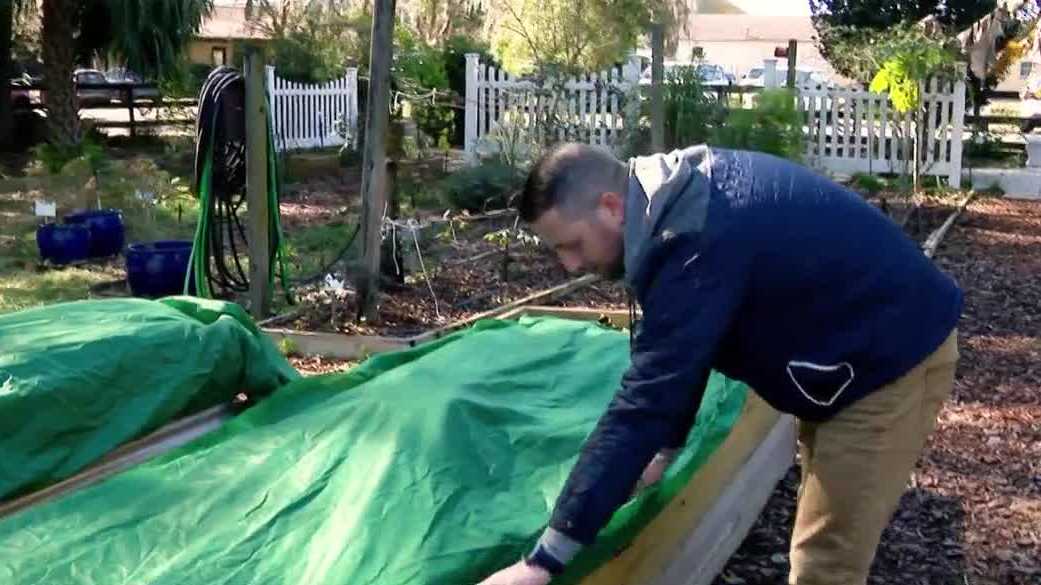
Jeremy Rhoden is the Urban and Residential Horticulture Agent and Master Gardener Volunteer Coordinator for UF/IFAS Extension Marion County. He helped cover plants and vegetables Friday and emphasized the importance of properly protecting plants from the cold.
“You want to make sure that your landscape fabric or your shade cloth is going over your plants completely, that you are not just covering the foliage,” Rhoden said.
Rhoden explained that using buckets or flower pots can help prevent frost cloth from touching the foliage, which can still freeze the leaf material and cause damage.
“We like to use buckets or flower pots like this to kind of put in the center. The reason we do that is this keeps the frost cloth from laying directly on top of the foliage,” he said.
Securing the frost cloth along the edges and covering the roots is also crucial, according to Rhoden. “Because the moisture in the soil produces heat that elevates within that covered area which keeps your plants heated up,” he said.
Rhoden noted that he often receives calls about freeze damage to citrus plants and palms. He advised against immediately cutting out damaged growth, suggesting instead to wait until early or late spring.
“Do not cut anything out until early spring or late spring would be best kind of toward the end of March, maybe mid-April. By then, you can see new growth coming. If you cut out that damage growth before then, you’re making your plant more susceptible to disease,” Rhoden said.
He added that cutting too soon could leave an open wound, making the plant more vulnerable to future freezes.
In addition to plant care, the cold weather shelter at the Red Cross is open, offering dinner for anyone needing to escape the cold. More information on this will be available in the next hour.