
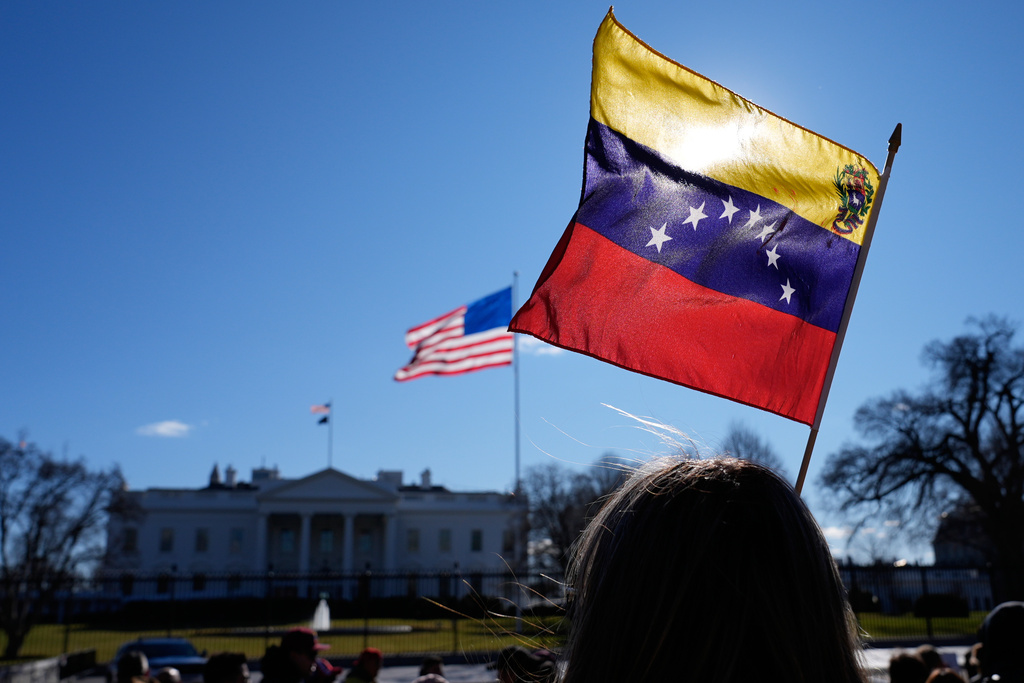
On Jan. 14, the Jacksonville chapter for Students for a Democratic Society (SDS) gathered in the Osprey Plaza to protest the United States’ military action in Venezuela.
The U.S. military action in Venezuela on Jan. 3 involved the capture of President Nicolás Maduro and his wife, Cilia Flores.
Maduro has been indicted in U.S. federal court with charges including narco-terrorism, cocaine trafficking, and possession of machine guns and destructive devices against the U.S. Flores was also named as a collaborator in the drug trafficking conspiracy, according to the indictment.
The capture marked the beginning of the U.S. military action in Venezuela, with President Donald Trump prioritizing U.S. oil companies championing Venezuela’s struggling nationalized oil industry.
The SDS described this event as “yet another senseless war for oil”.
Months of Military Buildup
Tensions between Venezuela and the U.S. rose significantly during 2025, under Trump’s administration.
In January 2025, Trump claimed that Maduro’s administration was working with a Venezuelan gang, Tren de Aragua, orchestrating drug trafficking and illegal immigration into the U.S.
While intelligence agencies later disputed this claim, the gang was labeled as a foreign terrorist organization.
In August 2025, the U.S. deployed three guided-missile destroyers to the waters off Venezuela as part of Trump’s effort to combat threats from Latin American drug cartels.
In September and October 2025, President Trump and his administration ordered several missile strikes against alleged drug-smuggling vessels in the Caribbean Sea and Eastern Pacific Ocean.
On Dec. 29, Trump said the U.S struck a building where drug-smuggling boats allegedly “load up.” The drone strike, planned by the CIA, became the first known direct operation in Venezuela since the September airstrikes began.
While the U.S. Senator Jack Reed said the U.S. military was not “empowered to hunt down suspected criminals and kill them without trial”, republican senators shot down legislation that would have required the president to seek authorization from Congress before further military strikes.
By December 2025, the military had destroyed at least 30 vessels, resulting in the deaths of more than 100 people, according to the Associated Press.
Future of Venezuela
Following the capture of the nation’s president, many have questioned the future leadership of the Venezuelan nation.
Despite Trump’s claims, the U.S. has no troops or fully operational diplomats in Venezuela. Maduro’s former vice president, Delcy Rodriguez, has been sworn in as interim president.
___
For more information or news tips, or if you see an error in this story or have any compliments or concerns, contact [email protected].