
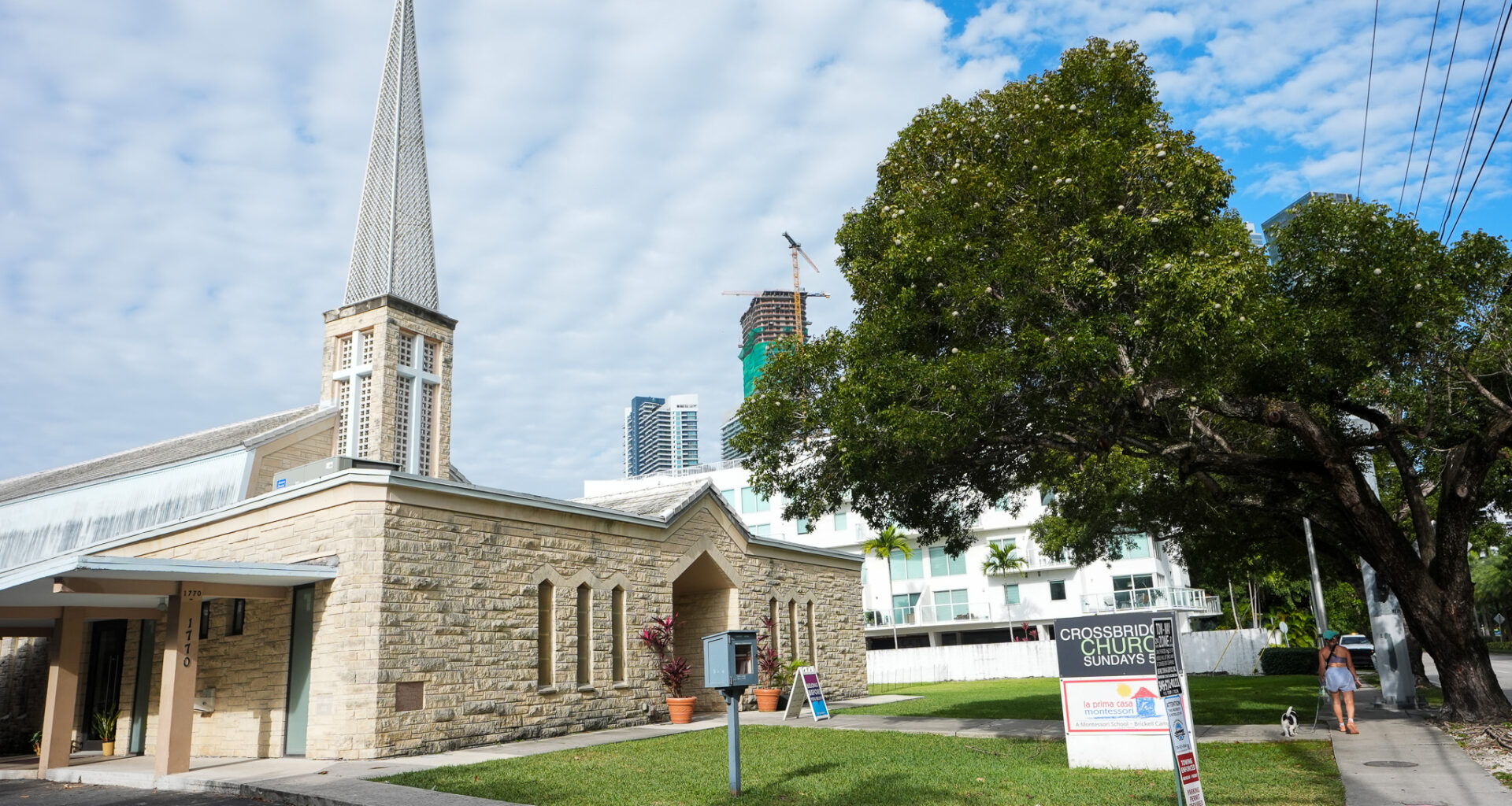
Crossbridge Church is embroiled in a legal battle with the largest denomination of Lutheran churches over the transfer of a valuable piece of property on Brickell Ave. The case involves questions of religious governance and the First Amendment’s protections of religious freedom about a property that could be worth as much as $40 million, according to court filings.
The lawsuit was originally filed in April 2024, just after the Immanuel Evangelical Lutheran Church of Miami conveyed its property to Crossbridge Church of Miami, based in Pinecrest. Crossbridge has several congregations in South Florida, including one in Key Biscayne.
The move came after Crossbridge, whose formal legal name is Immanuel Presbyterian Church of Miami, had been leasing space at the Lutheran church for more than a decade.
The transfer raised objections by the Florida-Bahamas Synod of the Evangelical Lutheran Church in America Inc., a regional religious governing body over about 170 churches including the one in Brickell. The organization claims in its lawsuit that the transfer should be nullified because Immanuel did not follow proper procedures before a vote by the congregation’s leadership.
The parent church body also alleges the congregation was given “salacious” information and personal attacks against Lutheran leadership.
The Immanuel land located in Miami’s bustling financial and tech area is estimated to be worth between $20 million and $40 million, according to Synod attorney Francisco Ramos. The Miami-Dade property appraiser recently valued it at about $8 million, according to court documents. The Synod filed a “lis pendens” on the property, a warning to title companies that ownership of the parcel is in dispute that would likely block any future sale.
The Synod concedes that its Immanuel congregation has the right to enact such a transfer but that it failed to follow a 10-day rule of notice to the congregation and other requirements for such a weighty decision.
“Yes, you own the property, local congregation, but there are certain rules we have to abide by if you’re going to transfer the property,” Ramos said at a court hearing last year. “And if you don’t abide by those rules, you are acting outside church governance.”
After the transfer, the regional church placed the local Lutheran congregation under “Synodical Administration” which it contends means it has control of the property.
Crossbridge’s position is that the local Lutheran leadership voted for the transfer legitimately and that a Miami judge should not reverse it, in part because the matter could become tangled in church policy covered by the First Amendment. An email to Crossbridge’s Senior Pastor, Felipe Assis, was not returned. Crossbridge has filed a counterclaim that asks the court to confirm the transfer of property.
“The matter at issue is the transfer of property and entering into this arrangement,” said Crossbridge attorney Amy Brigham Boulris at the hearing. “Who had the decisional authority on that? It was the local church.”
Never miss a story! Sign up for our FREE newsletter
The lawsuit was put on hold for 180 days beginning March 16, 2025, to allow time for a mediated settlement. None was reached, and Crossbridge in October filed a motion to reactivate the case. There was also a switch of judges, with Miami-Dade Circuit Court Judge Lisa Walsh currently presiding.
The Synod was also accused of illegally entering the Lutheran church pastor’s office with claims of harassment and freezing of church assets under a previous judge’s decision involving only the Synod.
The Rev. Robert Rose, assistant to the Synod’s administrative bishop, said in a court declaration that he provided notice to the Lutheran congregation that its pastor’s files would be examined in April 2024. No court order was sought to freeze the Lutheran congregation’s assets, Rose added.
“At no time were members of Immanuel’s congregation denied entry to the Immanuel property and they may still access the property for a ‘Word and Service’ worship service that can take place without an ordained pastor,” Rose said. Rose was not available for further comment.
It’s not clear from court documents when a decision on the Synod’s lawsuit might occur. Judge Walsh indicated last year she would hold an evidentiary hearing —a sort of mini-trial with no jury — sometime in 2026. A motion to dismiss the case is pending