
MIAMI BEACH, Fla. — Coaches will scour the ends of the earth to look for a way to sharpen a team’s edge come playoff time. But for these Miami Hurricanes, as they prepare for a national title game tilt in their own backyard Monday evening, all they needed to do was share the wealth.
The currency? One of the most beloved culinary cultural stamps of the “305”: shots of Cuban espresso.
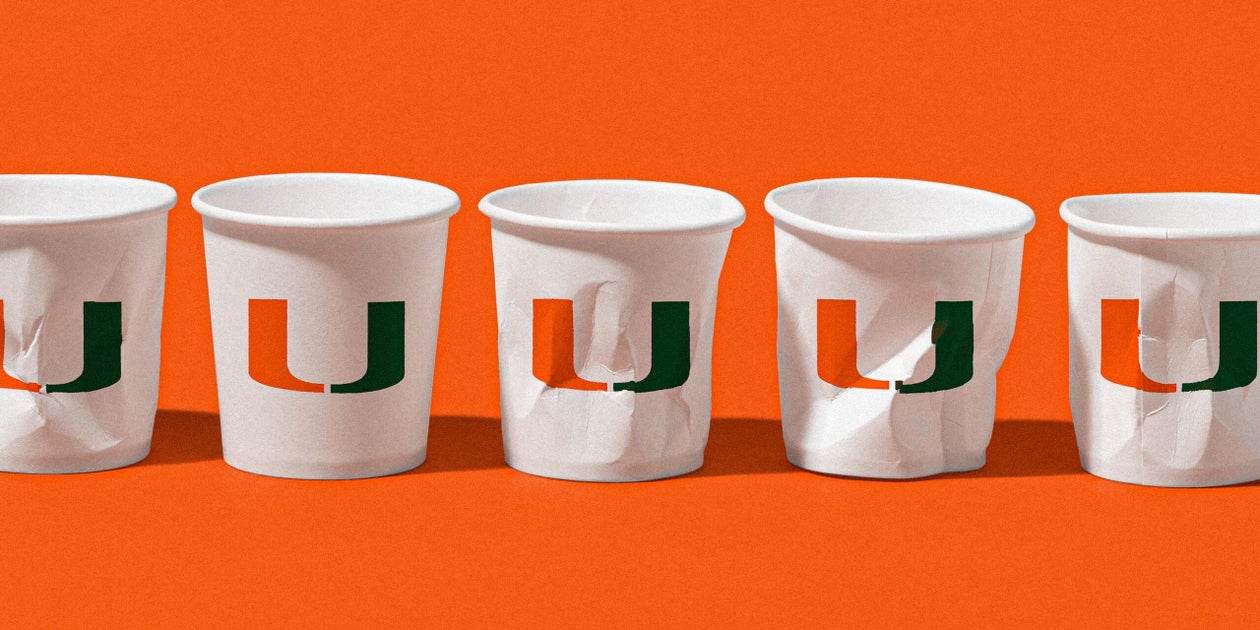
The Miami coaching staff regularly fuels up on tiny cups of “cafecito,” the colloquial nickname for the drink in South Florida, but it wasn’t until the Hurricanes began this dream run in the College Football Playoff that some of the players joined the fray. Before the first-round road matchup at Texas A&M on Dec. 20, assistant special teams coach Ferras Isa poured his perfected brew of cafecito — traditionally equal parts Cuban espresso and sugar — into tiny paper cups and handed them out to the team’s kickers, punters and long snappers.
Isa brews the coffee in the Miami equipment room. On road trips, he loads up his Moka Pot and takes it with him.
“He likes to call himself the Cafecito Coordinator,” Miami special teams coordinator Danny Kalter said.
About 45 minutes before the first-round kickoff at 11 a.m. local time in College Station, Texas, Miami’s specialists toasted together and tossed back shots. The Hurricanes gritted out a 10-3 road win, the first step on this winding road home to play for college football’s crown. They repeated it in the win over Ohio State in the Cotton Bowl and again in the last-minute semifinal win over Ole Miss at the Fiesta Bowl.
Miami things ☕️
The Canes took shots of cafecito before the semis 😂 pic.twitter.com/q4DYsJEiis
— ACC Network (@accnetwork) January 8, 2026
Starting kicker Carter Davis is admittedly not a coffee guy. So much so that he opted not to take the shot at Texas A&M. He went 1-for-4 on field goal attempts. That alone was enough to change his mind.
When in doubt, opt for the jolt of caffeine to help you lock in even more.
“It definitely gets you moving, though,” Davis said. “You can feel it.”
For the last month of the regular season, it was unclear whether or not the Hurricanes would even be included in the Playoff field. They had two stumbles in three weeks in the middle of the season with losses at home to Louisville and at SMU. The weekly Playoff ranking discourse pitted Miami against Notre Dame, who the Hurricanes beat in Week 1 inside Hard Rock Stadium.
Of COURSE @CanesFootball hs Cuban coffee on the sidelines. No detail left to chance ☕️Specialists take a shot before kicks. pic.twitter.com/vS2DeabF18
— Holly Rowe (@sportsiren) January 9, 2026
They’ll be back in Hard Rock against undefeated, No. 1 Indiana, college football’s most dominant team this year, and less than an hour before the college football world tunes in, Miami’s kickers, punters and long snappers will huddle and raise their tiny paper cups of cafecito in unison.
That, in essence, is the whole point.
The historical significance of the cafecito to Cuban and Cuban-American culture is tied to finding those precious moments in the day where you can simply enjoy conversation with co-workers or loved ones long enough to sip — or in some cases shoot — your shot.
Carlos Frías is a journalist and author based in his hometown of Miami. He was the food editor of The Miami Herald and has reported on the significance of Cuban coffee in the Miami community.
“Drinking Cuban coffee is a community activity,” he said. “There’s so little coffee that it takes so little time to drink it that it makes for a perfect short little catch-me-up with people. It acts like a water cooler.”
A cafecito, Frías said, can also measure one’s admiration (or lack thereof) for another. It’s said that if you visit a Cuban-American household that regularly partakes in cafecito and aren’t offered a drink within five minutes, you’re probably not welcome. If you serve a cafecito to someone straight without sugar (unless specifically requested that way), you aren’t fond of that person.
Dr. Michael Bustamante, a history professor in the Cuban-American studies department at the University of Miami, said cafecito is so ubiquitous in Miami’s culture that Starbucks recently attempted to copy a “ventanita,” the small service-window counters for cafecito throughout the city, in one of the affluent neighborhoods of Coral Gables. Bustamante’s favorite ventanita is not amid the glitz and glamour — it’s next to a laundromat. Over shots of cafecito is where people can unite momentarily, or in some cases, open a can of worms regarding politics.
“There’s a famous saying,” Bustamante said, “you put three Cubans in a room and you get 10 opinions.”
Miami coach Mario Cristobal, the son of Cuban refugees, said Isa has established himself as the staff’s coffee source. He joked that it is now officially part of his responsibilities on staff. Cristobal said he’s looking forward to expanding this little piece of the Playoff run in the future, but knows one place you don’t dare venture.
“I don’t want to get into a competitive warfare in Miami as to who makes the best coffee,” he said, “but it’s certainly an offseason project that I look forward to delving into.”
Miami long snapper Michael Donovan transferred from Michigan State in 2023 and has been a cafecito fanatic ever since arriving. Donovan said once Isa added the cafecito toast to his pregame speeches, “it’s been a little more fired up.”
He believes this is a custom just getting started.
Said Donovan: “I think it has enough traction on social media and enough people are talking about it to where I think it might be a specialty, a tradition forever.”
— The Athletic’s Scott Dochterman contributed to this story.