
HCC trustees will vote Tuesday on a non-binding Rays stadium framework as new details and questions about funding and taxes emerge.
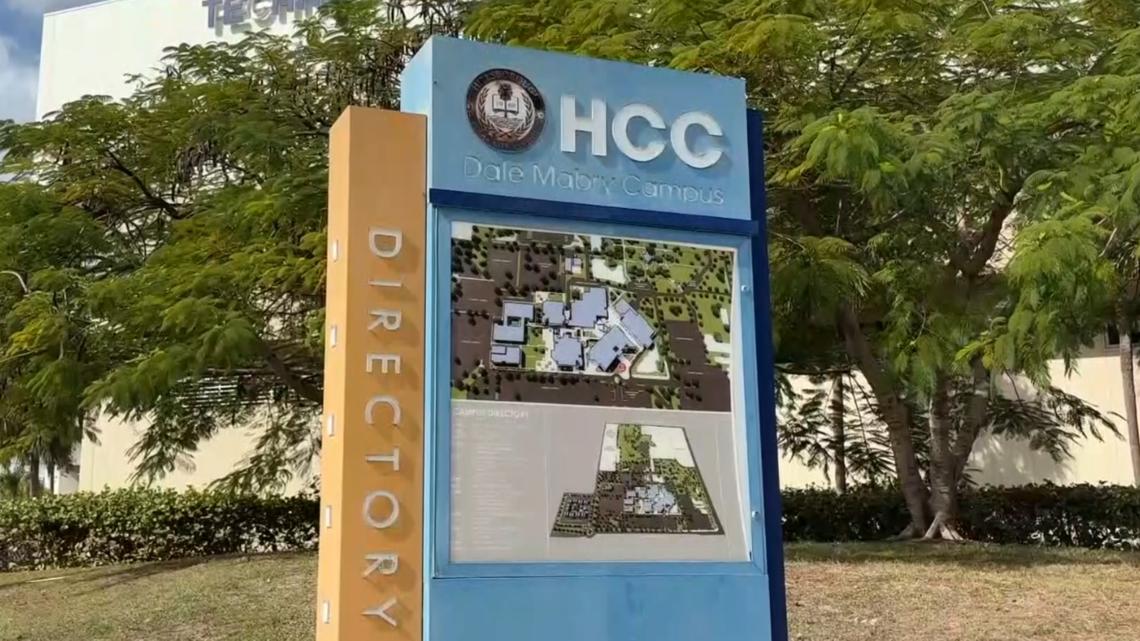
TAMPA, Fla. — Trustees for Hillsborough College are set to vote at a 4 p.m. meeting Tuesday on a non-binding memorandum of understanding that would lay the groundwork for a new Tampa Bay Rays stadium and mixed-use development on the college’s Dale Mabry campus.
The proposal, obtained by 10 Tampa Bay News, outlines a framework for redeveloping roughly 113 acres of the campus into a multi-phase project that would include a new stadium, hotels, housing, retail and new academic facilities for the college. The agreement does not finalize financing, design, or construction timelines, but would allow negotiations to move forward.
Under the memorandum, Hillsborough College would retain a portion of the property, referred to as the “College District,” for newly built academic facilities, while the remaining land would be leased to the Rays for at least 99 years. The Rays would control the stadium and surrounding development, while the college would maintain control over its academic facilities.
The memorandum does not spell out how property taxes would apply to the stadium or surrounding mixed-use development, a key question as negotiations move forward.
Because Hillsborough College is a public institution, the land itself is generally tax-exempt. However, private development on publicly owned land can still be subject to property taxes, depending on how ownership, leasing, and control are structured. The memorandum leaves those details to future binding agreements.
DeSantis shows support for new Rays stadium in Tampa
Florida Gov. Ron DeSantis weighed in on the proposal Tuesday morning during a stop in Pinellas Park, signaling support for the concept while reiterating that the state would not directly fund stadium construction.
“I think that HCC site could be very good for HCC,” DeSantis said, noting he has met with the college president about the proposal. “I think he’s excited about the possibility. We’re supportive of them pursuing that partnership because I think it could be good for them, it could be good for the state, and particularly good for this region.”
DeSantis added that while the state does not finance professional sports stadiums, it could play a role in other ways.
“Our position has always been the same: we don’t, from our coffers, help finance the stadium,” he said. “Local communities can work that out differently.”
He added that the state could assist with infrastructure improvements, such as traffic and roadway upgrades, and confirmed plans for a Department of Juvenile Justice facility currently located on the property to vacate, potentially freeing up land for redevelopment.
The memorandum also requires that Hillsborough College remain operational throughout construction, with temporary classrooms, utilities, and parking in place before any demolition occurs. Existing parking agreements tied to nearby sports facilities would need to be modified without causing revenue loss to the college.
Before any construction could begin, the Rays would need to secure zoning and land-use approvals, finalize financing, obtain Major League Baseball approval, and resolve state deed restrictions that currently limit how parts of the land can be used.
DeSantis said keeping the Rays in Florida remains a priority.
“I just want to see the team succeed in Florida,” the governor said. “I don’t want to lose the team from the state. The Tampa Bay area needs to have the first chance to make this work.”
If approved today, the agreement would give the Rays and Hillsborough College up to 180 days of exclusive negotiations to pursue definitive, binding contracts.