
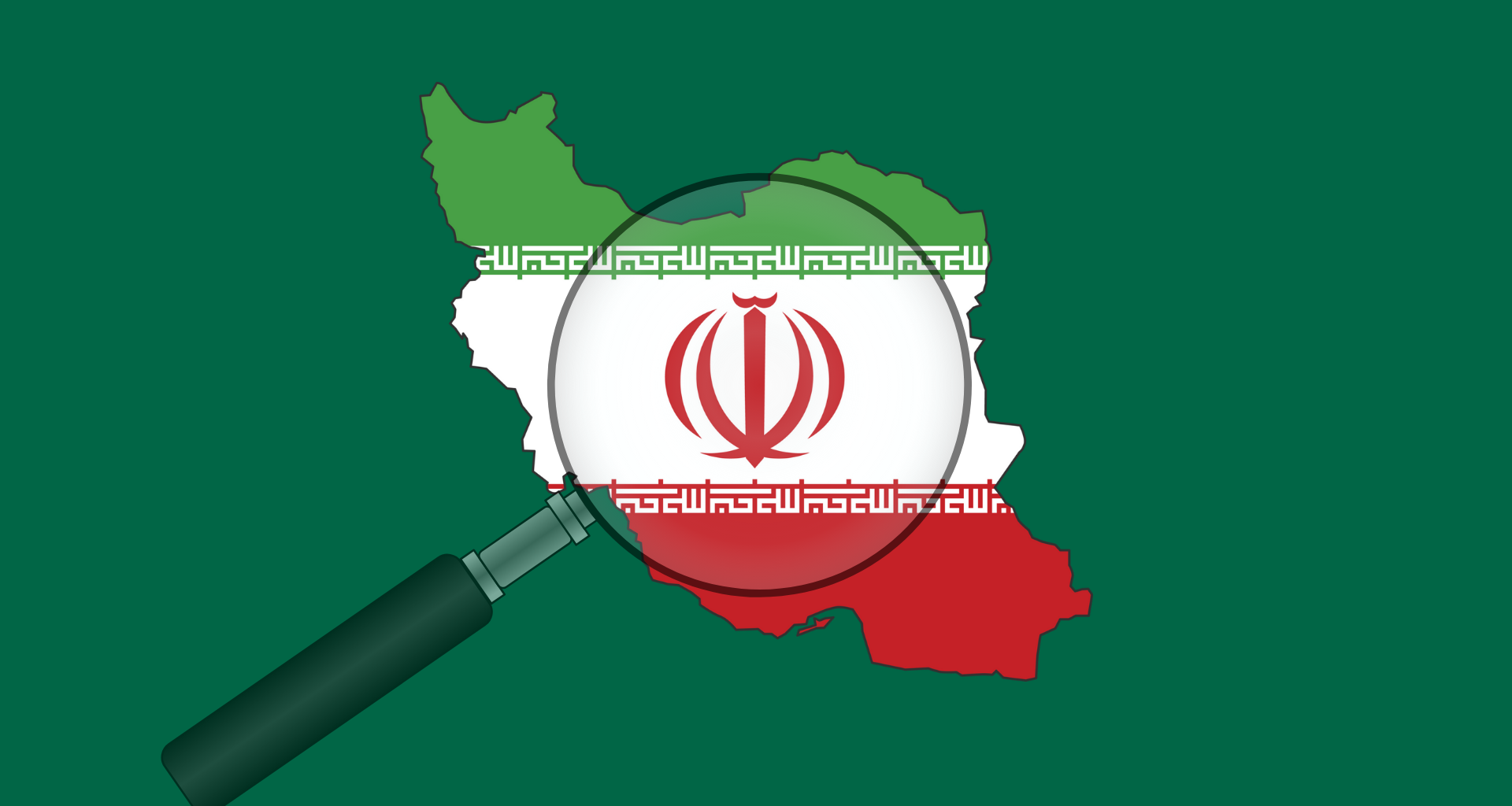
 Iranian students at USF reflect on the nationwide protests in Iran as demonstrators face deadly crackdowns, internet shutdowns and growing international attention. ORACLE GRAPHIC/DELANEY TORRES
Mass protests are erupting across Iran as citizens have started pushing back against the government amid economic hardship, political repression and mounting international pressure.
Supreme Leader Ayatollah Ali Khamenei has led the Islamic Republic of Iran since 1989. Supreme Leaders in Iran are selected by a clerical body rather than the public and serve for life, according to PBS.
Khamenei rules under an authoritarian theocratic system, where power is tightly centralized in his hands and security forces are frequently used to suppress opposition, according to the U.S. Department of State.
What started as economic demonstrations on Dec. 28 quickly burst into a broader call for political change — backed by a long history of protest movements in response to political repression and social restrictions, according to the Associated Press.
Since December, protesters have been killed during clashes with Iranian security forces, which include police, paramilitary units and the Islamic Revolutionary Guard Corps.
U.S.-based human rights agencies estimate that at least 2,586 people have been killed since the protests started. However, Iranian doctors treating injured protesters have said the number of deaths may be closer to 16,000.
For Iranian students at USF, the ongoing violence against citizens and communication shutdowns have raised fears about the safety of loved ones still in Iran.
Related: USF professors weigh in after US strikes on Iran nuclear sites
As protests grew in December, Iranian authorities restricted internet and mobile communications to limit the flow of information out of the country, according to AP.
The internet shutdown left Iranian citizens unable to contact family members or share footage of demonstrations.
One USF student, who chose to remain anonymous due to safety concerns, has family members in Iran and said they have been unable to contact some of them since the shutdown.
The student said the lack of information about their family’s safety has been one of the most distressing parts of following the protests from afar.
“We haven’t been able to have much contact with them,” the student said. “There was a brief day where phones were back on and some people were able to call very briefly, but now it’s all gone.”
Watching the protests grow, the student said it became clear this movement was different from previous demonstrations in Iran.
“These protests happen pretty much every year to some degree,” the student said. “But as this one grew, we all started to realize that this could be the big one and the one that would finally bring change.”
The student said the stakes of the protests feel especially high given reports of widespread violence against demonstrators.
“I don’t know anybody personally in my immediate family who has been killed,” the student said. “But everybody knows somebody that’s been killed or injured or has taken part in these protests.”
Related: USF Venezuelan students react to U.S. airstrike, Maduro’s capture
The student said violence has extended beyond clashes in the streets and has reached neighborhoods and livelihoods — including the destruction of family-owned businesses.
The student said their cousin’s store in Rasht, Iran, was a victim of one of these incidents.
“During the protests, regime forces surrounded the area, and the market was set on fire with people still inside, and people were shot as they tried to escape,” the student said. “His store was completely destroyed. He was only spared because his older brother stopped him from going back to try to save it.”
Still, the student said the realities of daily life under Iran’s current government are often misunderstood from outside of the country.
“I don’t think a lot of people in the West realize how bad it is in Iran,” the student said. “People here argue about policy or politics, but in Iran, people are fighting for the most basic rights — the right to free speech, the right to protest, the right to have freedom of religion.”
The student said international attention has brought encouragement, but believes stronger action is needed from world leaders.
“I want to make it clear, myself, along with the many Iranians I have spoken to, we want the international community, including U.S. President Donald Trump, to not only give us their words, but also a physical show of support in the region.”
Trump has publicly condemned the violence against Iranian demonstrators, according to AP.
Related: USF students protest university ties to immigration enforcement
A second Iranian student at USF, who also chose to remain anonymous, said watching the protests unfold has been emotionally overwhelming.
“It’s the not knowing that’s the hardest part,” they said. “You see bits and pieces online, but you don’t know what’s really happening to the people you love or if they’re safe.”
The student said the protests feel fundamentally different from past protests in Iran.
“There have always been protests, but this feels bigger and more desperate,” the student said. “People are protesting because they feel like there’s nothing left to lose.”
Despite their fears, the student said public condemnations from U.S. officials have offered some encouragement.
“When other countries pay attention, it reminds people they’re not alone,” the student said. “Even if nothing changes right away, that recognition matters.”
The student said they see foreign involvement as necessary for meaningful change.
“I don’t think change can happen without outside pressure,” the student said. “At this point, many of us believe U.S. involvement is the only way the regime will be forced to step back.”
The student said they remain cautiously hopeful about the protests’ outcome, despite the violence and uncertainty surrounding them.
“People are still showing up, even knowing the risks,” the student said. “That tells you how strong the desire for a change in government really is.”