
In the game, we played as unnamed test subjects being instructed by Dr. Brenner (voiced by actor Matthew Modine, reprising his role from the series). After being shown how to use our catalyst and other latent psychic powers, we suddenly found ourselves thrust into the Upside Down and forced to fight off waves of its creepy denizens and try to find a way out.
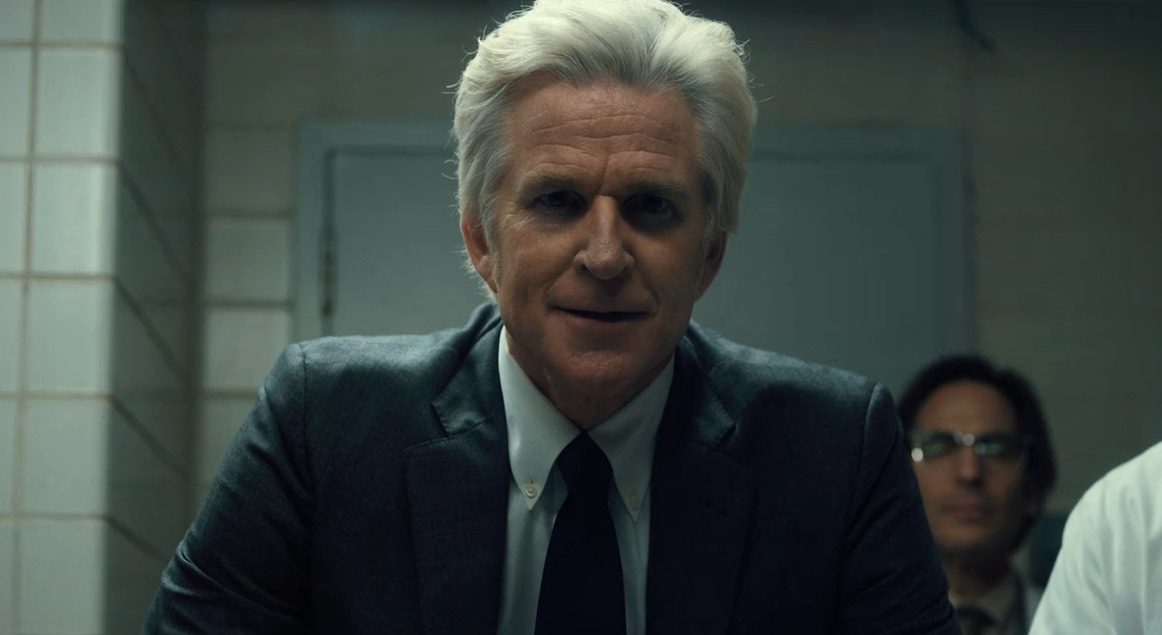
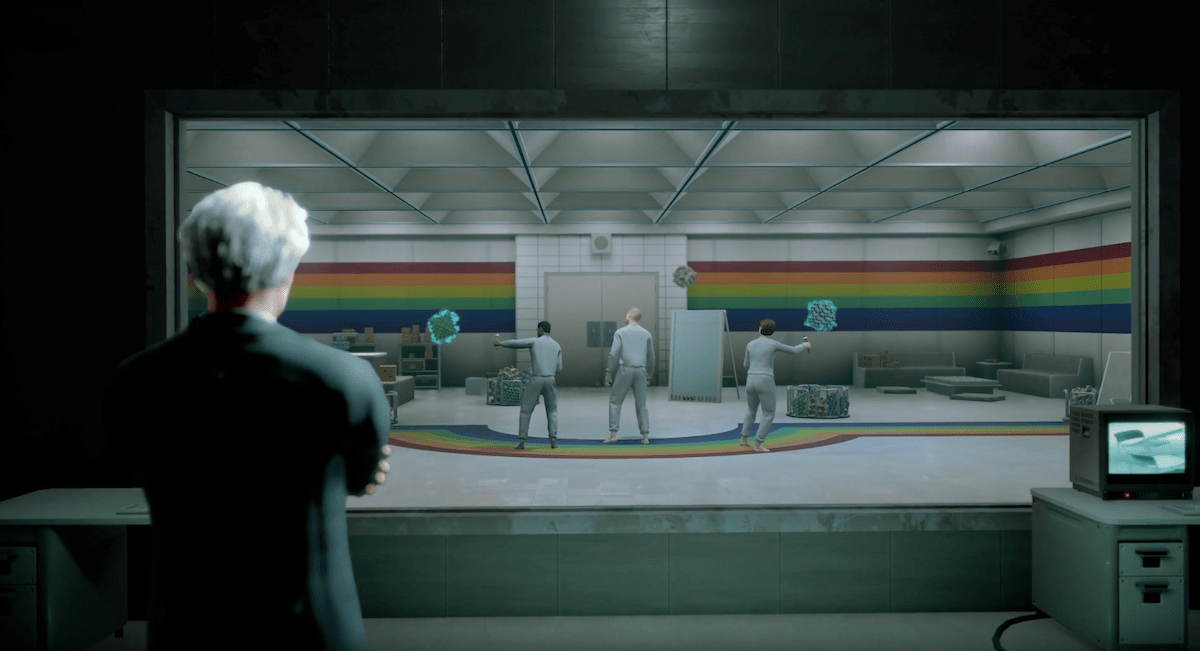
Matthew Modine returns as Dr. Brenner / “Papa” in “Stranger Things: Catalyst.”
Images courtesy of Sandbox VR / Netflix
Gameplay in “Stranger Things: Catalyst” is very similar to our other experiences at Sandbox VR where we had to look all around to see who was attacking us and to find objects to psychically pick up and throw at them. The free-roaming nature of the game, not attached to a wall by a cable, meant we were able to move around the room and duck to avoid attacks coming from all directions. Using the catalyst and our off-hand to attack and repulse enemies was fun, though immensely tiring. It was truly a workout that left us all sweating after only 10 or 15 minutes and gave me a sore arm I still felt a few days later.
Knowing the lore of the show is not necessary for the VR experience, but fans of “Stranger Things” will get a kick out of Matthew Modine’s cameo and the familiar world of the Upside Down with its recognizable creatures. Not being super familiar with the show, I was still able to enjoy myself as a gamer wanting to experience something different. The game is accessible to people with different levels of gaming experience, as even if you “die,” you will respawn shortly later. Families should be able to enjoy this together, although some scary moments here and there may be unsuitable for younger players.
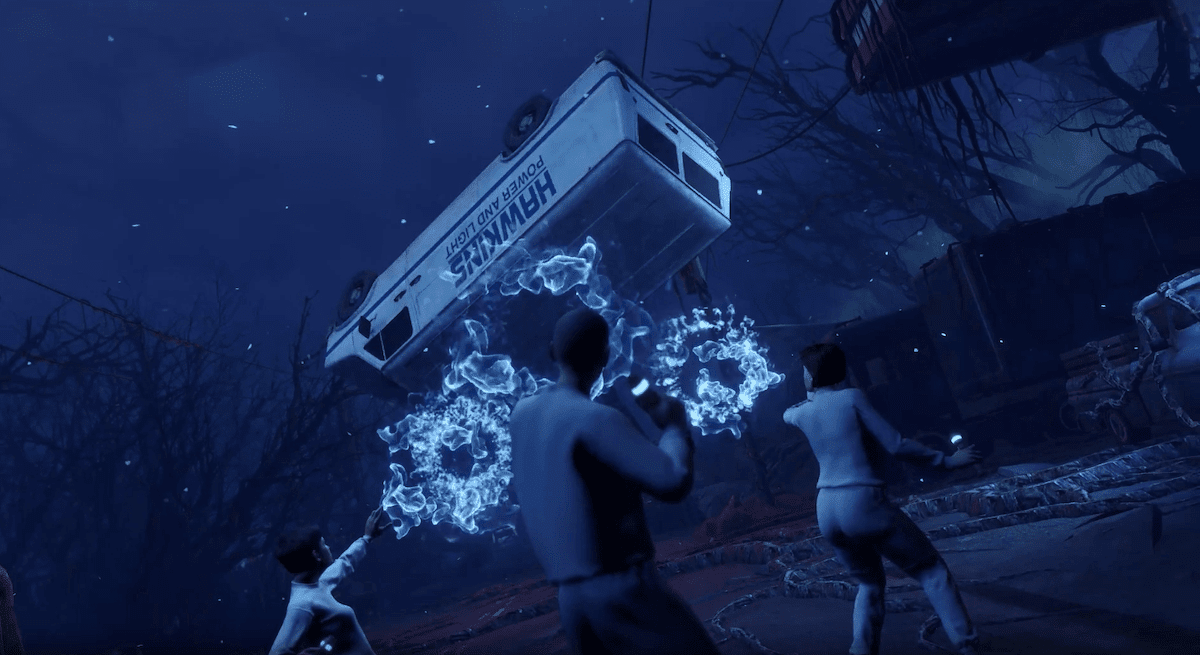
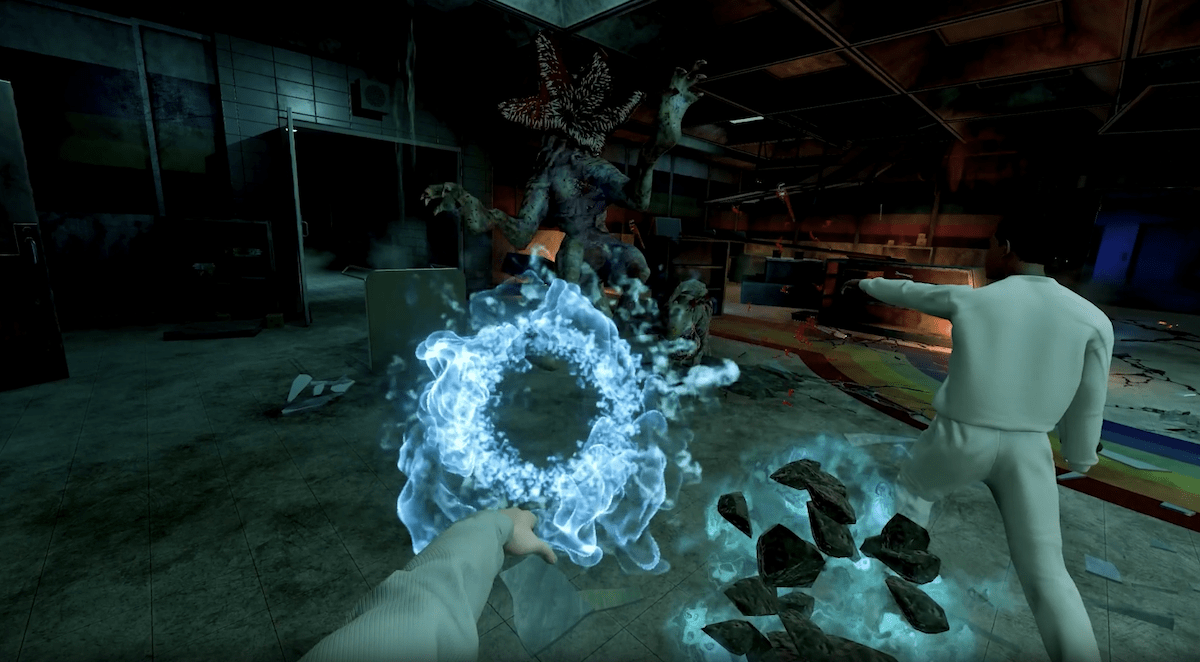
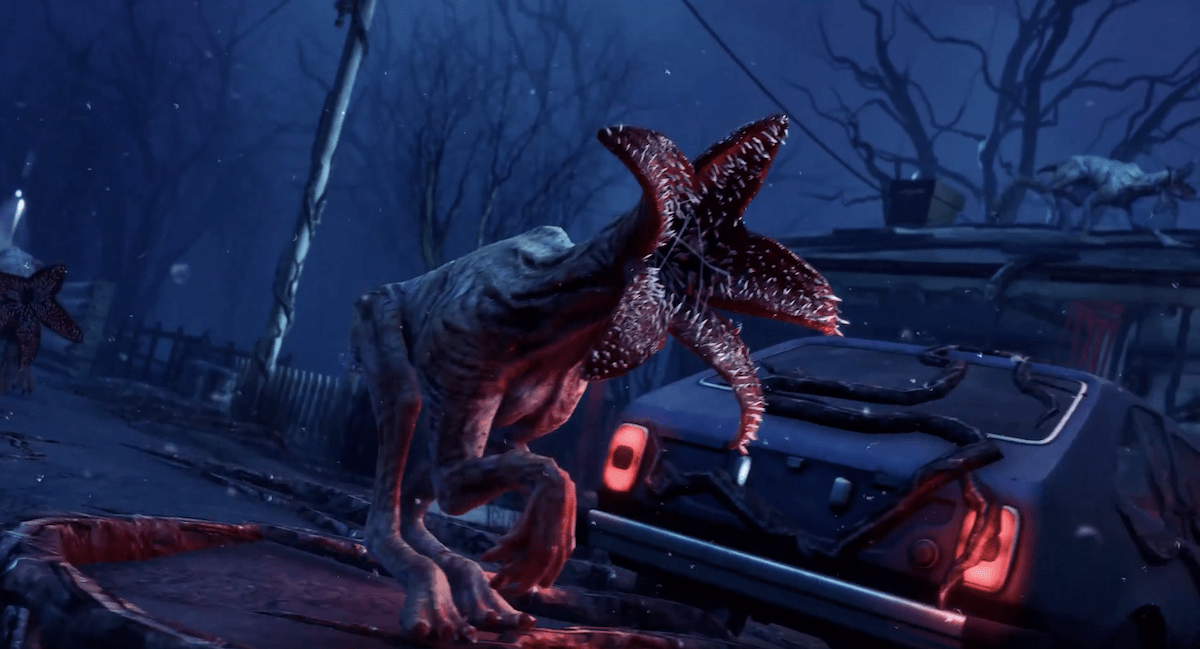
Gameplay moments in “Stranger Things: Catalyst.”
There remain some quibbles with the technology, as more than once I experienced a complete desync from the game where everything stopped and I found myself looking at nothing. Audio-wise, the headsets let us talk to each other, but there is a slight delay, so being close to a friend and hearing them in real life followed by over the headset a second later was often off-putting.