
Bill would expand data tracking in Florida’s problem-solving courts
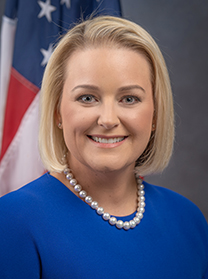
Rep. Hillary Cassel
The state would more closely track cases in Florida’s problem-solving courts under a bill that is moving in the Florida Legislature.
The House Criminal Justice Subcommittee voted 16-0 on January 20 to approve HB 831 by Republican Rep. Hilary Cassel, a Dania Beach attorney.
The bill would require the Office of State Court Administrator to collect more “meaningful data,” including a participant’s offenses and compliance, program completion, reasons for non-completion, recidivism outcomes, and “key life-stability indicators” such as employment, housing, and child-custody status, Cassel said.
“These courts are designed to reduce recidivism, improve public safety and move people into treatment instead of incarceration,” Cassel said. “But if we are investing in these programs, we should also be able to clearly measure whether they are working.”
Another provision would require drug treatment and mental health courts to file quarterly instead of annual reports.
Problem solving courts are non-adversarial and stress treatment over incarceration. A judge leads a problem-solving team and monitors compliance through frequent hearings, using sanctions and incentives to encourage compliance.
The 11th Judicial Circuit launched the nation’s first drug treatment court in Miami-Dade County in 1989.
As of this month, a court website listed 49 adult drug courts, 35 early childhood courts, 34 veteran treatment courts, 33 adult mental health courts, 13 juvenile drug courts, 13 dependency drug courts, four DUI courts, and one juvenile mental health court scattered across Florida’s 20 judicial circuits.
Meeting with a House subcommittee during a Supreme Court tour in November, Chief Justice Carlos Muñiz told lawmakers that the Office of State Courts Administrator is working with court clerks to enhance data collection as part of a broader initiative to improve the efficiency of the civil justice system.
“In intra-branch communications, we emphasize that we don’t just want to focus on inputs, we want to focus on outputs and performance,” he said.
HB 831 “simply standardizes the data that is already collected, and ensures it is reported in a consistent, usable format,” Cassel told the committee on Tuesday. “This is about transparency, evidence-based policy making and responsible stewardship of taxpayer dollars.”
The bill faces one more hearing, in Judiciary, before reaching the House floor.
Republican Sen. Jennifer Bradley, a Fleming Island attorney, is sponsoring a companion measure, SB 820. It has yet to move.