
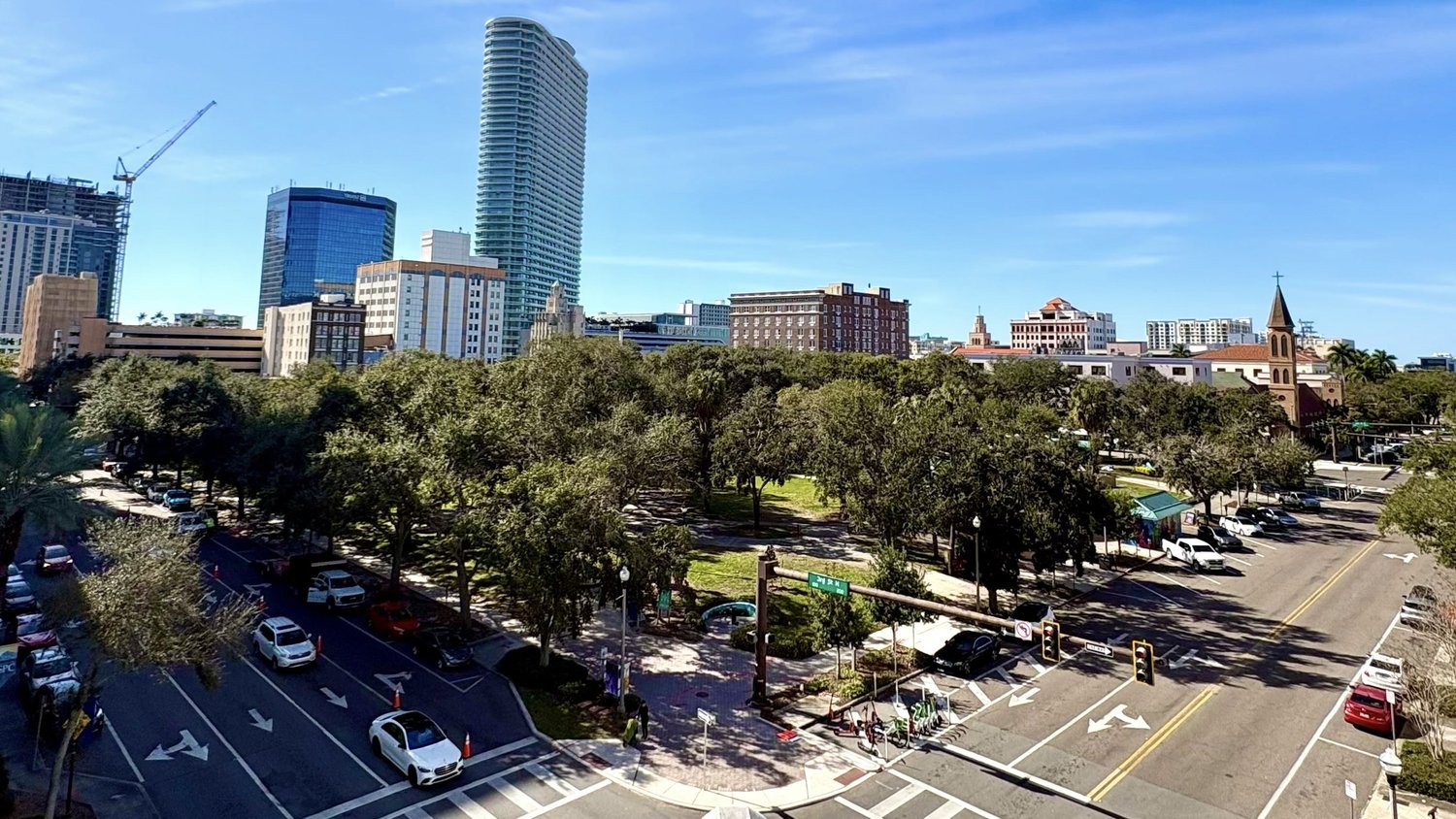
Biederman emphasized that successful parks are driven less by occasional large events and more by steady, everyday use.
“Most people think programming means concerts,” he said. “That’s part of it, but what really makes a park work is activity throughout the day.”
His firm’s approach focuses on simple, repeatable amenities such as staffed carts offering chess, ping pong, art supplies, reading materials, shuffleboard, and toddler-focused activities.
“Toddler programming works everywhere,” Biederman said. “Families always find it.”
To support early programming and operations, the Downtown Partnership and Williams Park Partnership are working to raise between $500,000 and $600,000, with roughly $200,000 to $250,000 already committed. Project leaders say interest has been strong among nearby property owners and stakeholders with longstanding ties to the park.
Separately, the Downtown Partnership is preparing to launch a downtown improvement district focused on cleaning, ambassadors, and maintenance across much of the downtown core.
The effort would be funded through new parking meter revenue rather than new taxes, by converting roughly 400 high-demand two-hour parking spaces to metered parking and generating an estimated $1 million per year.