
MINUTES. ALL RIGHT. I THINK A LOT OF PEOPLE ARE LOOKING FORWARD TO HEARING ABOUT THAT. WITH THE FREEZING TEMPERATURES, FLORIDIANS ARE COVERING UP THEIR PLANTS AND THEY’RE MAKING SURE THEIR PETS ARE INSIDE. WESH 2 NEWS DAVID JONES LIVE IN TAVARES AT THE UNIVERSITY OF FLORIDA IFAS OFFICE, WITH THE PRECAUTIONS, EXPERTS SAY YOU MIGHT WANT TO TAKE. FIRST, PROTECT YOUR PLANTS. FOR THOSE TROPICAL AND SUBTROPICAL PLANTS, EXPERTS SAY, MAKE SURE TO COVER THEM, BUT DON’T TIE IT AROUND RATHER, USE THAT YOU HAVE NEARBY TO WEIGH THEM DOWN. MEANWHILE, LOCAL HVAC COMPANIES SAY THEY’RE JUST BEING SWAMPED WITH ALL THE CALLS RIGHT NOW AS THE COLD LINGERS. I MEAN, IT’S IT’S ALWAYS GOING TO CONTRACT AND CONTRACT AND EXPAND ALL THESE FLUCTUATIONS IN WEATHER, FREEZING AND WARM BACK TO FREEZING AGAIN CAN HAVE EFFECTS. THE BIGGEST THING IS KEEPING YOUR FILTERS IN HERE AND CLEAN. IF YOU’RE NOT, YOU’LL GET DUST AND DEBRIS INSIDE YOUR AIR HANDLER. IT WON’T TRANSFER. THE HEAT FLOODS YOUR COMPRESSOR, KILLS IT. CHARLES BURNETT IS SERVICE MANAGER WITH LUCAS AIR CONDITIONING. IT’S EVEN WITH NEWER SYSTEMS, NEWER HOMES, NONE OF OUR SYSTEMS ARE BUILT BULLETPROOF. SO, YOU KNOW, WE’RE GETTING CALLS EVEN WITH SYSTEMS THAT WE’VE PUT IN A FEW YEARS AGO, THEY’RE HAVING A HARD TIME KEEPING UP. WE MAKE SURE TO USE THE FROST BLANKET FROM THE TOP TO THE LOWEST PART, AVOIDING THE FREEZE. MARIA BAUTISTA IS THE RESIDENTIAL HORTICULTURAL AGENT FOR LAKE COUNTY. SHE SAYS FROST CAN HAPPEN SLIGHTLY ABOVE FREEZING TEMPS. THAT TROPICAL AND SUBTROPICAL PLANTS CAN SHOW INJURY, EVEN WHEN TEMPERATURES DROP BELOW 50 DEGREES. COLD TOLERANCE BE MORE LIKE CABBAGE, BROCCOLI, SPINACH, KALE. BUT IF YOU HAVE TOMATOES AND OTHER TROPICAL CROPS LIKE CUCUMBERS FLOWERS, THEY WILL BE BETTER COVERED. HER SUGGESTION WATER AFTER A FREEZE TO HELP THAW SOIL AND BE SURE NOT TO PRUNE MAJOR BRANCHES IMMEDIATELY GROUP POTS TOGETHER AND PLACE THEM AGAINST A BUILDING OR WINDBREAK. MOVE CONTAINERS TO THE GARAGE OR A PORCH, OR NEAR THE HOUSE WHERE RADIANT HEAT HELPS THE LOWER PART OF THE TREE SHOULD BE MULCHED. SO MAYBE YOU CAN COVER WITH THE BLANKET, BUT IF YOU CAN’T DO IT. BUT IF NOT, MULCHING THAT AREA. BUT DON’T LEAVE ANY PART OF THE TRUNK UNCOVERED. THIS IS A PLANT COVER ABOUT THESE TWO. SAYS TO USE BREATHABLE MATERIAL TO COVER YOUR PLANTS, NOT PLASTIC. IF YOU DO USE PLASTIC, SHE SAYS, MAKE SURE YOU REMOVE IT EARLY IN THE MORNING. STAY WITH US AT 5:00. YOU’LL HEAR FROM LOCAL BERRY FARMS ON HOW THEY’
Central Florida’s cold snap: Everything to know about dangerous temps, wind chills and possible flurries

Updated: 5:18 PM EST Jan 28, 2026
Central Florida is battling a strong cold front that is bringing unseasonably low temperatures and gusty winds. Residents have been waking up to temperatures in the low 30s and 40s, with wind chills making it feel even colder. The cold snap is expected to linger, and as we head into the weekend, temperatures will dip to very dangerous levels. Here’s everything you need to know to stay safe: How low will temps dip? Thursday: Low of 37 degreesFriday: Low of 43 degreesSaturday: Low of 49 degreesSunday: Low of 26 degreesMonday: Low of 28 degreesSevere Warning Weather DaysWESH 2’s First Warning Weather team has declared Sunday and Monday mornings as Severe Warning Weather Days, as wind chills are expected to plunge into the teens.When could we see flurries?Saturday night and into Sunday morning are the best chances to see flurries, according to Meteorologist Tony Mainolfi.Protecting the four Ps People: Dress in layers and check on elderly/children. Pets: Bring pets indoors or provide warm shelter and water. Pipes: Wrap or insulate exposed pipes to prevent bursting.Plants: Cover sensitive plants or bring potted ones inside. For plants, experts recommend people to be aware of the types of temperatures their plants can withstand and cover tropical/subtropical plants if the sustained temperatures dip below 50 degrees.”Cold tolerant will be more like cabbage, broccoli, spinach, kale,” said Maria Bautista, the resident horticultural agent for Lake County, working in the UF IFAS extension office. “But if you have tomatoes and other tropical crops like cucumbers, flowers, they will be better covered.”Bautista said to make sure you cover the entire plant, from the highest point down to the ground, but not to wrap the root or trunk itself.”The lower part of the tree should be mulch,” she said. “Maybe you can’t cover with the blanket, but if you can, do it. But if not, mulching that area, but don’t leave any part of the trunk uncovered.”Use heavy weights to weigh down the breathable blanket or cover (don’t use plastic, she said).Group potted plants together and, if possible, place them against a wall or windbreak.Move containers inside a garage, porch or lanai, or near the house for radiant heat.Space heater safetyAs colder temperatures approach, Orlando residents are encouraged to prioritize the safety of space heaters.To see a list of free smoke and carbon monoxide detectors available through local programs, click here.
ORLANDO, Fla. —
Central Florida is battling a strong cold front that is bringing unseasonably low temperatures and gusty winds.
Residents have been waking up to temperatures in the low 30s and 40s, with wind chills making it feel even colder.
The cold snap is expected to linger, and as we head into the weekend, temperatures will dip to very dangerous levels. Here’s everything you need to know to stay safe:
How low will temps dip? Thursday: Low of 37 degreesFriday: Low of 43 degreesSaturday: Low of 49 degreesSunday: Low of 26 degreesMonday: Low of 28 degrees
Severe Warning Weather Days
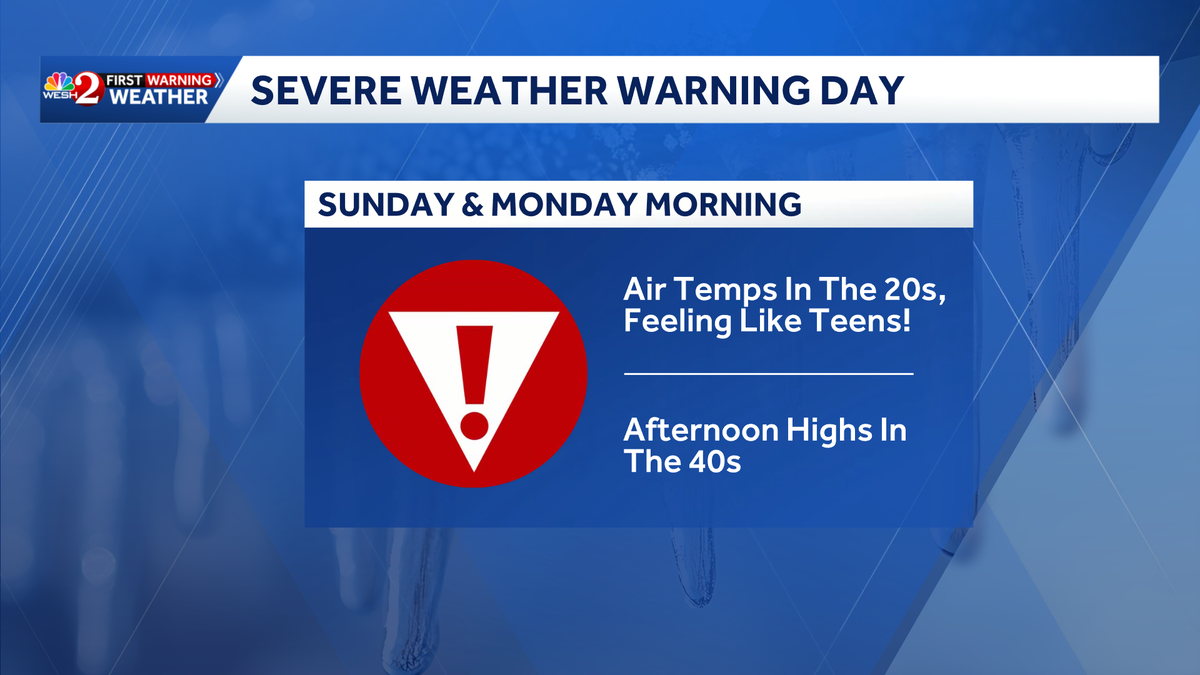
WESH 2’s First Warning Weather team has declared Sunday and Monday mornings as Severe Warning Weather Days, as wind chills are expected to plunge into the teens.
When could we see flurries?
Saturday night and into Sunday morning are the best chances to see flurries, according to Meteorologist Tony Mainolfi.
Protecting the four Ps
People: Dress in layers and check on elderly/children. Pets: Bring pets indoors or provide warm shelter and water. Pipes: Wrap or insulate exposed pipes to prevent bursting.Plants: Cover sensitive plants or bring potted ones inside.
For plants, experts recommend people to be aware of the types of temperatures their plants can withstand and cover tropical/subtropical plants if the sustained temperatures dip below 50 degrees.
“Cold tolerant [plants] will be more like cabbage, broccoli, spinach, kale,” said Maria Bautista, the resident horticultural agent for Lake County, working in the UF IFAS extension office. “But if you have tomatoes and other tropical crops like cucumbers, flowers, they will be better covered.”
Bautista said to make sure you cover the entire plant, from the highest point down to the ground, but not to wrap the root or trunk itself.
“The lower part of the tree should be mulch,” she said. “Maybe you can’t cover with the blanket, but if you can, do it. But if not, mulching that area, but don’t leave any part of the trunk uncovered.”
Use heavy weights to weigh down the breathable blanket or cover (don’t use plastic, she said).
Group potted plants together and, if possible, place them against a wall or windbreak.
Move containers inside a garage, porch or lanai, or near the house for radiant heat.
Space heater safety
As colder temperatures approach, Orlando residents are encouraged to prioritize the safety of space heaters.
To see a list of free smoke and carbon monoxide detectors available through local programs, click here.