
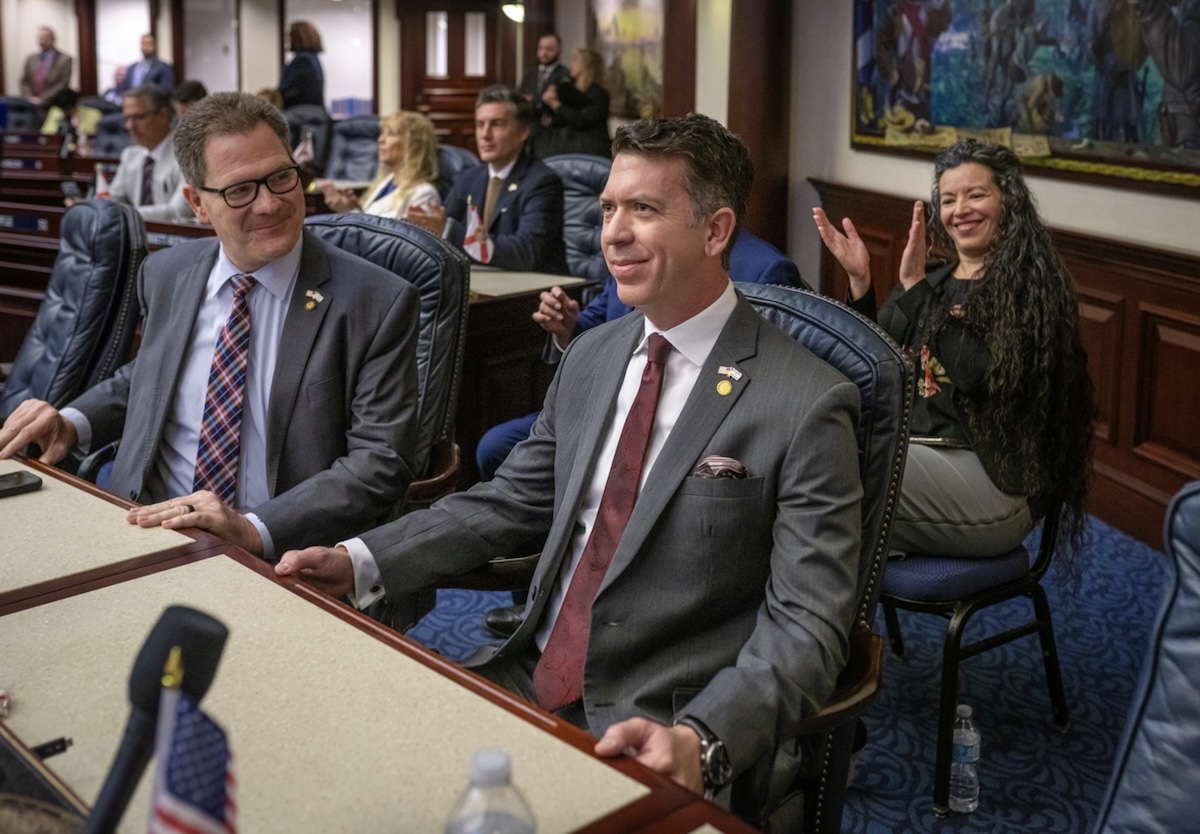
An effort to cheapen labor costs has resurfaced in the Florida Legislature after failing to gain the traction it needed in order to pass earlier this year.
Florida Republican Ryan Chamberlin, R-Belleview, on Friday refiled a bill (HB 221) that would allow employers to legally pay certain types of workers less than the state minimum wage of $14 an hour if the worker themselves signed a waiver opting out.
Under the proposal, to be considered during the 2026 state legislative session that begins in January, workers would be able to voluntarily accept pay below the minimum wage when employed in “work-study, internship, preapprenticeship, or other similar work-based learning opportunity.”
A similar proposal (HB 541) was filed by Chamberlin for consideration by the Republican-controlled Florida Legislature during the 2025 session, but failed to pass. Florida Senate leader Ben Albritton previously told reporters about the proposal, at the tail end of this year’s session, “I don’t love it, to tell you the truth.”
Florida’s minimum wage currently sits at $14 an hour for most employees — one of the highest minimum wage rates in the U.S. South — and is $10.98 for tipped workers. Under a constitutional amendment approved by Florida voters in 2020, Florida’s minimum wage is set to increase to $15 next September and rise with inflation after that. The federal minimum wage, last adjusted in 2009, still sits at a measly $7.25 per hour.
“The minimum wage in Florida as currently codified in our state constitution has become a weight on Florida’s economy and a hindrance to workers seeking to improve their personal finances,” Rep. Chamberlin said in a statement explaining his bill. “Wage controls are always enacted with good intentions but lead to a decrease in opportunities. We must seek alternative options like career development and continued education to ensure workers are receiving the skills needed to compete in today’s economy.”
Chamberlin’s 2025 proposal earned harsh rebuke earlier this year from organized labor, faith leaders and student activists, with critics arguing the bill would lead to opportunities for exploitation.
“It opens up the doors for businesses to exploit its workers, especially young people [and] low-income families, by unknowingly waiving their right to a fair wage,” argued Satin Fye, a “proud unionist” from Miami-Dade County, speaking to a Florida House committee back in April. “This bill is anti-worker, it is anti-family and it is anti-Florida,” she said.
Critics also argued that, if the proposal passed, employers would simply redefine entry-level jobs as “internships” in order to circumvent minimum wage requirements and pay more workers less. Current federal and state law already allows employers to pay certain workers less than minimum wage, including some workers with disabilities and youth workers for the first 90 days of employment. Independent contractors and freelancers are also not guaranteed a minimum wage under federal or state law.
“There are already multiple avenues under federal law that allow for lower minimum wages for student learners and apprentices,” Nina Mast, an economic analyst for the Economic Policy Institute, previously told Orlando Weekly. “But this Florida bill really massively expands those classifications,” she said, speaking of Chamberlin’s earlier bill.
“I think that the concern is that it creates an opportunity for exploitation and to essentially find a rationale to pay basically anyone the lower minimum wage by characterizing your work as work-based learning,” Mast added.
As of publication, no Senate version of Chamberlin’s bill has yet been filed for consideration during the 2026 session. In the 2025 legislative session, Republican Sen. Jonathan Martin sponsored the minimum wage proposal (SB 676) in the Florida Senate. Both chambers must approve of the proposal in order for the legislation to pass and head to the governor’s office for final approval.
Chamberlin’s bill, as filed for the 2026 session, does include certain guardrails. It would require that employers pay all eligible workers at least the federal minimum wage. It would also make an employee’s waiver to opt out of the state minimum wage valid for up to nine months only. After that, “the employee must be paid at or above the state minimum wage regardless of his or her position or job title with the employer,” the bill reads.
As Orlando Weekly has reported, Florida has a weak mechanism for actually enforcing the state minimum wage, and for holding employers accountable when or if they pay their employees less. A proposed amendment to Chamberlin’s 2025 bill filed by Orlando’s state Rep. Anna Eskamani sought to establish a stronger enforcement mechanism for Florida workers cheated of pay. That proposal, however, was rejected by her Republican colleagues earlier this year.
Florida’s 2026 legislative session, meanwhile, is scheduled to convene on Tuesday, Jan. 13, 2026 and last 60 days.
Subscribe to Orlando Weekly newsletters.
Follow us: Apple News | Google News | NewsBreak | Reddit | Instagram | Facebook | Bluesky | Or sign up for our RSS Feed
Related Stories
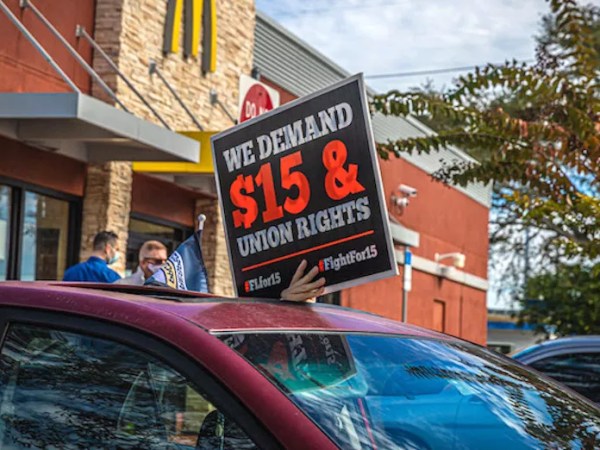
‘I don’t love it, to tell you the truth,’ Florida Senate president Ben Albritton told reporters
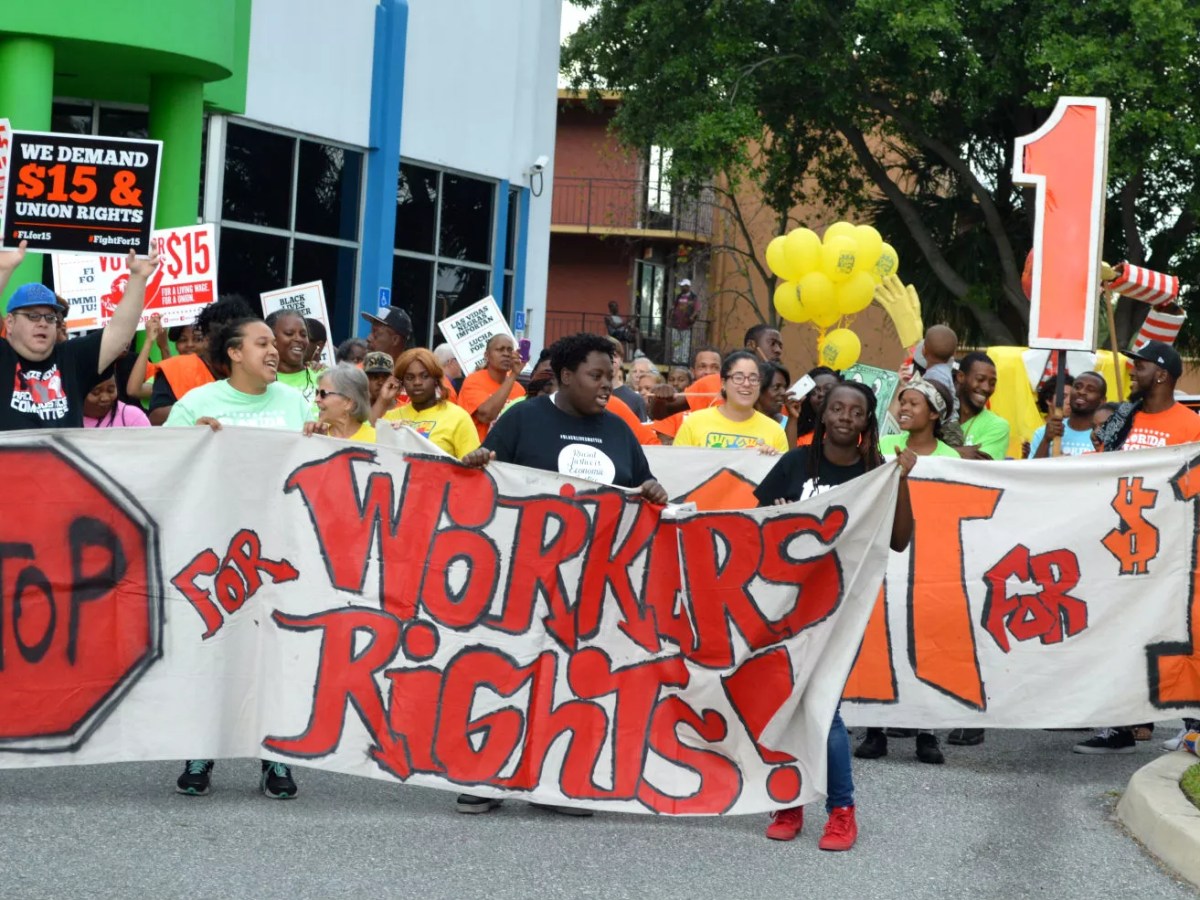
The proposal would in part erase local living wage laws in cities like Orlando, Tampa and Miami

Related