
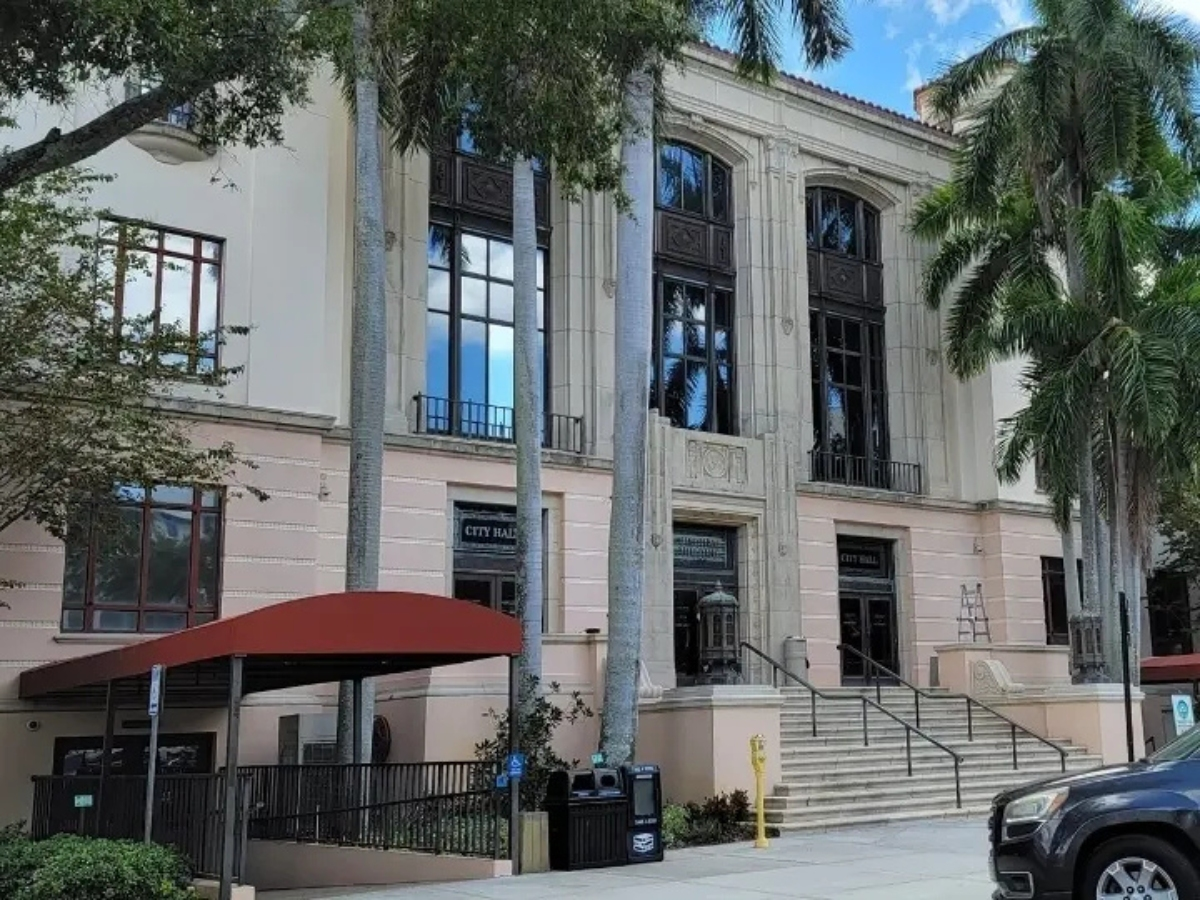
ST. PETERSBURG, FL — Mayor Ken Welch, in a social media post, called claims by Florida’s chief financial officer Blaise Ingoglia accusing St. Petersburg of overspending millions of dollars and overtaxing residents “political theater.”
Ingoglia, who oversees the state’s Department of Governmental Efficiency, said the city “is excessively, wastefully spending $49 million in the 2025-2026 General Fund Budget,” according to a news release from his office.
He also urged the city’s elected officials to listen to residents and provide property tax relief.
“Our methodology is showing that local governments should be cutting out reckless spending and lowering property taxes. Housing affordability is the number one issue for Floridians right now and local governments can provide property tax relief but instead, they are choosing to spend your excess property tax dollars on administrative bloat,” he said in the news release.
The Florida Agency of Fiscal Oversight found that St. Petersburg’s general fund budget increased by nearly $133 million between fiscal years 2019-2020, Ingoglia’s office said.
This increase of nearly 48 percent equates to $11,557 for each new person or $46,228 for each family of four that has moved to the city since then.
Ingoglia also questioned the number of employees hired during this time, during a Wednesday news conference in St. Petersburg.
“For 11,500 new people coming into the city … they added 371 new employees. That doesn’t make sense,” he said, according to WTSP.
He questioned why only 65 of those hires were first responders, St. Pete Catalyst reported.
“The rest were absolutely nothing but bureaucrats and administrative personnel,” Ingoglia said.
During the news conference, he also questioned the city spending more than $300,000 on sustainability initiatives and more than $1 million in salary increases in the mayor’s office, WUSF reported.
“It’s concerning because government just thinks that you’re an ATM. Zero fiscal constraint whatsoever, taking all the extra money that is available to them, never even thinking once of giving it back to the taxpayers,” he said.
The city could cut the millage rate by 1.34 mills without disrupting necessary services, Ingoglia’s office said. This would save residents who own a home worth $400,000 about $535 a year.
While city staff and officials are working to verify Ingoglia’s claims, Welch encouraged residents to do their own research. We encourage residents to view our property tax page for full, transparent information on how the City’s budget is allocated. St. Pete believes in transparency, data and facts, not political theater in support of a legislative agenda,” he wrote in a social media post.
Residents can learn more about how property taxes fund city services online here, Welch said.
Nearly 76 percent or $173.66 million of the fiscal year 2026 total tax revenue of $228.87 million was given to the St. Petersburg Police Department, according to the website. Another 12.5 percent or $28.7 million was allocated to St. Pete Fire Rescue.
“Recent national events remind us of the harm that false and politically motivated official statements can create,” Welch said. “The CFO’s claims are unsubstantiated and targeted to support the obvious political agenda of justifying property tax changes, regardless of the impacts on police and fire service delivery by local governments. We will continue to operate based on facts, not conjecture.”