
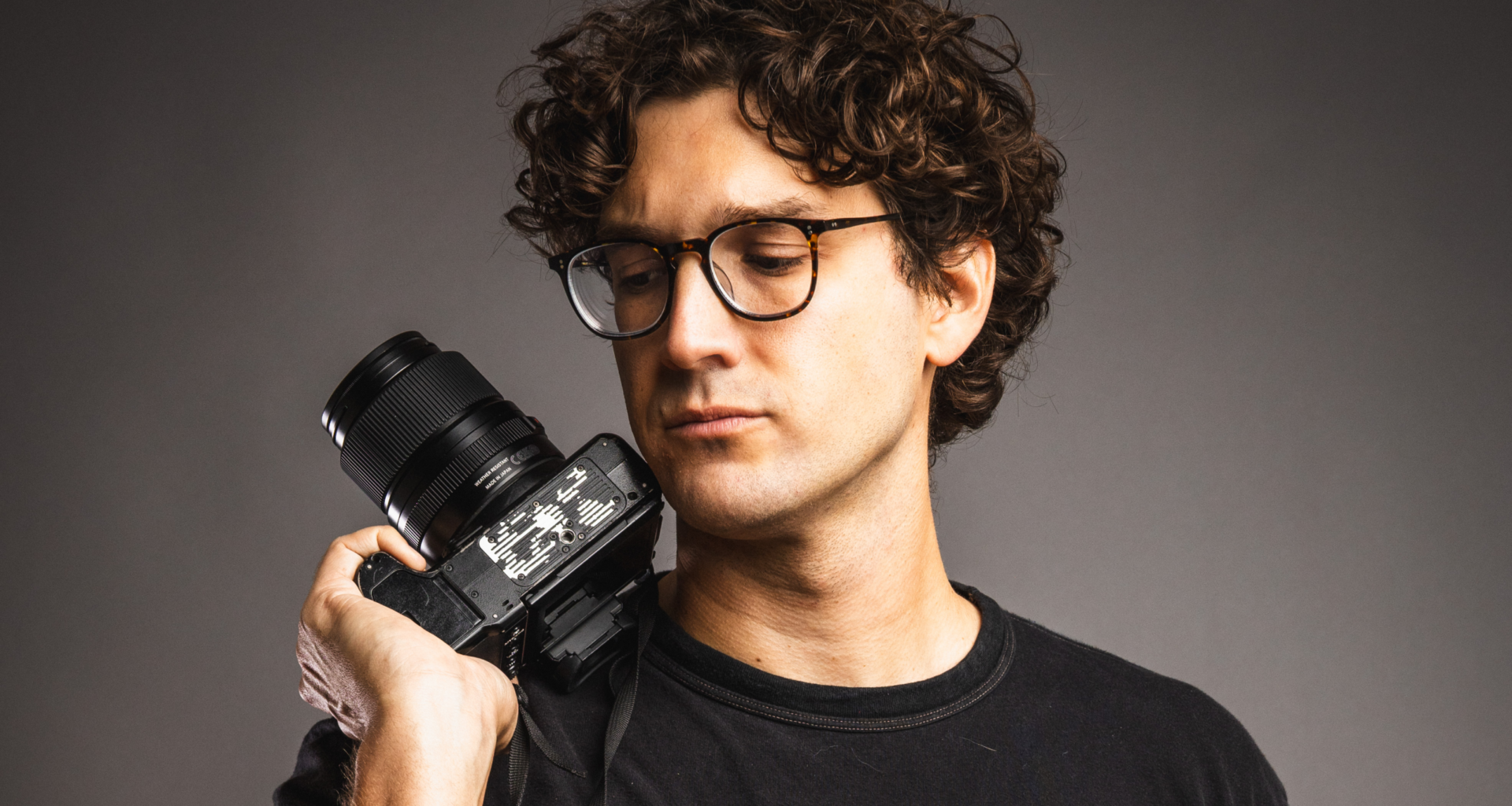
 Zack Wittman at Dave Decker Photography in Ybor City, Florida on Jan. 12, 2026. Credit: Dave Decker / Creative Loafing Tampa Bay
By the time Zack Wittman had the opportunity to photograph Tampa’s cigar factories, there were only 25 left.
Of those 25, only is operational. Named for its clock tower, El Reloj is the last remaining operational cigar factory in the United States.
As Ybor City’s 140th anniversary approached, Drew Newman commissioned Wittman to photograph the 25 remaining factories for the beautifully designed coffee table book, “Cigar City: The Legacy of Tampa’s Founding Industry,” now available for purchase at J.C. Newman Cigar Co. in Tampa and in St. Pete.
 Drew Newman commissioned Zack Wittman to photograph Tampa, Florida’s 25 remaining factories for the beautifully designed coffee table book, ‘Cigar City: The Legacy of Tampa’s Founding Industry.’ Credit: Zack Wittman
“It was kind of a dream scenario to be able to make a book in collaboration with such a huge piece of Tampa’s history,” Wittman told CL.
Wittman took 12,000 photographs—165 made it into the book. How does one create 12,000 photographs of only 25 buildings? “At the very beginning, I was so overwhelmed with how beautiful these factories are, that I was kind of just taking photos like crazy,” said Wittman.
The task was easy at J.C. Newman, because it’s still operating. “There’s so much movement and magic, hustle and bustle and history happening in front of your eyes,” Wittman explained.
Other interiors, however, proved more difficult. Wittman gives the Berriman-Morgan Cigar Factory, now St. Leo University’s Tampa Center, as an example.
“We went after hours so as not to disturb the students,” Wittman—whose work appears in the New York Times, Wall Street Journal, The Washington Post, and more— recalls. “And it was completely dead. There wasn’t a lot going on, and I had to shift my focus on what to photograph in there. Eventually, it became clear what I was looking for.”
Wittman was looking for pieces of history—a way to capture a moment even after it had passed.
He references the construction of a cigar factory by photographing its foundation, encased in glass. He revisits the signing of the Cuban embargo in 1962, which left Tampa cigar factories scrambling to find a new source of tobacco, through a photograph of the last bale of pre-Embargo Cuban tobacco in the United States at J.C. Newman Cigar Co.
Together with insight from Newman, Wittman’s photos show everything from cigar factory mosaics and master cigar rollers at work to the construction of new apartments and hotels in old cigar factory buildings, ghost murals, and beams of light across splintered floors. They call forth Ybor City’s unofficial color palette in rich shades of brown and brick red.
From April 9-July 19, 2026, shows Wittman’s Tampa cigar factory photos alongside original vintage photographs from The Burns Collection & Archive in “Cigars! Photography, Industry, and Identity in Ybor City.”
The exhibition, sponsored by J.C. Newman Cigar Company and Opal Fine Art Printing, is timed to coincide with the 140th anniversary of the first cigar rolled in Ybor City on April 13, 1885. In the meantime, Wittman continues to photograph for various media outlets in search of the next big thing.
Pitch in to help make the Tampa Bay Journalism Project a success.
Subscribe to Creative Loafing newsletters.
Follow us: Google News | NewsBreak | Reddit | Instagram | Facebook | BlueSky
This article appears in Jan. 29 – Feb. 04.
Related