
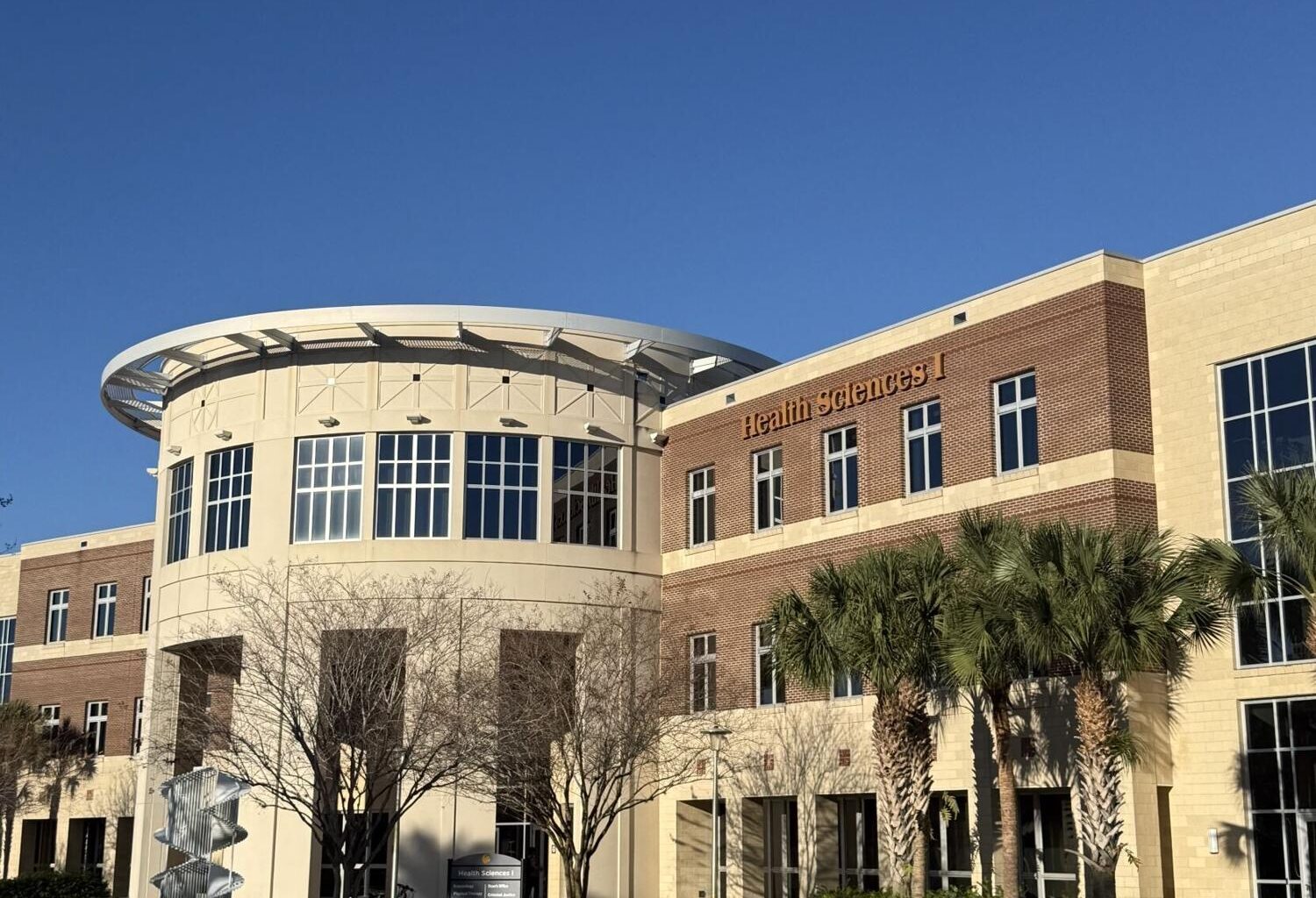

UCF College of Health Sciences building is home to students in the health field and those affected following the U.S. decision to withdrawal from the World Health Organization.
Izabella Siwik
The United States left the World Health Organization on Jan. 22, according to the U.S. Department of Health and Human Services. The action comes almost a year after President Donald Trump signed an executive order to finalize the process.
The WHO is a worldwide organization that ensures global health safety by working together with countries to set actions for critical health issues and updates.
The Trump administration said that the WHO failed to respond efficiently to the COVID-19 pandemic and that the United States will not be paying outstanding dues from 2024 and 2025. As a result, this decision stopped all U.S. funding to the WHO, causing withdrawals of American workers from the organization’s program.
Before its exit, the U.S. often paid more in dues and contributions than any other country, averaging in $111 million dues annually, according to the National Library of Medicine. Public health experts have warned that losing the United States’ involvement could risk disease surveillance, weaken outbreak responses and reduce the availability of critical health information.
Dr. Lynn Unruh, a retired professor with the School of Global Health Management and Informatics, collected COVID-19 data for the organization in 2020. She said that the WHO’s response to the pandemic was “reasonable and helpful.”
Individuals opposed to the United States’ decision, like Unruh, also warned that withdrawing from the WHO could isolate the country from critical global health information.
“WHO guidelines reflect the best research being conducted in member countries,” Unruh said, adding that disregarding them would be “detrimental to students’ education.”
While the federal government stated it will continue engage in global health efforts through direct partnerships with other countries, the United States will no longer adhere to WHO policies that influence international public health standards.
Some UCF students studying health-related fields said they are worried that the United States’ decision may have a different impact on health opportunities.
“I think global health decisions do affect the opportunities and resources available to Americans, especially in the future,” Audrey Adkins, a freshman molecular and cellular biology and health services major, said.
Others said that the decision’s impact on education has already affected students.
“I was not aware of the WHO until the COVID-19 outbreak,” Ayden Barnufsky, a junior biology major on a pre-health track, said. “My entire junior year of high school was very stressful because we had to transition to online classes, and I hate learning online.”
Barnufsky said global health decisions would continue to affect his future career plans, as he hopes to become a dentist.
“Viruses are nothing to play with and can be transmitted very easily,” Barnufsky said. “I hope if another major outbreak happens that there are ways to make sure people are safe without it affecting our everyday life.”
Barnufsky said that the withdrawal does not strongly concern him as a student, and that he believes in the university’s ability to respond to another possible outbreak.
“I believe the COVID-19 pandemic made us learn a lot of lessons of what not to do and what to do when there is an outbreak,” he said. “I would hope that if there is another outbreak that UCF would know how to handle it.”
Students outside of health fields also see potential risks for campus life and future careers. Kathryn McCallum, a sophomore hospitality major, said that she previously researched the WHO and associated it with managing outbreaks like COVID-19.
“If the WHO is efficient in handling outbreaks and we no longer have a source to handle emergencies like that, then this would affect both my education and career,” McCallum said. “It risks my health, my classmates’ health, and the safety of customers and coworkers in my future career.”
After the United States’ decision to leave the WHO, students in various fields and students at UCF are left questioning how global health crises in the future will be handled and how universities, like UCF, will play a role in protecting their campuses.