
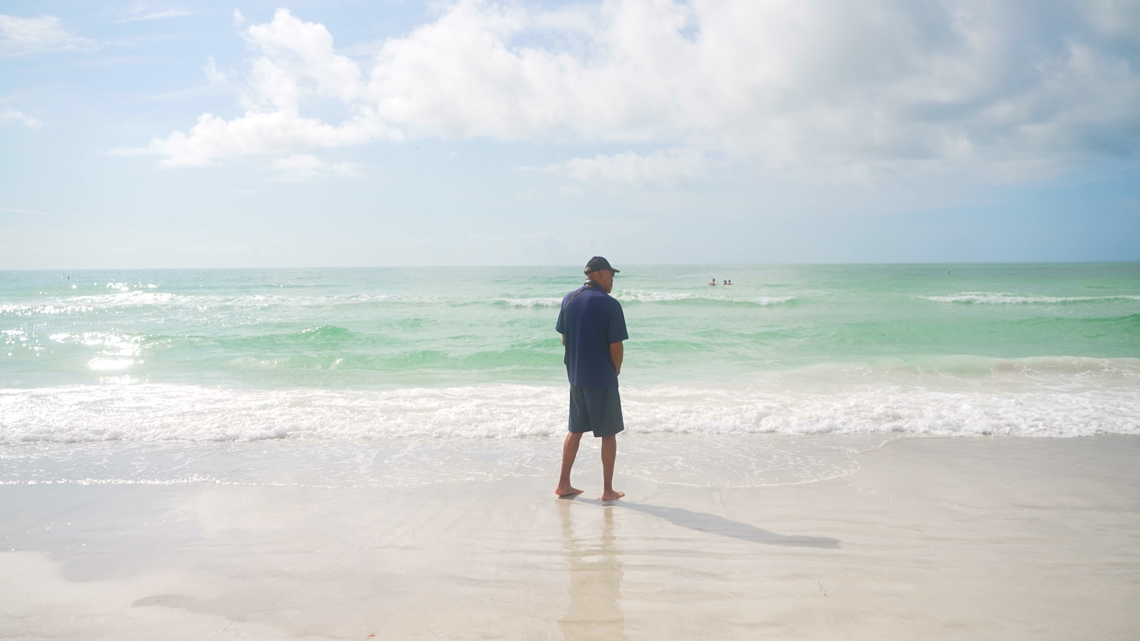
At 85 years old, Jetson Grimes of Sarasota has lived through aspects of Jim Crow many Americans are unaware of. For him, it went beyond separate water fountains and schools or even having to ride the back of the bus. He lived at a time when segregation spanned the seas.
“They just felt the water was theirs,” he said. “They made every effort not to let us…come to the beaches.”
Beach and pool segregation is a unique chapter of racial segregation in the United States that sets Florida apart.
“When you’re in school and you’re learning about…the modern civil rights era of the 1940s, 1950s, 1960s and early 1970s, you learn about places like Selma and Montgomery and Jackson and Atlanta. Maybe if you’re lucky in Florida, you’ll learn about St. Augustine,” Rui Farias, executive director of the St. Petersburg Museum of History, said. “Rarely do you hear about Tampa Bay, which is unfortunate.”
While the Tampa Bay area had sit-ins, connections to Freedom Riders and other forms of protest during the Civil Rights Movement, what distinguished this area and all of Florida were its beaches.
“You have miles of public beaches that is completely segregated from the African American population,” Farias said. “What we had that a lot of other places did not have were these wade-ins because of our location on the water.”
Like sit-ins to protest lunch counter segregation, groups of Black demonstrators would organize and go to whites-only beaches to protest racial restrictions.
Grimes participated in a series of wade-ins that started in October 1955 at Lido Beach in Sarasota County.
“I felt that if they don’t want me there, I’m going to be there,” he said.
Grimes was a teenager when Black people, denied the right to enjoy sun, sand and sea along the Sarasota shoreline, decided to wade in the water. Under the leadership of Sarasota NAACP President Neil Humphrey Sr., groups of residents and supporters organized weekly cavalcades to Lido Beach to test the limits of segregation.
“It was just a resistance that you can’t keep me from being a part of the…integration of the beaches,” he said. “I can remember one of the ladies came up to one of the individuals during that period and say, ‘If uh we build you a pool in your community, would you stop coming to the beach?’ And some of us say, ‘Well, yeah, if you build us a pool, maybe we’ll stop coming to the beach.’ So, we got our first pool, and the next day we went back to the beach. So, we killed two birds with one stone there.”
Newspapers and historical records show Sarasota initially responded to the wade-ins by suggesting a segregated beach for Black people on Longboat Key. However, opposition was so fierce, residents voted to incorporate in November of 1955 in part to avoid the beach question. The county commission later voted to ask the legislature for permission to sell all of its beaches to developers as Black residents continued to test the waters.
As wade-ins continued, police then restricted the main access point to Lido Beach altogether, acting on a new ordinance allowing them to close any racially segregated place Black people tried to visit.
“If you know anything about Jim Crow and segregation…I always believe all of that is a part of the DNA of this country,” Grimes said.
Today, a historical marker outlining the history of the local wade-ins stands at the entrance to Lido Beach.