
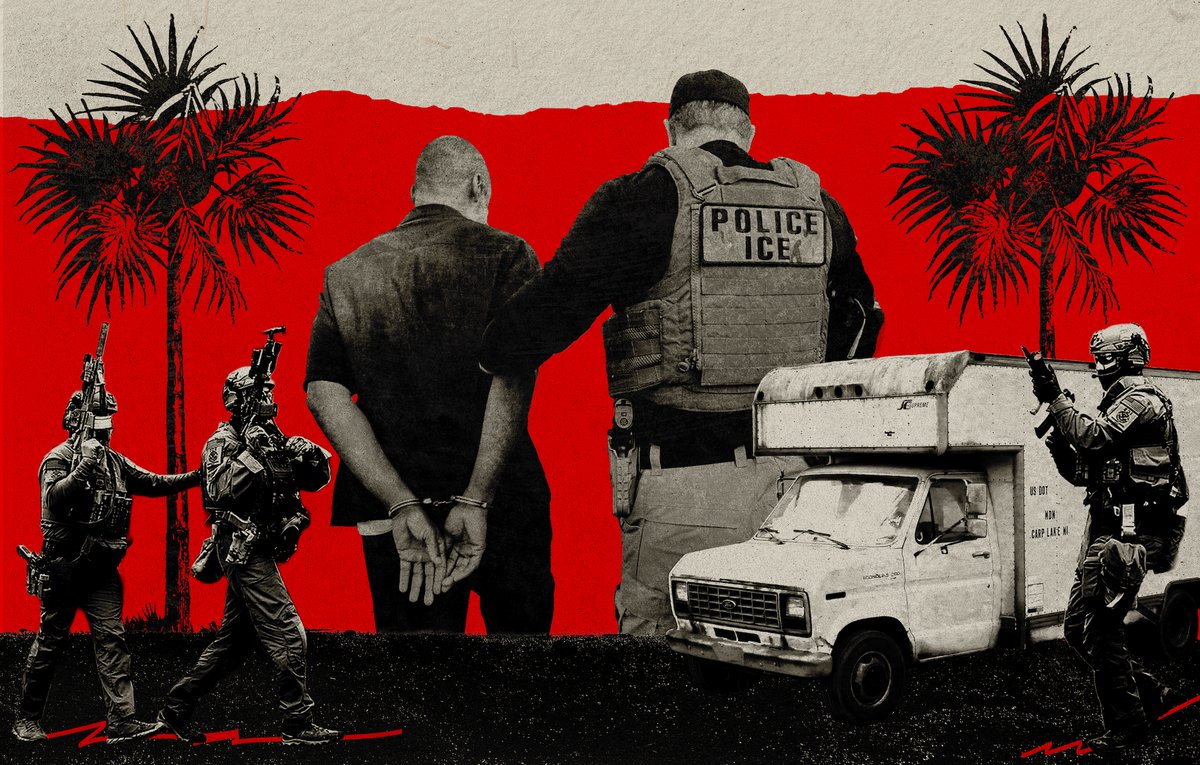
On August 12, three people were killed on the Florida Turnpike after their vehicle collided with a semi-truck whose driver was allegedly attempting to make an illegal U-turn. The incident has since become a rallying cause within the Trump Administration, as the driver, a twenty-eight-year-old commercial truck driver named Harjinder Singh, is not a U.S. citizen.
A little more than a week after the crash, Secretary of State Marco Rubio announced that the United States would stop issuing work visas for “foreign” commercial truck drivers, stating that these drivers were “endangering American lives and undercutting the livelihoods of American truckers.”
The administration had already been pushing to target commercial truck drivers as a part of immigration enforcement—during his first month in office, President Donald Trump signed a slew of immigration-related Executive Orders with the potential to disrupt cross-border trucking and the current workforce of non-U.S. citizen drivers. In April, one month after declaring English the official language of the United States, Trump signed another Executive Order stating that his administration would ensure “anyone behind the wheel of a commercial vehicle is properly qualified and proficient in English.”
On August 22, Department of Transportation (DOT) Secretary Sean Duffy said the fatal accident in Florida would not have happened if “states had followed the rules,” blaming “non-enforcement and radical immigration policies” in states like California and Washington. Duffy called the trucking industry a “lawless frontier” and promised that the Trump Administration would “use every tool” to hold states and “bad actors” accountable.
Following the accident, there was a rush to implement harsher enforcement on truckers, especially in Florida. On August 24, the Sheriff’s Office in the state’s northwestern Bay County arrested Roberto Carlos Vergara Cervantes for holding a New Jersey commercial driver’s license, which the state of Florida does not consider valid when issued to an undocumented immigrant. According to the official arrest report from the Bay County Sheriff’s Office shared with The Progressive, Cervantes was arrested for operating a motor vehicle without a valid license, a misdemeanor offense. The report also indicated that at the time of his arrest, Cervantes was living and employed in Bay County and was detained less than a mile from his listed home address.
Florida Attorney General James Uthmeier announced during a press conference the following day that Cervantes, who is not a U.S. citizen, would be detained by U.S. Immigration and Customs Enforcement (ICE) and deported. An ICE spokesperson told The Progressive via email that Cervantes was deported on October 7.
“We’re supporting our Agricultural Law Enforcement and state police to ramp up inspections at state entry-points for illegal aliens who may be operating large trucks using out-of-state driver’s licenses,” Uthmeier said in a statement on August 25. “If you’re here illegally or can’t speak English, you have no business operating large commercial vehicles on Florida’s roads.”
The news of Cervantes’s arrest immediately sparked panic on social media, spreading concern that anyone driving with an out-of-state license might be subject to arrest. In reality, only those with commercial driver’s licenses operating vehicles that are required to go through weigh stations would be affected. Still, a crackdown on immigrant truck drivers by targeting non-English speakers is a major enforcement development.
While an exact number of truckers arrested so far under this new initiative has not been released, a U.S. Border Patrol official said on September 26 that more than 6,000 immigrants had been arrested in Florida in the previous five months. Law enforcement in Florida has already begun operations to target non-English speaking truck drivers. There are twenty-three agricultural inspection stations on the highways going in and out of Florida, where a team of officers from the Office of Agricultural Law Enforcement inspect each vehicle. Now, these officers will also receive additional support from ICE and a massive state investment of funds to increase the number of lanes at weigh stations in order to screen drivers for English proficiency.
So far, Cervantes’s arrest has been the only one to make the news in Florida, following Singh’s. But other states are implementing similar crackdowns. Between September 22 and 25, ICE and Oklahoma Highway Patrol arrested ninety-one undocumented people who “were operating a commercial motor vehicle with commercial driver licenses,” according to a statement provided by the Department of Homeland Security.
The arrests were part of ICE’s 287(g) program, which allows local law enforcement to participate and carry out immigration enforcement under the federal agency.
“ICE’s 287(g) program clearly demonstrates how federal and local law enforcement agencies can work together to make America safe again,” said Madison Sheahan, ICE Deputy Director, in a statement regarding the Oklahoma arrests. “Illegal aliens have no business operating eighteen-wheelers on America’s highways . . . . We encourage more state and local law enforcement to sign 287(g) agreements to help remove public safety threats and receive reimbursement funds available to our law enforcement partners.”
In early September, U.S. Senator Ashley Moody, Republican of Florida, introduced the Safer Truckers Act of 2025. If passed, this legislation would “require that commercial driver’s licenses be restricted to United States citizens, lawful permanent residents, and individuals authorized by U.S. Citizenship and Immigration Services to engage in employment in the United States that includes driving a commercial motor vehicle, and for other purposes.”
“If you’re a commercial truck driver in America, being able to competently read the road signs in English isn’t optional . . . . It’s the job,” Moody told Fox News. Moody’s office did not return a request for comment from The Progressive.
If Moody’s bill passes, Texas-based immigration lawyer Alfredo Lozano says skilled drivers would not be able to enter the United States. “These cross-border drivers come here with a B1/B2 Visa, and the Safer Truckers Act would not allow them to operate a commercial vehicle because only legal permanent residents and U.S. citizens would be allowed and required to have a CDL [commercial driver’s license],” he tells The Progressive.
While advocates for immigrants have criticized this legislation, the Florida Trucking Association endorsed Moody’s bill. At the national level, the American Trucking Association issued a statement in support of Duffy’s enforcement plans for English language proficiency. Even with this professional buy-in, Moody’s bill could still be detrimental to trucking.
“Using a hammer to swat a fly is unnecessary. This is what the Safers Truckers Act will do to the trucking industry,” Lozano says. “It is intended to punish trucking companies that rely on international drivers from Mexico and Canada to deliver products imported from those countries.”
According to data from 2022, 30 percent of semi-truck accidents result in injury, and 3 percent result in fatalities. Under the Biden Administration, the DOT pushed to increase road safety after roadway deaths in 2021 reached the highest number since 2005. But in all of the data produced, there was no documented correlation between non-citizen or foreign-born truck drivers and increased fatalities.
It’s still unclear how much of Florida’s law enforcement resources are being funneled towards stopping truck drivers to check their proficiency in English. The federal guidance on this test includes an interview and a highway sign recognition test. But even the mere threat of enforcement can have a chilling effect on truckers fearing arrest and deportation, regardless of the documentation or licenses they possess.
“Targeting hard-working truck drivers is deeply detrimental, not only to the individuals who keep our shelves stocked and our economy moving, but also to Florida’s role as a hub for interstate commerce,” Adriana Rivera, communications director for the Florida Immigrant Coalition, tells The Progressive. “Truckers are the backbone of supply chains, ensuring that food, medicine, and goods reach families and businesses on time.”
There’s no evidence, Rivera says, that this crackdown on non-citizen truckers is helping to employ more truckers with U.S. citizenship or to keep roadways safer.
“Instead of creating unnecessary barriers, Florida should be making it easier for drivers to do their jobs by honoring valid driver’s licenses from other states where drivers have already met rigorous training and safety requirements,” Rivera says. “Respecting these qualifications strengthens commerce, reduces red tape, and shows that we value the essential workers who literally keep our state and our country running.”