
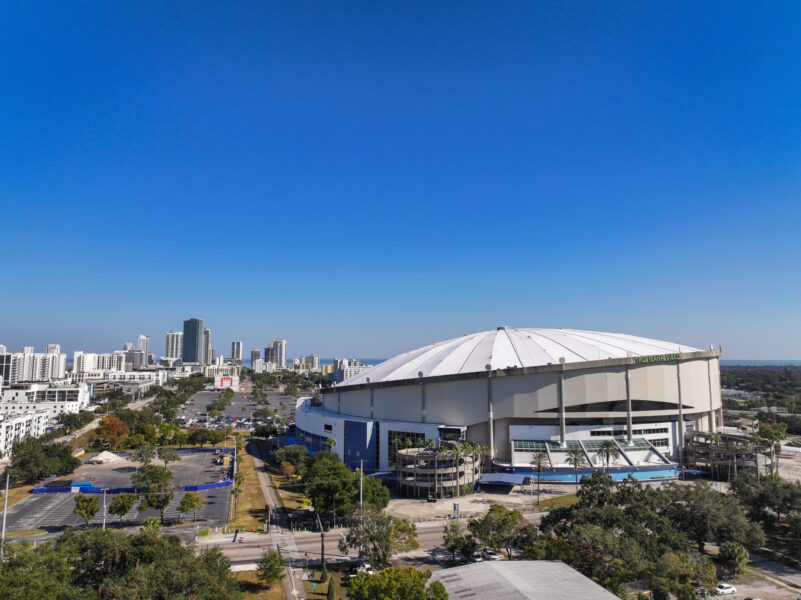
St. Petersburg City Council members, in a 6-2 vote, approved a resolution Thursday asking Mayor Ken Welch to “pause any action” related to selecting a Historic Gas Plant District redevelopment proposal.
The resolution is nonbinding, and Welch previously told the Catalyst that he would not pause an already long-delayed generational project, regardless of the council’s wishes. Nine development teams submitted proposals to reimagine roughly 86 acres, currently home to Tropicana Field, by the Tuesday deadline.
Councilmember Brandi Gabbard advocated for the Urban Land Institute (ULI) to complete an extensive study in October, two weeks after the city received a $6.8 billion unsolicited bid from ARK Investment Management, Ellison Development and Horus Construction. She introduced Thursday’s resolution and believes the city is “flying without a radar.”
“We are not just voting on a resolution,” Gabbard said. “We are deciding how history will remember our stewardship for St. Petersburg’s most valuable remaining asset, the Historic Gas Plant site.”
Gabbard, who plans to run against Welch this year, said city officials are “too close” to the project and need independent experts to create a comprehensive planning framework. The ULI could, potentially, complete the study in six months, she added.
The previously estimated $135,000 analysis is a “small investment for a massive return,” Gabbard said. “It would allow us to negotiate from a position of strength, not desperation.”
Gabbard said previous requests for a committee to discuss the study “went unanswered,” while an unsolicited redevelopment proposal dictated the administration’s pace. She wants to “catch our breath and consider the residents we serve.”
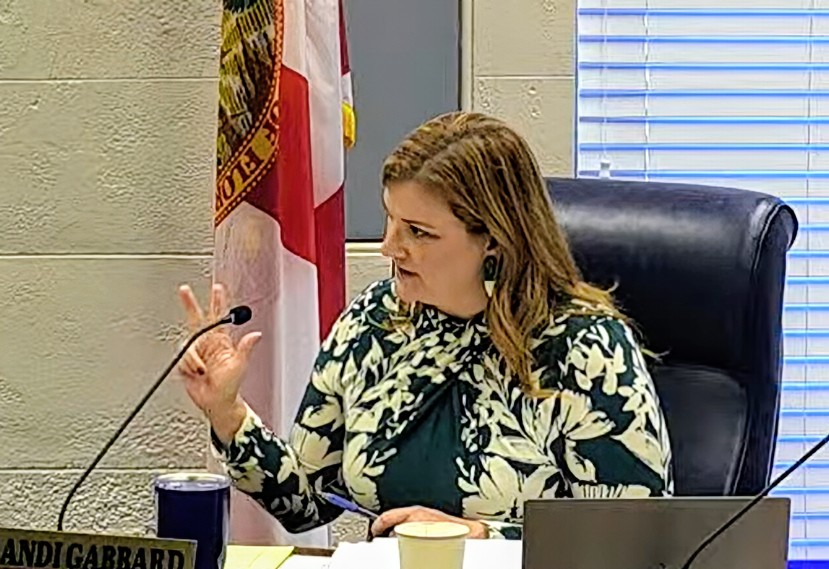
Councilmember Brandi Gabbard said she was told that the study could take six months. Image: Screengrab.
Some residents and organizations, most of whom also opposed the previous Tampa Bay Rays and Hines deal, would prefer the city to sell individual parcels of land and maximize financial returns. Councilmember Deborah Figgs-Sanders called that “gentrification, block-by-block,” of an area that was once home to a thriving African-American community.
“Stop playing with my people,” Figg-Sanders said. “Every time I hear someone wants to tell us what’s best for us, as though the words of the descendants did not mean anything, I quiver. Stop playing with the history of what the Gas Plant means to the City of St. Petersburg.
“They didn’t take it from us parcel by parcel.”
Welch reiterated his position on the matter in a letter sent to the council Wednesday. He noted that members approved development agreements with the Tampa Bay Rays and Hines “without the duplicative exercise now being suggested.”
The letter highlighted multiple planning and visioning efforts that began in 2016, and that two community redevelopment area plans also guide the redevelopment process and reflect evolving needs. “This project is about people, history and long-standing promises – not simply a stadium site or a real estate transaction,” Welch wrote.
“Pausing all progress for yet another planning exercise, after proposals have been submitted, risks repeating a familiar and painful pattern for this community: Plans discussed, promises acknowledged and action deferred,” Welch added.
“St. Pete, including the families and descendants impacted by the original displacement, has already waited generations for meaningful progress. I do not believe further inaction serves them or the city.”
Councilmember Richie Floyd, who is “very sympathetic” to Welch’s position, expressed hope for common ground. He suggested that previous work could streamline the new study while allowing the proposal selection process to simultaneously progress.
Floyd also noted that he would “evaluate whatever gets in front of me, no matter how it gets there.” Figgs-Sanders guaranteed that the selected development team would acquiesce to the council’s feedback.
Councilmember Gina Driscoll said there were several “brilliant ideas” in the submitted proposals, and she would “hate to hinder” the process. However, she also believes officials should “take our time,” and that the council should play a more prominent role in setting the generational project’s scope.
“When I say pause, it is not to delay progress into perpetuity,” Gabbard explained. “It is to have this moment for a cohesive conversation between the administration and the city council. And at that point, chart a path forward that will … guide the administration through their selection process, if they so choose.”
Councilmember Copley Gerdes noted that everybody on the dais, regardless of their stance on the resolution, “cares deeply about what happens to this property.” Many city officials have spent hundreds, if not thousands, of hours discussing the site’s future.
However, the council and administration have separate roles, and Gerdes said the resolution intertwines those “in a way that I don’t find comfortable.” The long-awaited project has momentum, and he doesn’t want to “set that aside.”
Council Chair Lisset Hanewicz felt the Rays and Hines deal was rushed, and said planning is a core tenet of government. She reiterated that previous plans lacked a new fire station to serve a massive development.
Hanewicz wants a “little bit broader road map” for the area than what some of her colleagues likely prefer. She also stressed that the resolution vote is not indicative of future support for a selected proposal.
Gabbard, Hanewicz, Driscoll, Floyd and Councilmembers Mike Harting and Corey Givens Jr. voted in favor of the non-binding resolution. Figgs-Sanders and Gerdes dissented.