
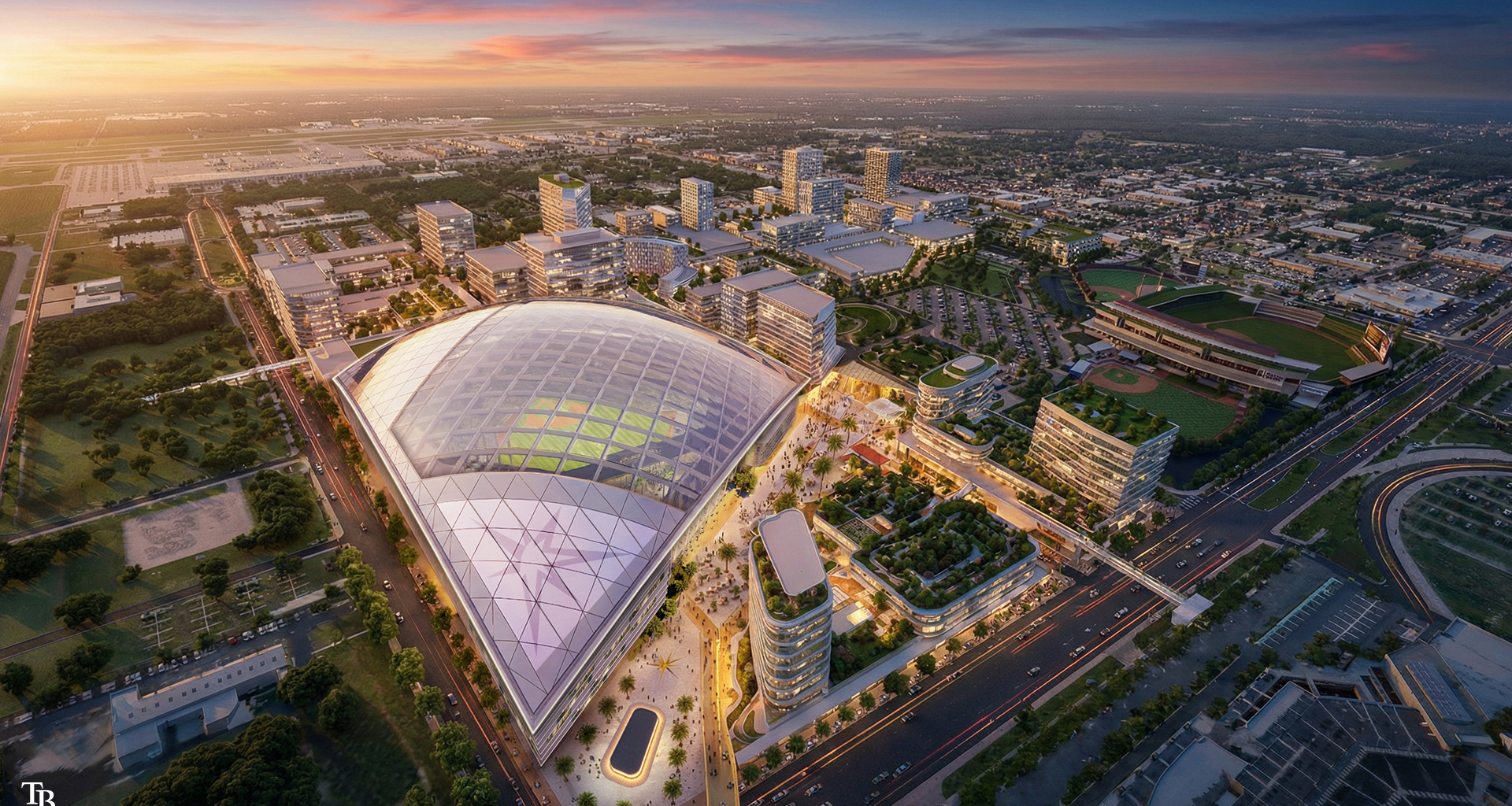
The Tampa Bay Rays released initial renderings of a proposed Major League Baseball ballpark and surrounding mixed-use district Thursday at Hillsborough College’s Dale Mabry campus, offering the first public look at a project the team hopes will anchor its long-term future in Tampa.
The images present an early, conceptual vision for the site. Team officials emphasized that the designs will continue to evolve as studies progress and as feedback is gathered from local leaders, students, nearby neighborhoods and the broader Tampa Bay community.
Patrick Zalupski, managing partner of the Rays, framed the moment as a milestone reached quickly after the franchise’s recent ownership transition. He pointed to Hillsborough County’s unanimous vote this week to begin negotiations on ballpark funding as a signal of regional commitment to keeping Major League Baseball in Tampa Bay.
Ken Babby, the team’s chief executive officer, said the organization is entering the next phase of planning with momentum, and intends for the project to deliver benefits well beyond baseball. He described the concept as a district that would serve fans, Hillsborough College and surrounding neighborhoods while contributing to regional growth. Babby also stressed that community input will play a central role as the design advances, with public listening sessions planned across the county in the coming weeks.
The proposed ballpark would be developed through a partnership with Hillsborough College, whose Board of Trustees has already approved a memorandum of understanding with the Rays to redevelop the Dale Mabry campus. The college enrolls more than 45,000 students, and the partnership is designed to modernize campus facilities while expanding workforce development programs, curriculum offerings and internship opportunities connected to the district’s development and ongoing operations.
 On the public side, the Hillsborough County Commission voted unanimously Wednesday to begin negotiations with the Rays on a funding framework for the ballpark itself. The team envisions a public-private partnership in which construction costs are shared among the Rays, Hillsborough County and the City of Tampa. By contrast, the broader mixed-use development surrounding the stadium would be entirely privately financed.
According to a recent independent economic analysis commissioned for the project, the full build-out of the district could generate an estimated $34 billion in total economic impact over time. The study projects 11,900 new permanent jobs attributed directly to the development, and roughly 10 million annual visitors to the campus and surrounding area once the district is complete, a figure comparable to attendance at a major U.S. theme park.
The scale of the proposal is reflected in the roster of partners already engaged. The Rays and Hillsborough College are working with national design, engineering and development firms, along with legal, financial and public affairs advisors. Regional sports organizations and civic stakeholders have also been consulted as planning moves forward.
While the renderings highlight a modern ballpark integrated into a dense, walkable district, team officials cautioned that specifics around design, phasing and financing remain subject to negotiation and public input. The upcoming community engagement sessions are intended to give residents, students, faculty and business owners an opportunity to review concepts, ask questions and influence the final outcome.
The Rays have launched a project website where fans can register for updates and place a refundable $19.98 deposit for early access to seating in the proposed new stadium, a symbolic nod to the franchise’s inaugural 1998 season. Additional details on the engagement sessions are expected to be announced soon.
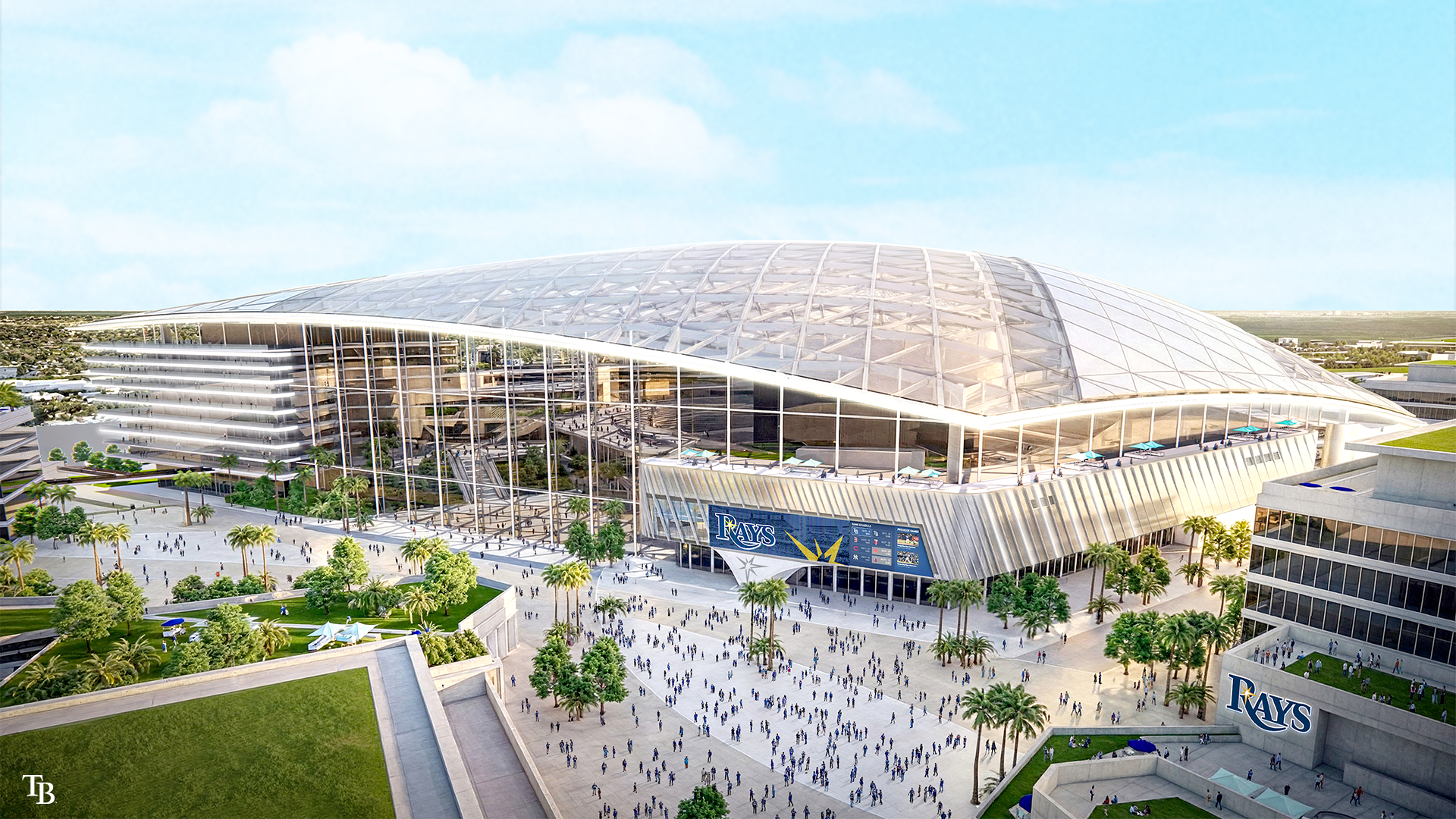
Stadium rendering provided.