
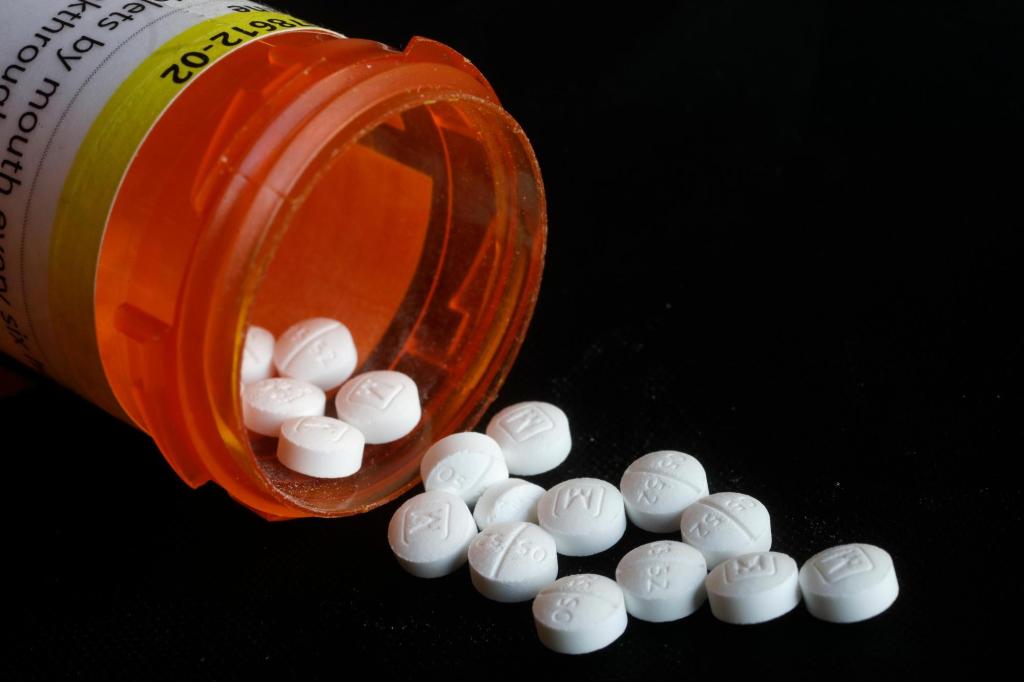
TALLAHASSEE — A statewide advisory board set up to oversee how Florida spends millions of dollars from a nationwide opioid settlement deal was never told that Gov. Ron DeSantis’ office directed more than $4 million from that fund to a media blitz designed to defeat a 2024 ballot initiative to legalize marijuana.
Sixteen months after members raised questions, they still have no answers from the state about the process that shifted the money into the coffers of a Republican-aligned marketing firm. The firm ran ads warning of the dangers of marijuana during the weeks leading up to the vote on the Amendment 3, which won approval from 56% of Florida voters but failed to reach the 60% threshold needed to become law.
“I thought they were going to bring something back but they haven’t,” said Lee Constantine, a Seminole County Commissioner and former state lawmaker who sits on the Statewide Council on Opioid Abatement. “When I ask questions I expect an answer — and I have never gotten one.”
Constantine said he does not think opioid settlement money should have been spent on anti-marijuana advertising, and he expected more discussion among his fellow council members.
“I believe the dollars we get should be spent on treatment and helping those in really dire circumstances,” he said. “All the dollars we get should be on treatment and abatement.”
The ads in question were ordered by the state’s Department of Children and Families and coincided with a slew of anti-marijuana TV and online ads sponsored by other state agencies including the Agency for Health Care Administration, the Florida Department of Education and the Florida Department of Health.
The state ultimately spent more than $35 million to defeat Amendment 3, sparking outrage from those who said state money intended to help the public should not be used to influence an election.
The council was set up in 2023 to oversee the $3 billion Florida is to receive over 18 years as part of court settlements with opioid manufacturers, pharmacies and distributors. The state has spent at least $446 million of that since the settlement agreements were approved.
The agreements say the money is to be used primarily to help eradicate the opioid crisis through prevention, education, treatment and recovery efforts, but they also say it can be spent to combat “substance abuse” in general.
The council is charged by state law to make recommendations for, and review the spending, of those funds. Its members are appointed by the governor, attorney general, legislative leaders, DCF’s top executive and the associations representing cities and counties.
A state agency must tell the council each year “how it intends to use settlement funds,” Florida law says.
A video recording of the council’s Oct. 30, 2024 meeting shows Constantine discussing news reports from earlier that week stating that $4 million in opioid funds had gone to anti-pot ads with Seminole County Sheriff Dennis Lemma, who was appointed by the attorney general to chair the council.
Constantine questioned the expenditure at that meeting and asked for more information. And he said there needs to be more oversight of how those dollars are spent.
Lemma said during the meeting that he had not received any information from DCF about the expenditure.
“That is not something I have any direct knowledge of that has come to our council,” Lemma said. “Actually, Amendment 3 has not been discussed by any of us at all.”
But he added that the settlement rules allowed some money to be spent for education, awareness and prevention so that could give the state some wiggle room on how to appropriate opioid dollars. That year the trust had earmarked $18 million for primary prevention and media campaigns “allowing for some openness to interpretation of what those are,” he said.
In an email to the Orlando Sentinel on Friday, a spokesman for Lemma said, “Any inquiries regarding the expenditures of these funds should be routed through DCF or the Florida Legislature.”
DCF did not respond to questions this week about spending the opioid settlement money on ads to defeat Amendment 3.
The agency ultimately paid Strategic Digital Services $4.49 million “to develop an impactful advertising campaign aimed at educating Floridian families and youth about the dangers of marijuana, opioid, and drug use,” according to public records.
None of the other council members participated in the discussion, Constantine said. And they have not brought it up since.
Amy Ronshausen, who also serves on the council, was among those who did not address the issue in that 2024 meeting, but months later found herself embroiled in the Hope Florida scandal that also involved state money spent to defeat the marijuana amendment.
Ronshausen is the CEO of Drug Free America Foundation, executive director of the Save Our Society From Drugs PAC and a “Florida hero” feted by Gov. Ron DeSantis and First Lady Casey DeSantis for her anti-drug work.
Three weeks before the opioid council met in October, 2024, the Hope Florida Foundation received $10 million from a Medicaid settlement, which it gave to two political action committees, one of them Ronshausen’s. Those PACS in turn quickly sent much of the money to a third committee set up by James Uthmeier, now the DeSantis-appointed attorney general but then the governor’s chief of staff, to defeat Amendment 3.
That donation was at the heart of hearings that roiled the Legislature last year and led to a criminal investigation by a Leon County Grand Jury that is still pending. Ronshausen was seen entering the courthouse in October, when hearings began. She has claimed she has done nothing illegal.
Constantine, who served in the Legislature from 1992 to 2010, said he hoped lawmakers will look into DCF’S use of the opioid settlement dollars for political ads, just as it did last year with Hope Florida.