
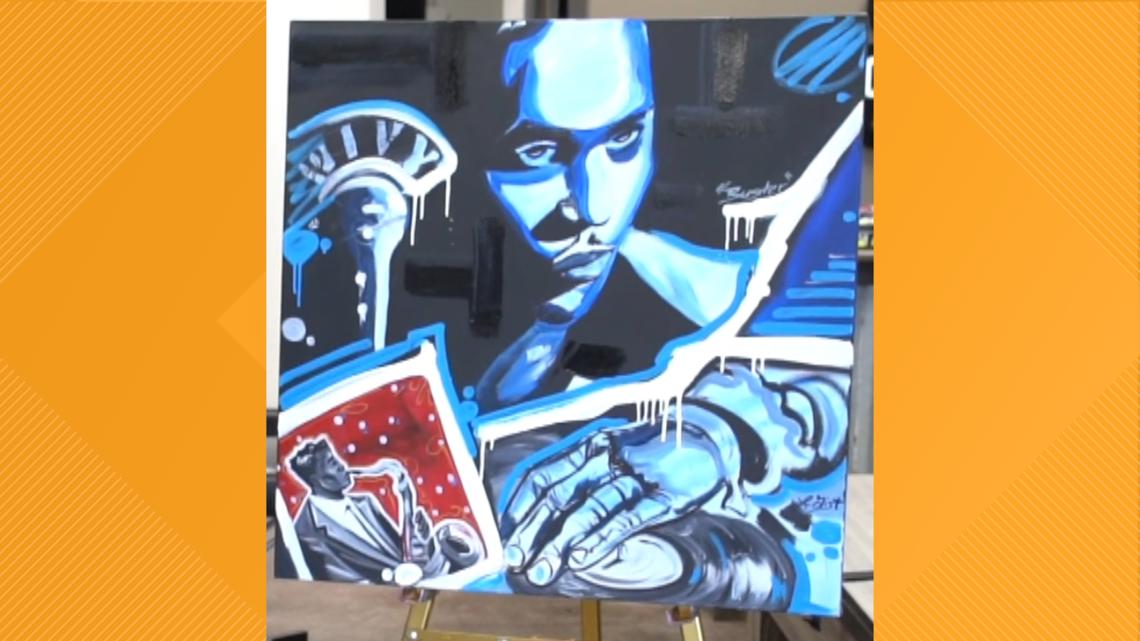
William Anthony “Buster” Ford helped shape Jacksonville’s Eastside through business, leadership, and quiet advocacy during segregation.
JACKSONVILLE, Fla. — In segregation-era Jacksonville, the Eastside stood as a self-sustaining Black community built and protected by leaders working quietly behind the scenes. One of those leaders was William Anthony “Buster” Ford.
Good Morning Jacksonville sat with Ford’s daughter, Elaine Ford Jackson, at Buster Ford Checkerboard Park along A. Philip Randolph Boulevard, to reflect on her father’s legacy,
Elaine described an Eastside rooted in pride, collaboration, and determination.
“The community needed to be upgraded… the streets, the sidewalks.”
Those changes, she says, didn’t come from official channels alone. Instead, they were driven by an informal coalition of men who believed progress was possible.
“The group of men who said, ‘Why not?’—they made it happen,” Jackson said. “My dad was a big part of that group.”
She smiles when she speaks about her father. “I was his sweetheart,” she said, laughing softly as memories return of a time when ‘The Avenue’ was alive with energy.
“It was a beautiful, bustling Black community,” she said.
In 1956, Ford opened a confectionery on the Eastside. The business later expanded into a restaurant where he sold his now-famous Buster Burgers.
“The back of the confectionery became Buster Ford’s Bird Land Restaurant,” Elaine explained.
Bird Land was a Chitlin’ Circuit-era juke joint that welcomed Black musicians during a time when few venues would. The space also served a vital civic role, doubling as a polling station on election days.
As the business grew, a hotel was added—providing a rare and much-needed safe place for Black travelers to stay overnight in the segregated South.
Elaine says her father was also a trusted problem-solver within the community.
“People could come to Daddy very quietly and say, ‘You know, so-and-so,’” she recalled. “Next thing you know, he would call someone in the neighborhood or downtown and say, ‘Hey, we have a problem.’”
And, she says, the problem would get solved.
Elaine speaks of her father’s accomplishments with pride: a successful business owner, the first Black disc jockey at WIVY radio station, and a trailblazer in local law enforcement.
“My dad became one of the first detective sergeants in Duval County’s history, along with Willie Westin,” she said.
Buster Ford remains a prominent figure in the history of Jacksonville’s Eastside—a community that once thrived, later endured abandonment, and is now rebounding. Today, the Eastside holds tightly to the remnants of what once was, while looking ahead to what it can become.
To learn more about today’s featured artist, Lashion Gist, visit his website.
Next Monday on Vivid Hues, we’ll take you inside a historic church where generations of Eastsiders have gathered—among them civil rights icons A.L. Lewis and A. Philip Randolph.