
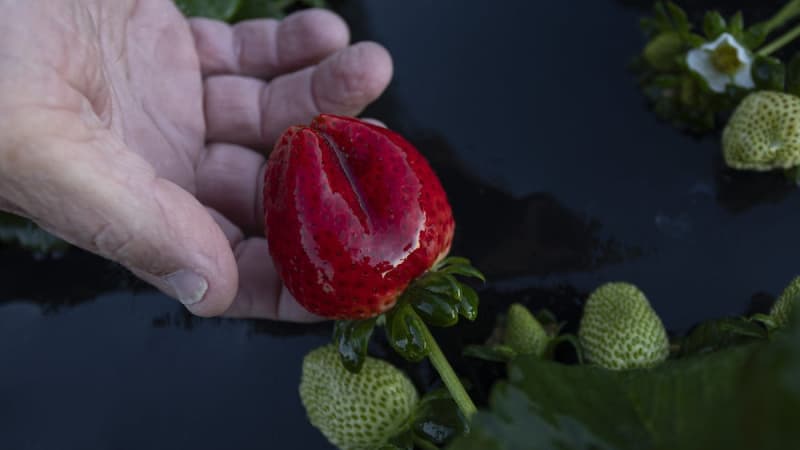
A few weeks ago, I bought a crate of Florida strawberries. I am not one for hyperbole — OK, yes I am — but I mean this: They were the best, biggest, sweetest berries I’d ever consumed. I’m talking about an unsightly, juice-down-the-chin situation, a wanton display of crimson glee. I housed a pound of those babies like a castaway who’d spent a year eating raw guppies.
The next day in a group chat, unprompted, a friend shared: “This year’s strawberries are insanely good. Perfectly sweet. Go get them!!!”
Had we all been suggestively sold by Big Strawberry, or was something scientific afoot?
Tampa Bay is in the peak of strawberry season, a time when our region’s signature fruit tends to shine. The Florida Strawberry Festival opens this month, serving up a plethora of shortcakes and milkshakes.
Still, these berries felt suspiciously transcendent. I tracked down Vance Whitaker, a strawberry breeder with the University of Florida’s Gulf Coast Research and Education Center in Wimauma. I pitched the academic thesis of “strawberry taste mmm?”
Not imagined, he confirmed.
“I’ve gotten a lot of different comments from people this year who know what I do for a living,” said Whitaker, 45. “I don’t think you and your friends and other people are wrong.”
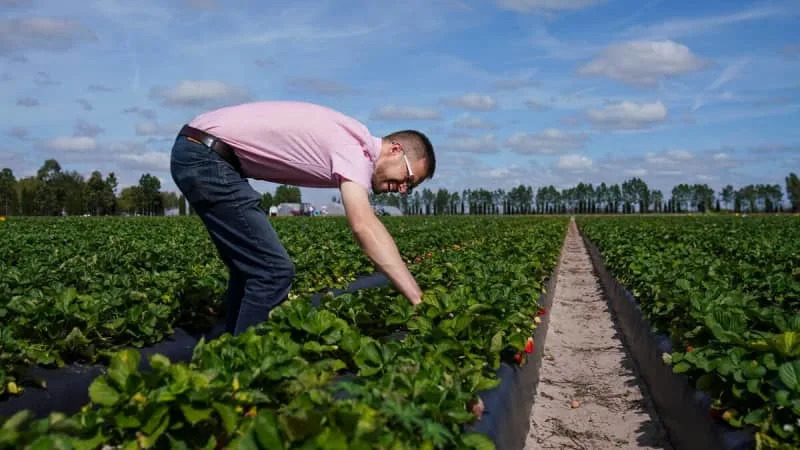
A couple factors create exemplary berries, he explained. Whitaker and his team have spent years nurturing two new standout breeds: Encore and Ember. Both were on the commercial market last year in small numbers, but this year, Whitaker said they’re being grown on more than half of the strawberry acreage in Tampa Bay. Encore and Ember have all the lascivious characteristics described in the chin drool paragraph, plus they’re more resistant to a fungal disease that has plagued growers.
Weather is an even bigger flavor lever. Strawberry yumminess increases with a combination of sunny days and cool nights, which we had plenty of until recent freezing conditions.
Think of it this way: The strawberry’s leaves are the machine that produce the fruit. The sun powers the machine through photosynthesis. And on cold nights, strawberries don’t burn off as much energy. They store it to do other things — primarily, get delicious. Strawberries are luxuriant divas.
How might average shoppers identify Embers and Encores in the grocery store? Well, we probably can’t, Whitaker said. He can, but that’s a function of being a strawberry expert. Unlike apples, strawberries aren’t sold by variety. Breeds ebb and flow in quality through the season, and a single grower produces multiple varieties at any given time.
Whitaker suggests looking for the Fresh From Florida logo, branding from the Florida Department of Agriculture and Consumer Services. If berries bear that label, “there’s a super high chance” they are the new varieties.
Color is the best predictor of flavor, he said, not size. Some fruits and veggies taste better when they’re small. Not the case with strawberries, which can be fist-sized and sweeter than a sack of Splenda.
I wondered, does Whitaker get sick of strawberries? On the contrary, he loves them. They were a formative fruit for him as a child in small-town North Carolina where he visited U-pick farms. His own kids, he joked, are thankful he’s not a Brussels sprouts breeder.
However, a professional must exercise restraint.
“During the season, I basically refrain from eating them at home,” he said. “I have to eat so many strawberries in the field, I cannot afford to get tired of strawberries.”
Lucky for the rest of us, we can.
Get Stephanie’s newsletter
For weekly bonus content and a look inside columns by Stephanie Hayes, sign up for the free Stephinitely newsletter.