
When young people in foster care turn 18, many are forced to turn to the streets. This can have tragic outcomes.
A young man named Walter Scott III took his own life.
“It’s hard to see past those really difficult times,” Spring Zone St. Pete founder and executive director Christopher Warren said. “It didn’t have to happen in the first place.”
The nonprofit aims to empower local youth and families through various programs.
He hopes the Ujima Transitional Housing Initiative can make a difference. The project relies on the state’s Yes in God’s Backyard Act – which allows affordable homes to be built on church property. St. Petersburg became the first city in Florida to adopt the law in December.
Warren intends to build 10-unit transitional housing developments at two different St. Petersburg-based locations to start – Mt. Zion Primitive Baptist Church and Rock of Jesus Missionary Baptist Church.
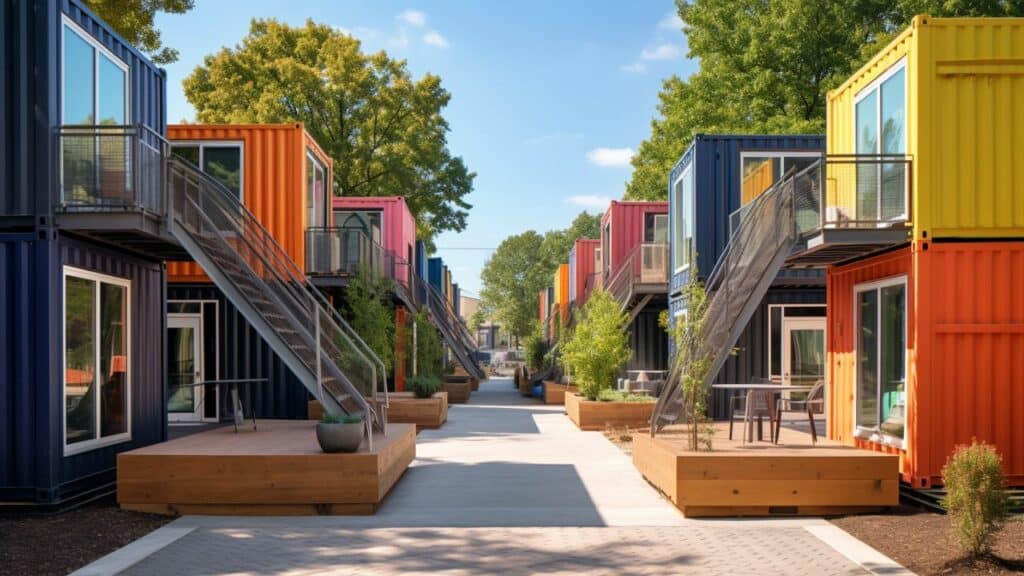
Each site will serve 20 youths. The homes will be made out of shipping containers – individual units cost approximately $150,000.
Financing the project is underway. This has proven to be one of the biggest challenges.
“A lot of the state funding agencies fund social services, but not the construction of new homes,” he said. “They’ll only sponsor group homes that currently exist.”
Warren and his colleagues are working with Florida state representatives Berny Jacques and Michele Rayner on updating policy to “adapt to new service models and methodologies.”
The Spring Zone St. Pete team is finalizing the permitting process with the City of St. Petersburg as well. He hopes young people can move in by the end of the year or early 2027.
“The point of this is really community building,” Warren explained. “So much of what foster youth go through is because of a lack of family and community.”
This will allow participants to meet leaders and congregation members from the churches, he added, who can invest in them.
The young adults chosen for the four-year program will receive workforce training and engage in a curriculum that focuses on financial literacy, mental health, home care and professional development.
Warren said that the St. Petersburg Housing Authority will be providing Foster Youth to Independence (FYI) vouchers to cover the residents’ $600 per month rent for the first three years.
“Both Habitat for Humanity Tampa Bay Gulfside and the St. Petersburg Housing Authority have foster youth home buying programs, but they are underutilized because when the young people turn 18, they’re not ready to buy a home,” he explained. “What we’re doing is actually strengthening those efforts because once they leave us, they will understand the dynamics of home buying, being stable, and they’ll have a career.”
The goal is to encourage “true community integration” where the young adults become productive members of society and purchase a home in the St. Petersburg area.
“We want to create a new avenue of development that’s social service and community based,” Warren said. “We can take a population that was ignored and part of the problem and turn them into a part of the solution.”
The Spring Zone St. Pete team hopes to expand the initiative over time. There are over 70 churches in the area that have at least an acre of land.
“I’ve got enough churches to be building for the next decade and at that point, we’ll actually be ahead of the problem,” he added. “We can take foster youth homelessness off the table in St. Pete.”