
A metropolitan planning organization (MPO) merger consolidating Pinellas, Pasco and Hillsborough counties is inching closer to reality. The move would increase the region’s leverage when competing for federal and state transportation funding, particularly for large-scale projects that individual counties might struggle to secure on their own.
“We would be a mega MPO, and with that would come so much more opportunity for funding,” St. Petersburg City Council member Gina Driscoll said during a Friday meeting between representatives of each county.
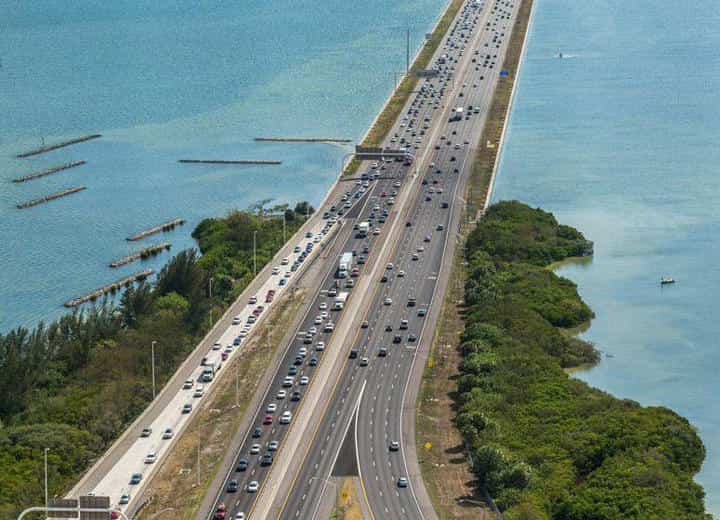
There is precedent for cooperation yielding results. Funding secured for the Howard Frankland Bridge, for example, could have gone elsewhere – to a larger metro like Miami – but the roughly $785 million investment was made possible through regional coordination.
Dave Eggers, chair of the Pinellas County Commission and a longtime advocate of a merger, pointed to the arbitrariness of county lines: “Businesses don’t care about county lines, only politicians do,” he told Catalyst.
Though Eggers is enthusiastic about the practicality of a merger, he cautioned that leaders must “be careful as we evaluate all aspects of the potential merger while the decision is still in our hands.” In other words, skepticism should be addressed before – not after – a merger is finalized.
There is also a political underpinning, and some concerns are warranted. An MPO merger would create a new governing board. At present, the working assumption is a 25-seat commission, but how those seats would be distributed among the three counties and the smaller cities within them remains under negotiation.
As far as St. Petersburg goes, City Council member Richie Floyd told the Catalyst he is confident the city would receive fair representation if a tri-county commission is formed, since representation would be based on population.
Pinellas County, however, will have to determine what is equitable for its smaller municipalities. Both Floyd and Eggers said representation of small cities remains the most pressing issue.
A merger has been in the periphery of discussion for decades, but only recently have the counties grown large enough to seriously revisit the idea. Still, it would be something of an experiment.
While the coordination behind the Howard Frankland Bridge lends credibility to the concept, questions remain as to whether a formal merger will ultimately prove more effective and beneficial for the broader public, according to Eggers.
If talks continue to progress, a final vote could take place as early as March or April, with the merger taking effect in 2027.