
The changes would let those developers get more units per acre if they commit to pay for certain public uses like affordable housing or multi-modal transportation.
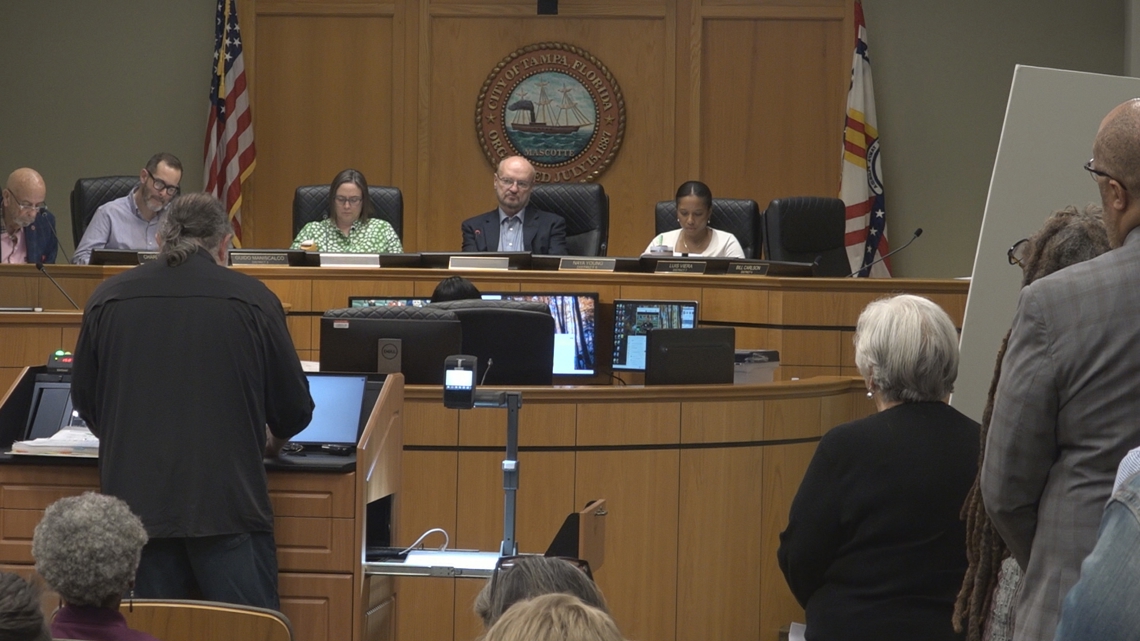
TAMPA, Fla. — The Tampa City Council took another step forward Tuesday night for proposed land use changes that will shape the city for decades to come, voting six to one to send modifications to the city’s comprehensive plan to the state for approval.
But the councilmember who voted no said the public largely didn’t know tonight’s meeting was happening.
“The public has not had a chance to weigh in on this proposal,” District 4 councilmember Bill Carlson said, frustrated that the Hillsborough Planning Commission only gave the public a week’s notice before the hearing. “There would have been 200 more people here had they known that we were going to do this.”
Those who did show up mostly wanted their neighborhoods put back in the plan to increase housing density bonuses for developers along major roads throughout the city, especially in east Tampa.
The changes would let those developers get more units per acre if they commit to pay for certain public uses like affordable housing or multi-modal transportation. Several roads were removed from the plan after a meeting in August, where adding and removing “Transit Ready Corridors” were traded back and forth.
“It may attract new, smart development by providing the much-needed bonuses that developers look for when considering their next projects,” one resident said Tuesday.
At one point, staff broke out a highlighter to update the roads that would or wouldn’t be included following comments from neighborhood groups.
“I love that this sort of turned into a little bit of a workshop,” another resident said. “I don’t know that that’s what everybody planned on, but I think it was helpful to kind of collect everything.”
Still others said Tampa’s growth is slowing and the city needs more restrictions on development, but a state law passed last year, Senate Bill 180, prevents cities from doing that, even if in some places councilmembers hinted it may be needed.
Council voted to send the changes to the state for approval, and may enact the new policy in May.
Overall, Florida’s growth in population due to people moving here from other states slowed sharply last year, according to the U.S. Census Bureau. Still, Tampa’s population has grown nearly 8% in the last five years to about 420,000 people.
Also a part of the discussions, language will be put back in that describes the “typical” height for different residential zoning areas.
Some in south Tampa voiced concerns that it could lead to high-rises in their part of the city, which is already stressed with flooding and emergency response problems.
And one particular kind of residential zoning, R-50, will not have language using the word “high-rise,” after those same residents cautioned councilmembers that south Tampa is mostly R-50 and has never seen a building taller than 8 stories.