
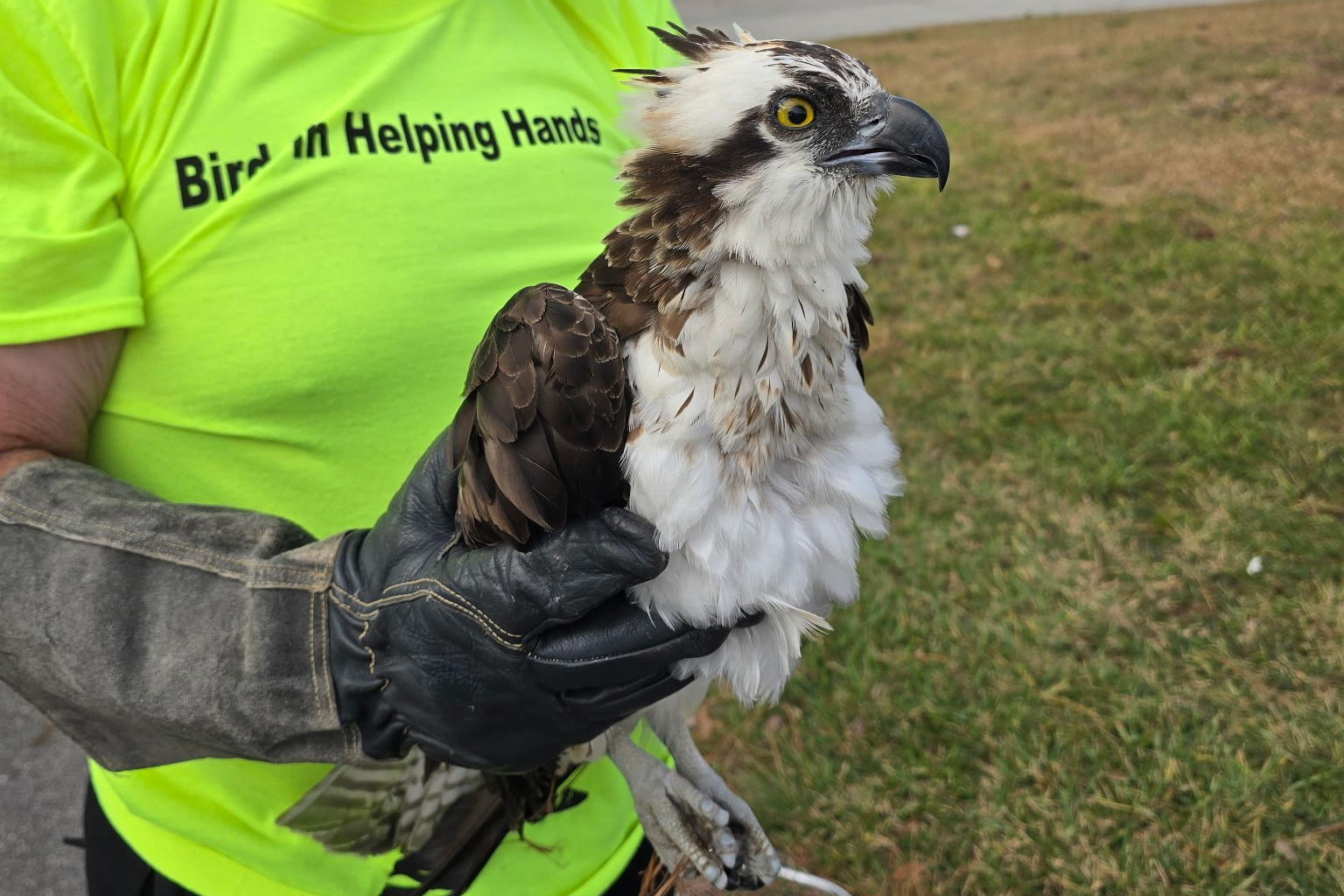
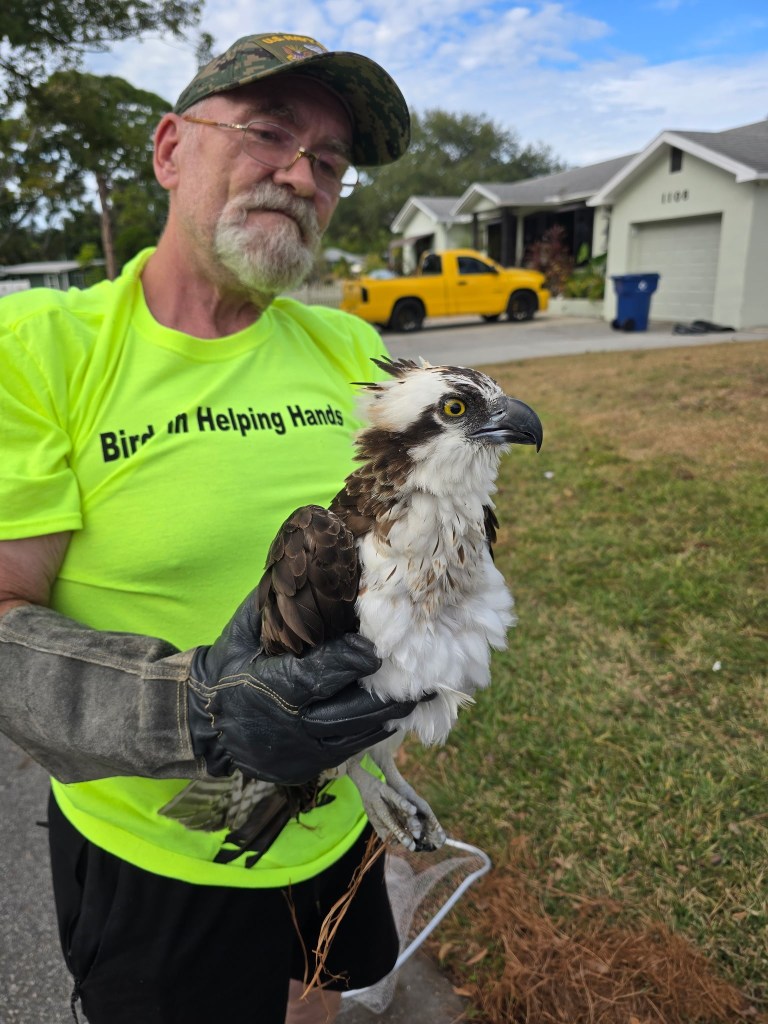
 A Birds In Helping Hands volunteer assists in an osprey rescue.
Credit: Birds In Helping Hands / Facebook
Across Tampa Bay, birds of countless species are found injured in backyards, on sidewalks, and on the beach. And there’s over 100 volunteers on call ready to help them.
Based in Seminole, Birds in Helping Hands responds to calls across Hillsborough, Pasco, and Pinellas counties, often arriving within the hour to transport injured animals to rescue facilities, veterinarians, or back into their natural habitat when possible.
The nonprofit’s hands are pretty much always full, too with founder Shelley Vickery telling Creative Loafing Tampa Bay that the group answers or responds to about 10,000 calls annually.
“We pretty much deal with everything,” she added. “We take what other rescuers can’t.”
For more information on how you can help, visit birdsinhelpinghands.org. To report a potential rescue, contact Shelley Vickery at 727-365-4592.
Some rescuers are unable to take in birds like pigeons, peacocks, and chickens, because they would contaminate their facilities. That willingness to step in where others can’t has made the organization one of the region’s most relied-upon wildlife rescue networks.
The team works closely with sheriff and police departments, Florida State Parks, SPCA, hotels, marinas, veterinarians, tree trimmers, residents, and visitors to bring proper care to injured and orphaned wildlife.
No day looks the same, said Vickery, but the team always has their (helping) hands full, and certain times of year bring predictable surges in calls.
During the holiday season from Thanksgiving to New Years, when many visitors are in the region, the number of calls regarding wildlife entangled in fishing lines spikes, since many tourists aren’t familiar with how to free animals from lines.
After Easter, a time known as “baby bird season,” calls for ducks and roosters multiply. People purchase the birds as ducklings and chicks because they’re cute, and then are unable to properly care for them once they grow.
“At the height of baby bird season, I can’t answer texts [for rescues] fast enough,” Vickery said.
After Hurricanes Milton and Helene in fall of 2024, Birds in Helping Hands received over 180 calls for wildlife rescues. As one of the few rescuers accepting calls, Vickery said the volume of rescues in weeks to follow were unprecedented.
Moments like that highlight how important it is for people to know what to do when they encounter injured wildlife.
Folks who come across a bird or other small animal that appears injured, Vickery said the first step is simple: move the animal away from sidewalks and high traffic areas. Visible blood, a misshapen wing, or bird grounded in one spot for over three hours? Professional help is likely needed; call Birds in Helping Hands.
What people shouldn’t do, Vickery emphasized, is try to give wild animals food or water, or try to cuddle them—no matter how inviting they may seem. Handling wildlife can frighten animals, and in some cases harm the animal or the person. Mammals like bats, racoons, and feral cats can carry and spread rabies, and even small animals like bunnies may react aggressively if frightened.
“A volunteer is usually nearby, so don’t wait to call,” said Vickery. The sooner Helping Hands can get to a rescue, the better the chance the animal has.
Beyond wildlife rescues, Birds in Helping Hands is also dedicated to prevention and education. The organization will be attending Hope in Action’s Youth Environmental Action Summit on Feb. 28, held at the University of Tampa’s Plant Hall. Led by local experts, the event honors the late Dr. Jane Goodall and aims to educate and inspire Tampa Bay’s youth to get involved in environmental stewardship projects in our city.
At the event, guests can expect to learn about fishing line entanglement, baby bird season, the dangers of rat poison, and how to know when to call Helping Hands.
This event is part of a collection of summits and action days organized by Hope in Action 2026, hosted by the University of Tampa and the Roots & Shoots Alliance.
Pitch in to help make the Tampa Bay Journalism Project a success.
Subscribe to Creative Loafing newsletters.
Follow us: Google News | NewsBreak | Reddit | Instagram | Facebook | BlueSky
This article appears in Feb. 12 – 18, 2026.
Related