
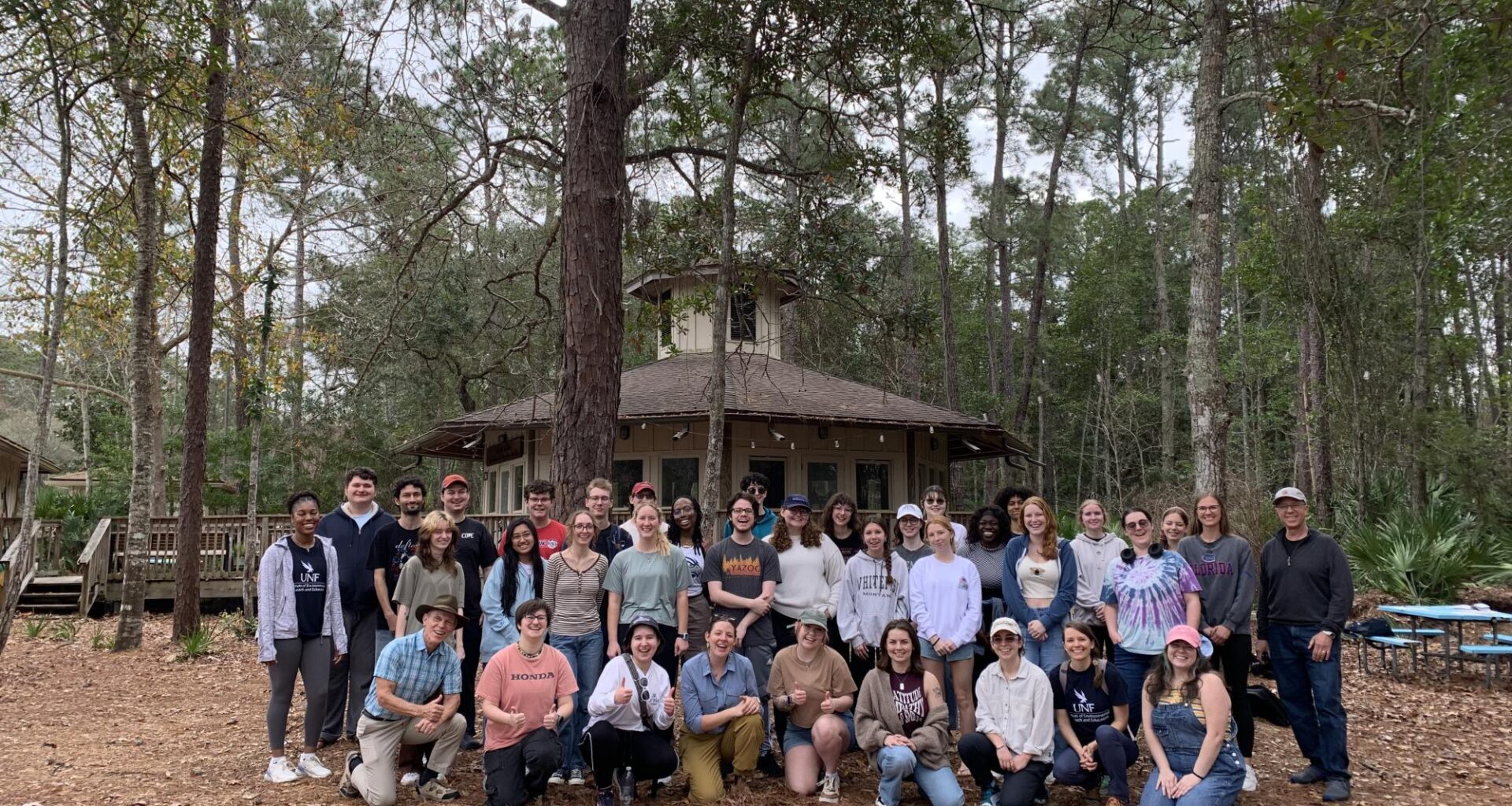
As spring graduation approaches, University of North Florida students can explore careers in environmental research through hands-on events like the Introduction to Forestry.
Hosted on Feb. 18 at the UNF nature trails, the Florida field school connected its students with a forestry professional who shared insights into the careers of forest management, manufacturing, and more.
Students gathered at the University of North Florida nature trails for Florida Field School: Introduction to Forestry on Feb. 18. According to the UNF events website, Erin Ogrodnik, Resource Information Coordinator from Rayonier, presented a lecture on opportunities in the forestry field, including state versus private management, forest ranger positions, and manufacturing, as well as hands-on learning.
According to the Rayonier website, “Rayonier was formed through the merger of Rayonier and PotlatchDeltic, combining two long-standing industry leaders with more than a century of experience in timberlands, manufacturing, and real estate.”
Students Learn Forestry Cycles Hands-On
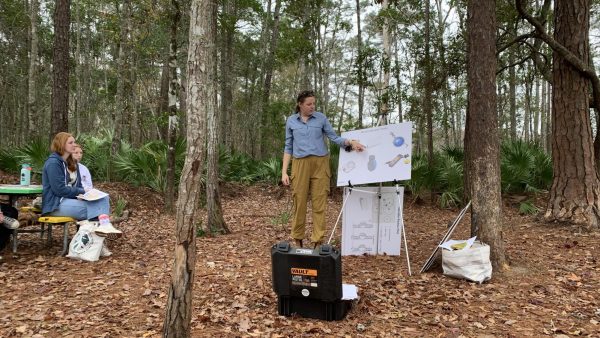
During the event, students gathered around picnic tables at the entrance to the trails and got to ask questions to Ogrodnik after the lecture.
Students were given an answer key showing the cycle of seeding nurseries and how they are transported in refrigerated vans to the land to be planted, then site preparation, planting, fostering the plants, and using tools to measure and map out the acres for harvesting and getting products to market.
Ruby Cox, program coordinator for the Institute of Environmental Research and Education, hosted the Introduction to Forestry event. According to the UNF IERE Core Staff and Faculty website, Cox previously was a community volunteer ambassador for the National Park Service at Timucuan Ecological and Historic Preserve in Jacksonville, Florida, where she developed her passion and skills for environmental interpretation, community engagement, and volunteer management.
“Florida Field School is embedded within the Environmental Sciences degree curriculum so that every graduating student has a chance to participate in experiential trips that explore habitats, species, current environmental issues, and career pathways. Students are encouraged to go beyond learning concepts; they also meet professionals across sectors, including federal agencies and private industries like forestry,” Cox said.
“IERE’s mission is to provide opportunities for environmental research and education through interdisciplinary programs that enhance students’ experiences, prepare them for the workforce and graduate school, and increase scholarship and innovation,” Cox said. “Through experiential learning and professional connections, the Florida Field School program supports that mission.”
 Ana Brown
Student Career Growth through Environmental Career Pathways
According to the UNF IERE Index, the Institute of Environmental Research and Education is an interdisciplinary hub that unites students and faculty from all six UNF colleges in a shared mission to advance environmental knowledge through interdisciplinary research, education, and community engagement. This mission is achieved by fostering interdisciplinary collaboration, providing real-world experiences, and offering innovative academic programs that enrich student learning and advance environmental research.
Cox said, “We hope students walk away with a clearer picture of the range of environmental science and forestry career paths (from public land management to private forestry) and how modern forestry uses specialized tools and technology. Just as importantly, we want them to gain confidence by asking questions directly to professionals and trying hands-on field measurements.”
Janet Herrick, office director at SWCA Environmental Consultants and a University of North Florida alumna, provides a career example, stating that environmental consulting is a valuable yet demanding career.
According to Deltek, environmental consultants help their clients understand and manage their environmental impact, comply with environmental regulations, and develop strategies for sustainable development.
Herrick said, “Environmental consulting and business services are highly valuable fields. To become a good environmental consultant, you need to keep learning, work hard to develop your skills, and stay committed to improving your craft.”
___
For more information or news tips, or if you see an error in this story or have any compliments or concerns, contact [email protected].