
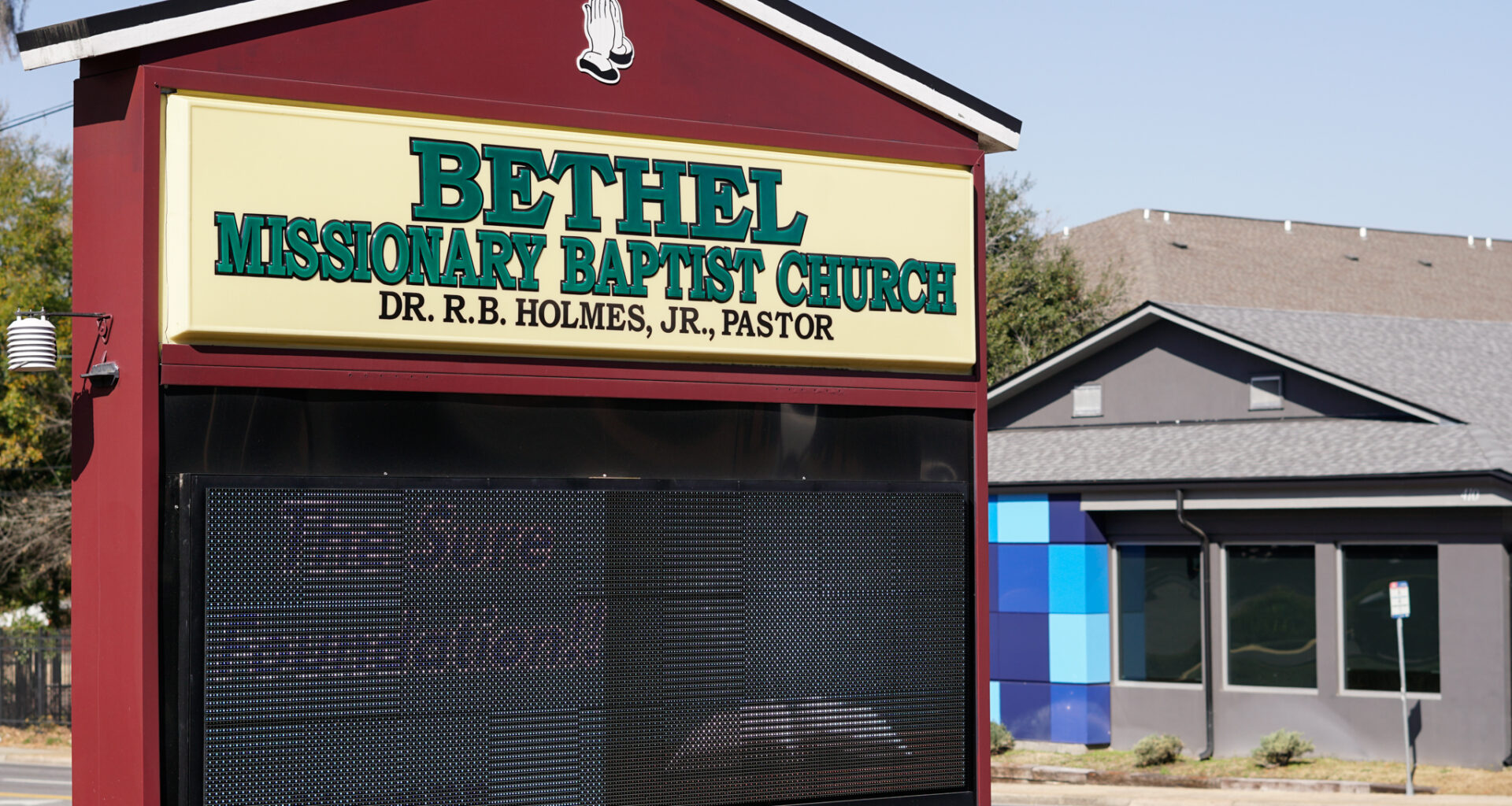
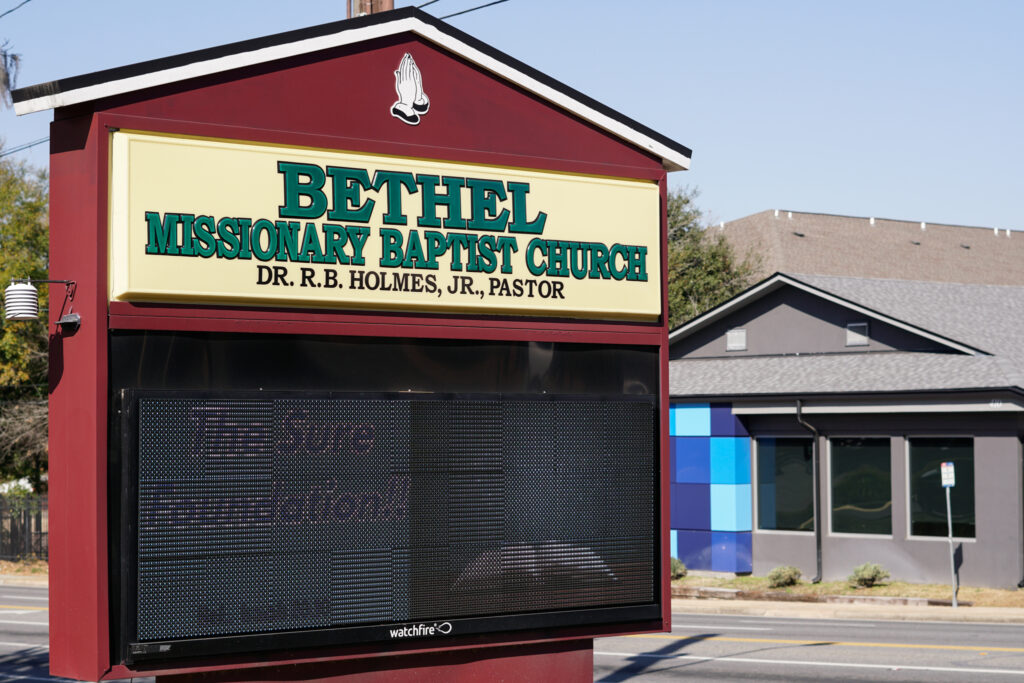
 Bethel Missionary Baptist Church is located on 224 N Martin Luther King Jr Blvd in Tallahassee, Florida, under the leadership of Reverend Dr. R. B. Holmes Jr., SDS. (Khalil-Lullah Ballentine/FAMUAN)
As the African American experience in America has forged community, resilience and innovation, the Black church has served as a pillar for African Americans in times of poverty, systematic oppression and racial injustice.
Historically, the Black church has not only served as a place of worship, but also an economic epicenter for Black-owned businesses, social services, and refuge. Bethel Missionary Baptist Church in Tallahassee, Florida, has served as that light in the local Black community since 1870.
“One of the things that was the greatest benefit of the community and of the civil rights movement was the Black church,” said Pastor Derek Steele, son of Reverend CK Steele, who was the former pastor of Bethel Missionary Baptist Church. “It was Black pastors who were able to get involved, not worried about the support of their family, because their checks didn’t depend on white people, their paycheck depended on the people supporting them … there were educated leaders who were filled with the Spirit of God to lead the movement.”
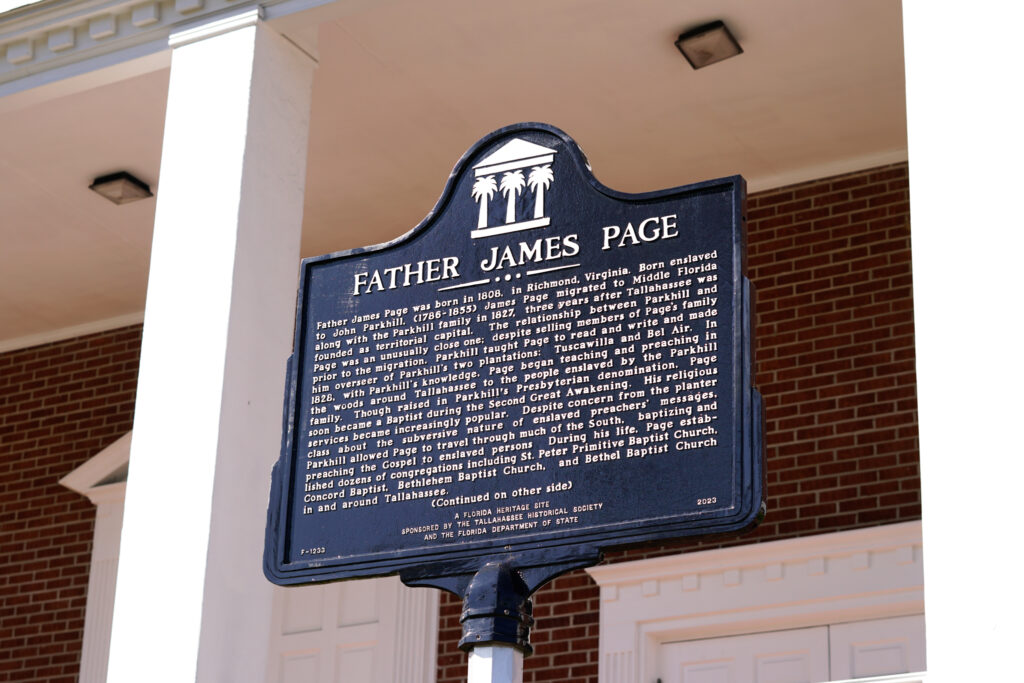 Historical marker honoring Father James Page, original pastor of Bethel MBC who became ordained as a minister in 1851. (Khalil-Lullah Ballentine/FAMUAN)
Founded by a former enslaved man known as Father James Page, Bethel Missionary Baptist Church has served a vital role in the progression of the African American community. While traditional religious spaces have been known to be confined to the four walls of a physical building, Bethel has led a legacy of providing ministry and resources to the community.
“The history of Bethel goes back to the institution of slavery,” said Dr. Larry Rivert, distinguished professor of history at Florida A&M University and author of “Father James Page: An Enslaved Preacher’s Climb to Freedom.” “During that time, an enslaved James Page was given permission by his enslaver to go about different plantations. … Page was instrumental in starting Bethel Missionary Baptist Church; he felt that the church would be the center hub to number one religious activities and number two, social and economic concerns of the community.”
Bethel’s ministry expanded beyond Sunday services as they prioritized educating the community on social and civil rights issues. This ministry also led the establishment of Bethel Christian Academy and Steele-Collins Charter Middle School in 1996, Bethel Towers for Senior Citizens in 2000 and the Frenchtown Financial Opportunity Center in 2016. These services became essential to the Black community as access wavered, and there were few resources.
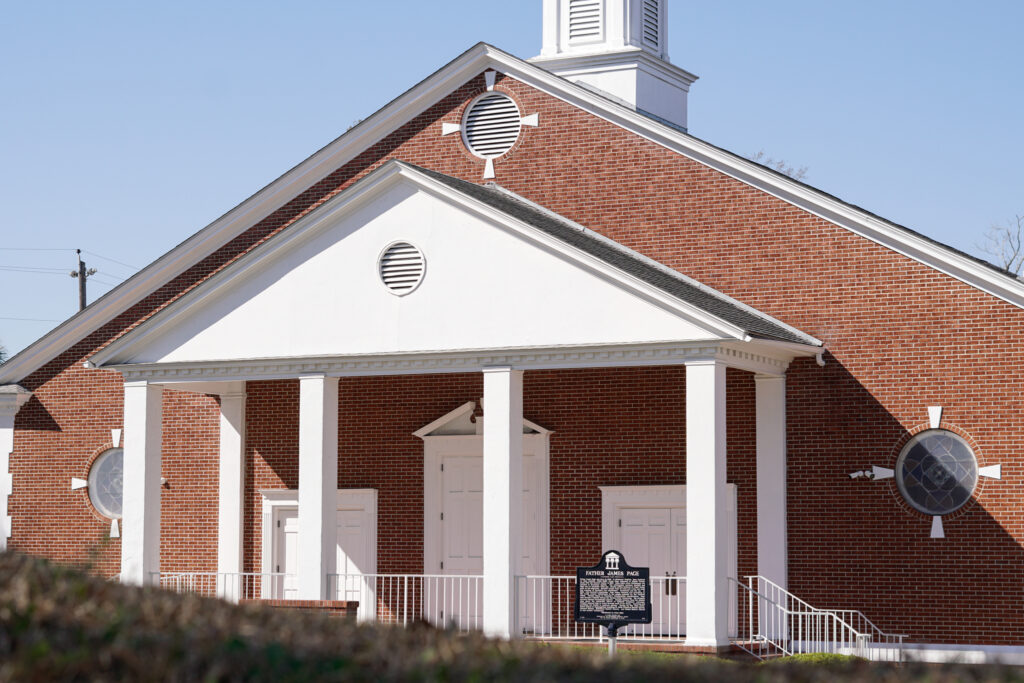 Bethel is affectionally known as “the People’s Church”, attracting both Black and white worshippers and supporters. (Khalil-Lullah Ballentine/FAMUAN)
“We were left at the will of the majority, which was white citizens and their resources, and even my dad had problems getting a loan to buy a house,” Pastor Steele said. “Blacks had a terrible time trying to get loans, and because of redlining and all the kind of things that they did to keep Blacks down … the church has been essential in continuing to support and hold up our Black citizens.”
While the Black church has been known as a place of community and progress, younger generations of African Americans are attending church less than their elders. Millennial and Generation Z Black Americans are about twice as likely as those in the Silent Generation to say they rarely attend religious services, if ever, according to Pew Research Center.
“Those of us who were raised in the church, when we had the opportunity to get away from the church, that’s what we did, but we found ourselves coming back, because the church is still a very vibrant part of our community,” said Dianne Williams-Cox, Bethel Missionary Baptist Church Member of 40 years. “We see the churches taking leadership in situations that become ones that need to be amplified, such as voters’ rights and voter education, marches against injustice … I think that it is not a lost cause. I think it is something that we need to continue to feed and fuel to make sure that we don’t lose any generation.
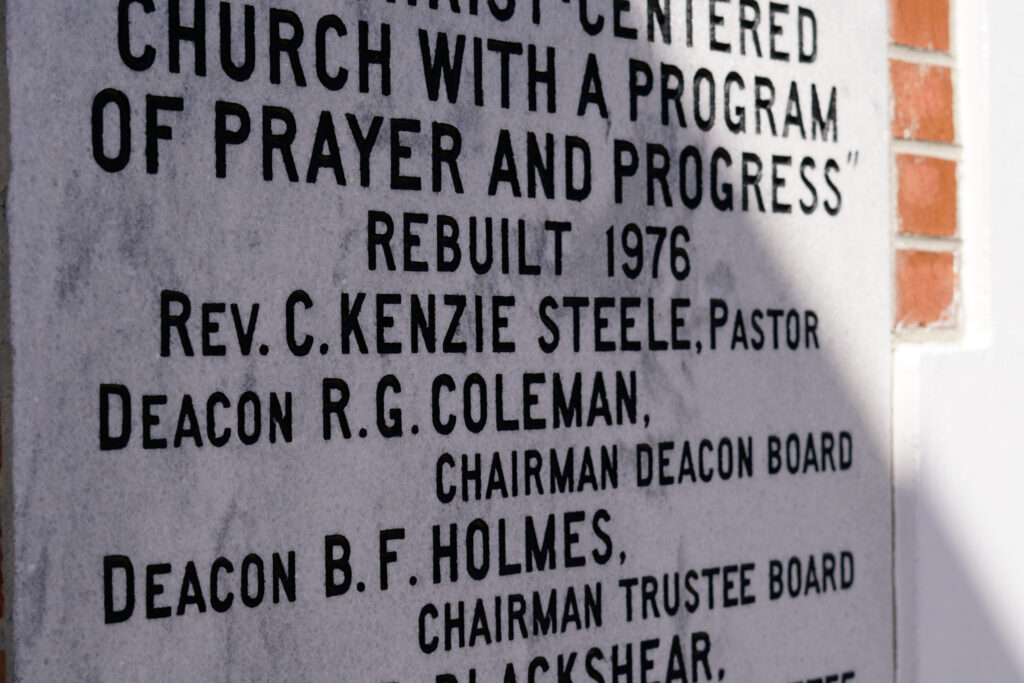 Reverend C.K. Steele as an instrumental leader in his time as pastor of Bethel from 1952-1980. (Khalil-Lullah Ballentine/FAMUAN)
While ministry and engagement have evolved alongside civil access and the needs of the Black community, Bethel Missionary Baptist Church has continued its central mission “to transform the lives of people for the Glory of God and for the good of the community.”
“The majority of the population who take advantage of it is from the Black community, but there are others who also benefit from the work that [Bethel] does in the community,” Cox said. “The various ministries at Bethel; the couples ministry, the singles ministries, the children’s ministry, the youth ministry, the choir ministry, all of these ministries where people could come together and work for the betterment of our community … through the grace of God, Bethel has been able to provide because the people had a willing mind to do the work.”