
In 1988, the power brokers of the Democratic Party watched a Chicago civil rights leader, a maverick with a movement he called a “Rainbow Coalition,” start to threaten the presidential candidacy of Massachusetts Gov. Michael Dukakis. They’d expected him to do well with Black voters, but not to win easily the state of Michigan or make major inroads with Americans of all stripes.
The rise of Jesse Louis Jackson was viewed with considerable alarm by party pundits and consultants. They feared having no choice but to nominate Jackson for president if he secured the most convention votes. That didn’t happen, but it did establish him as a force to be reckoned with. He used his newfound national power to successfully push for an overhaul of Democratic Party rules. This probably helped set the stage for Barack Obama to become president of the United States.
Jackson rose to prominence as one of the Rev. Martin Luther King Jr.’s inner circle (he’d met King in Selma, Alabama,after Bloody Sunday in 1965) and as a member of the Southern Christian Leadership ConferenceHe went on to lead of not just one but several movements, from Operation Breadbasket and Operation PUSH (People United to Save Humanity) to his National Rainbow Coalition, established in the mid-1980s to campaign for human rights.
In later years, Jackson never stopped fighting for causes large and small. Though Jackson never lost his power as a warrior on national issues, he also understood the potent appeal of local battles and tragedies. In In 2019, the Tribune editorial board wrote about his efforts to bring natural gas to Pembroke Township, population of about 1,800, in Kankakee County. Jackson did not want the residents there, who had seen one broken promise after another, to have to continue to rely on space heaters. This quest was hardly akin to negotiations in the Middle East or the kind of civil rights efforts that made him famous, but it made a big difference if you happened to live in Pembroke Township.rg
Chicago was the city Jackson most identified with, and where he died Tuesday at the age of 84. But Jackson often visited Central Florida, giving stem-winding sermons in Eatonville or Parramore focused on threats to voting rights and the dangers of gun violence. He inspired generations of leaders here, among them state Sen. LaVon Bracy-Davis, whose parents , both civil-rights leaders, were friends with Jackson. Former state Rep. Dick Batchelor travelled with Jackson to South Africa in 1994 to witness the first post-apartheid election there. Six years later, he came to Florida to protest another election, the 2000 contest between George W. Bush and Al Gore.
Key quotes from the Rev. Jesse Jackson that define his politics and legacy
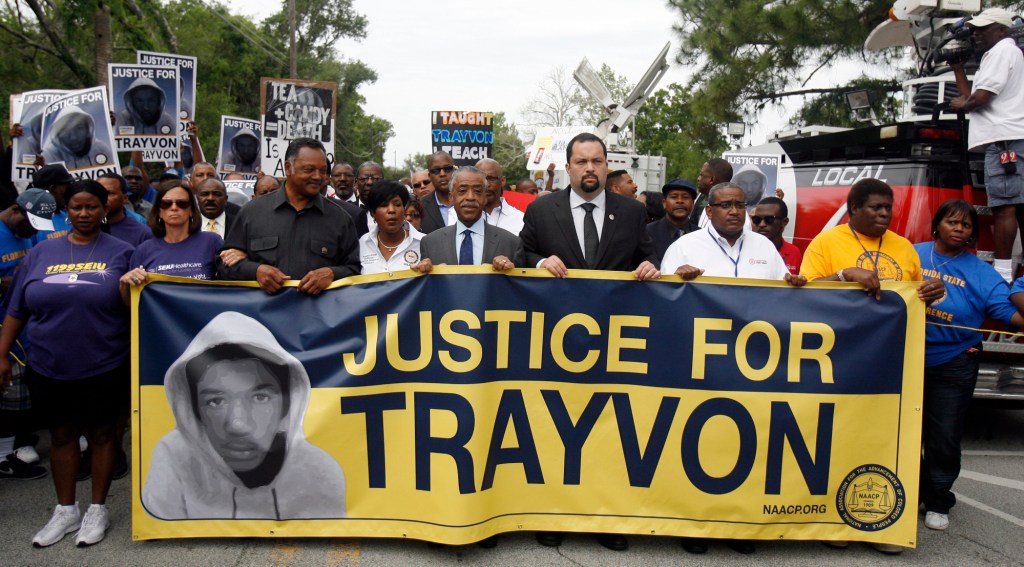
But Jackson’s most defining Florida moment may have come when he stood beside the parents of 17-year-old Trayvon Martin as they protested the reluctance of Sanford Police to arrest the man who’d shot and killed their son on the night of Feb. 26, 2012.That case marked a turning point in Seminole County and throughout the area.
Jackson, of course, got up in people’s faces, and there were some who did not appreciate his work. He had an uneasy relationship with the Black Panthers, not least because Jackson’s aims were reformist first and (contrary to the stereotype) radicalist second. He mounted an anti-abortion rights campaign after Roe v. Wade, which proved controversial. And he was often a thorn in the side of the white establishment, which sometimes labeled him as an opportunist, or someone whose machinations led to cronyism at best and corruption at worst.
Those criticisms waned over time, as Jackson’s work helped better the lives of Americans across the country. He spoke on radio shows and at rallies about the need to push for equality. His groups, handed out awards and persuaded big business to hire more Black managers and buy more of the things they needed from Black-owned companies. Many of their boycotts won results, especially the 1982 boycott of Anheuser-Busch. Jackson won his own show on CNN. He even hosted an episode of “Saturday Night Live!”
“Everything that I’ve done has been in some context,” Jackson said on his 65th birthday in 2007 when asked to weigh his achievements and failings, “and I’m convinced that we look back like the true judge and ultimately you judge yourself by your cumulative box score. It’s not the home run you hit one inning; it’s not the strikeout the next inning. It is the box score. And our box score — my batting average — has been one I can accept.”
We should all agree with that, given that we are unlikely to see his like anytime soon.
This editorial is adapted from one that originally appeared in the Chicago Tn. The Sentinel sometimes publishes editorials that agree with our own positions. The Orlando Sentinel Editorial Board includes Executive Editor Roger Simmons, Opinion Editor Krys Fluker and Viewpoints Editor Jay Reddick. Send letters to insight@orlandosentinel.com.