
Students at FAMU have decades of stories of activism from the civil rights movement to modern police brutality. Many times, the stories go untold and unnoticed.
‘Sisters jailed in student lunch counter protest visit here; tell of experiences’
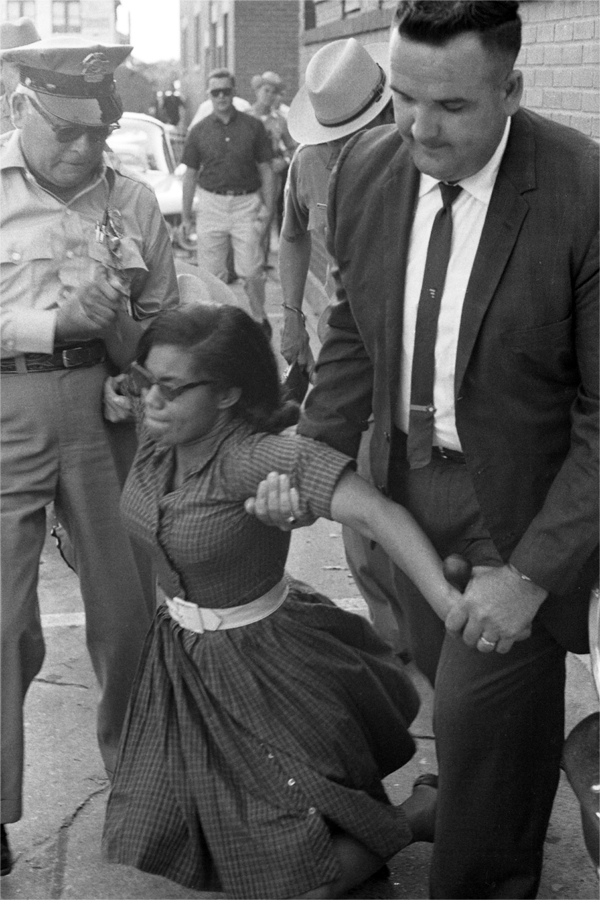 Patricia Stephends Due being arrested after defying restraining order with others at
the State Theatre in Tallahassee, 1963. (State Archives of Florida
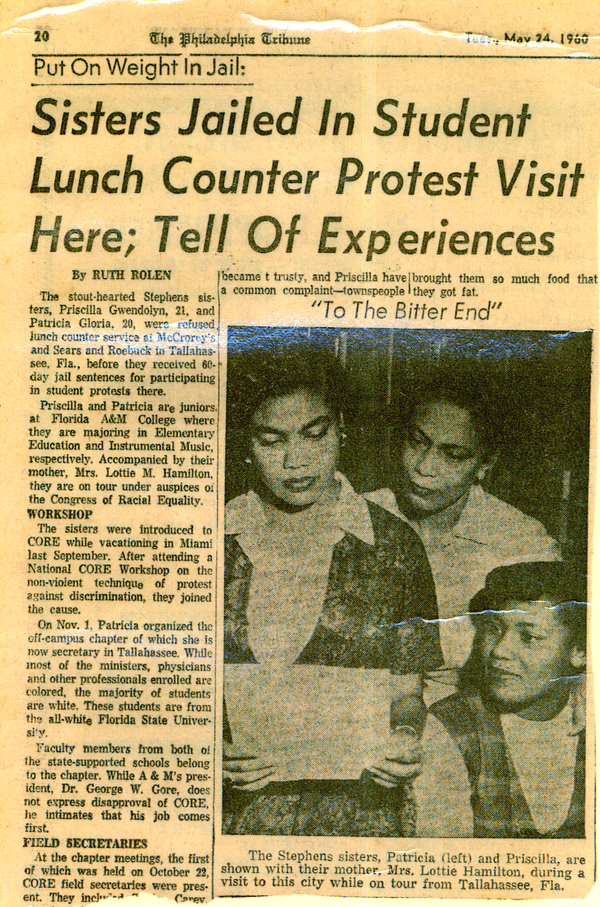 Activists Patricia and Priscilla Stephens with their mother Lottie in Philadelphia.(State Archives of Florida)
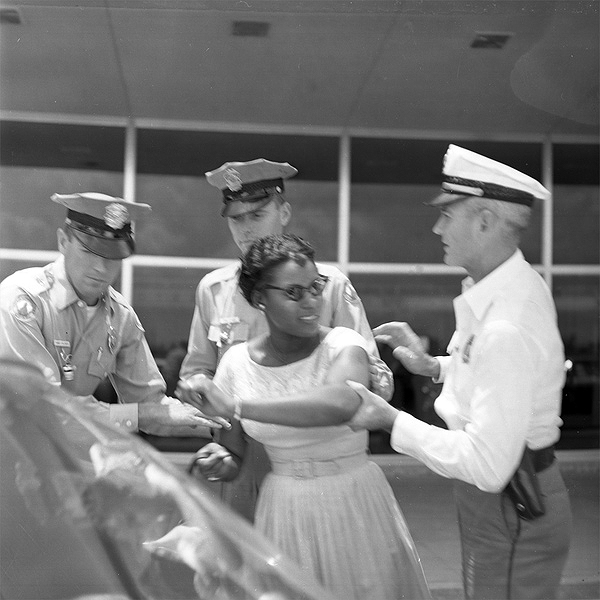 Priscilla Stephens (later Kruize), from CORE, being arrested at the Tallahassee Regional Airport.(State Archives of Florida)
A headline in The Philadelphia Tribune from May 24, 1960, about FAMU students, and sisters, Priscilla Stephens Kruize and Patricia Stephens Due while on a national tour sponsored by the Congress of Racial Equality. The students held a “jail-in” where the pair spent 49 of their 60-day sentence in the Leon County jail after refusing to pay a $300 fine they received after a non-violent sit in protest at the Woolworth’s lunch counter.
“They kicked off the civil rights movement in the entire state of Florida,” said Dana Dennard, Ph.D., a psychology professor at FAMU. “King wanted to come down and meet them because of this. This is how serious it was.”
The sisters founded the Tallahassee chapter of CORE and innovated the concept of the “jail-in” for civil rights activists across the country eventually coining the term “Jail, No Bail,” garnering attention from Martin Luther King Jr. due to the courage of their actions,
“To stand up like that as a student, you are risking your future,” said Corey Johnson, 2022 Pulitzer Prize-winning journalist and FAMU graduate. “You’re also going up against the administration because anytime students are clashing with the dominant society, that puts pressure on the university president and the university as a whole.”
In a 1963 leaflet published by the Miami chapter of CORE, the organization urges readers to “Petition the FAMU administration to defend its students and join the battle for Freedom in America,” as Patricia Stephens Due had been suspended from the university following three months of demonstration in Tallahassee.
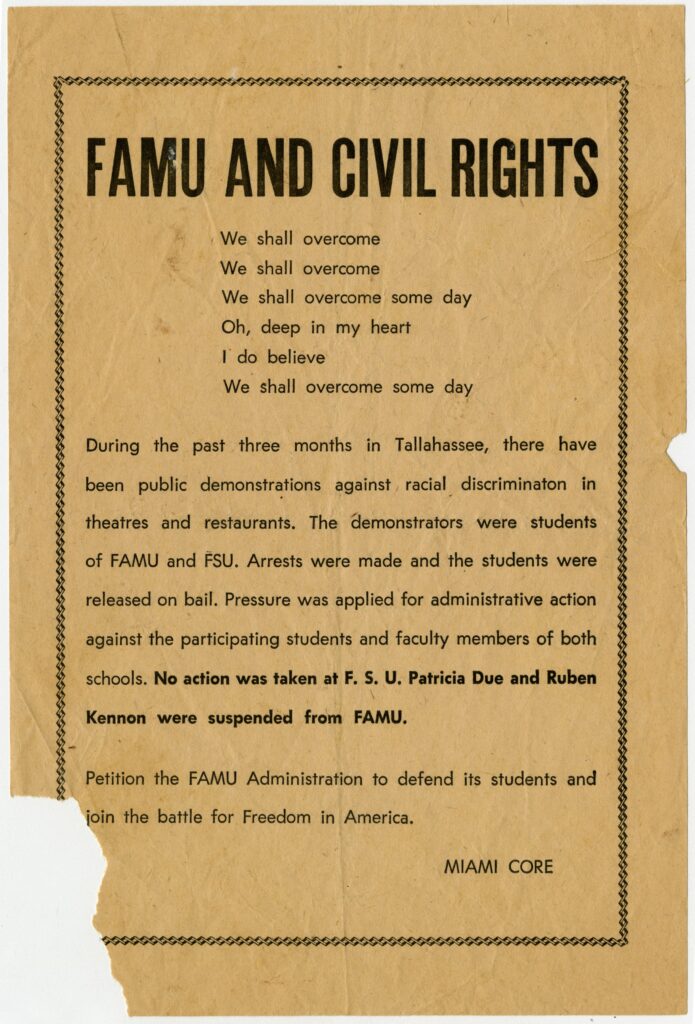 A Miami CORE flier describing demonstrations in Tallahassee in which Florida Agricultural & Mechanical University (FAMU) and Florida State University (FSU) students were arrested and released on bail. Two FAMU students, Patricia Stephens Due and Rubin Kenon, were suspended as a result. The flier is encouraging people to contact FAMU Administration and encourage the university to “defend its students.” (State Archives of Florida/Congress of Racial Equality. Miami Chapter)
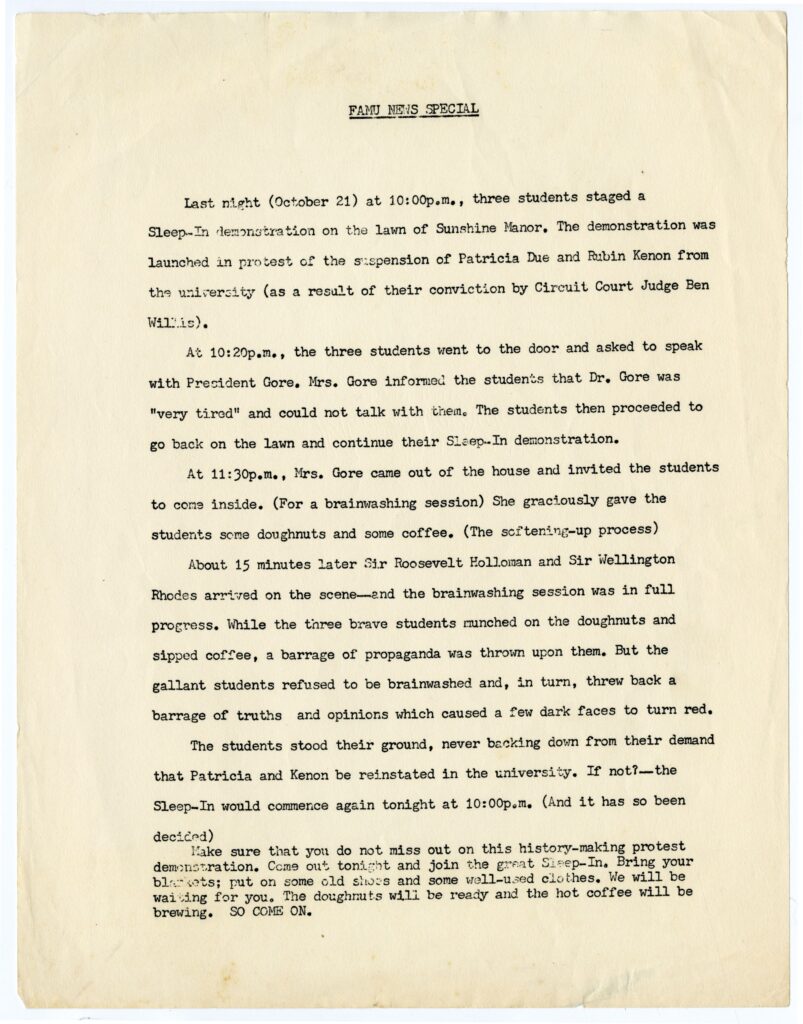 News special relating the sleep-in demonstrations of three FAMU students who were protesting the suspension of fellow students Patricia Stephens Due and Rubin Kenon.(State Archives of Florida)
In retaliation, FAMU students held a sleep-in to protest the suspension at the home of university president at the time, George W. Gore.
‘The repeating history behind the closure of Florida A&M University’s hospital’
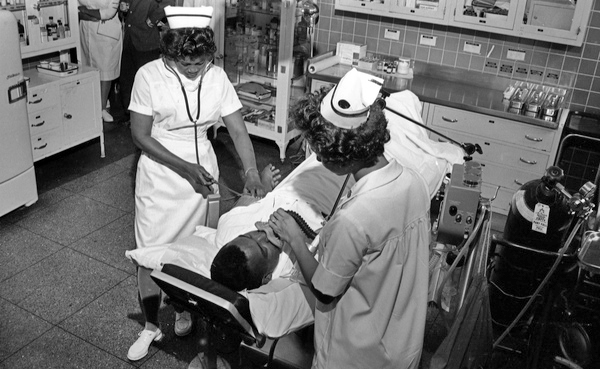 Nurses with patient at the FAMU Hospital in Tallahassee, 1965(State Archives of Florida/Finch)
In a 2019 deep dive by WFSU, the often-untold history of FAMU’s trials with closure and dissolvement are documented by alum Lynn Hatter.
In the late ‘60s and ‘70s, FAMU faced two detrimental closures with the defunding and closure of FAMU Law School in 1968 and the closure of the FAMU hospital in 1971.
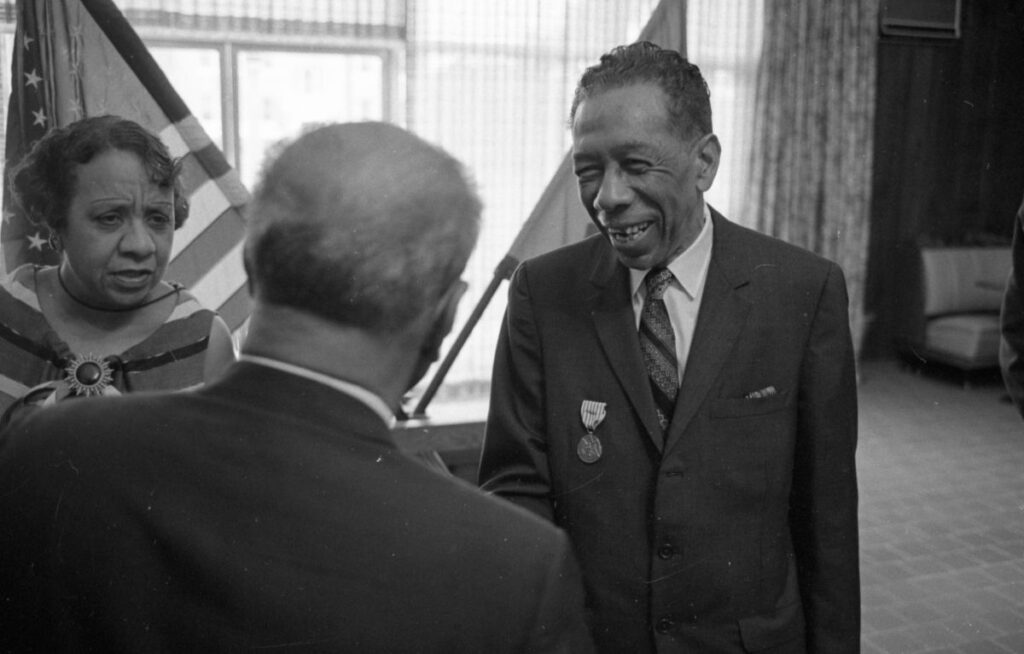 FAMU president Dr. George W. Gore being congratulated during award ceremony in Tallahassee.(State Archives of Florida)
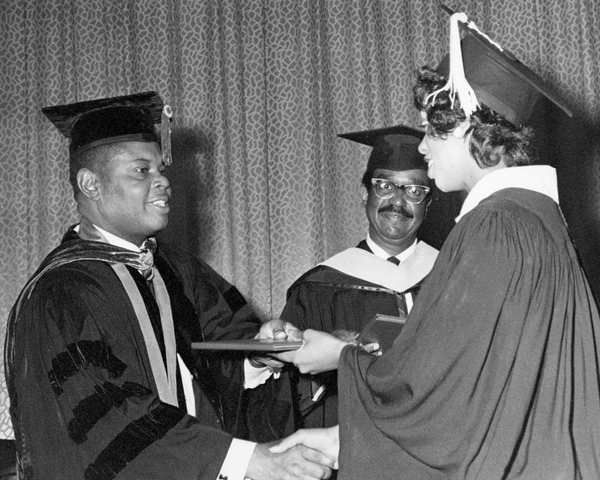 FAMU president Benjamin L. Perry presenting diploma to new graduate in Tallahassee.(State Archives of Florida)
During the presidency of George W. Gore (‘50 – ’68) and Benjamin L. Perry (‘68 – ’77), the burning question of both administrations was whether FAMU should be merged into Florida State University. At this time, the argument presented by the legislator and the Board of Regents was that, following integration, “FAMU did not have a clearly defined mission or “unique” role and scope” as stated in “Florida Agricultural and Mechanical University: A Centennial History” by Leedell W. Neyland and John W. Riley.
This time in FAMU’s history inspired many students to take a more radical stance with their position as Black students and people. This radicalism was largely done in the campus newspaper, The FAMUAN.
“The question of merger and the apparent insensitivity of the BOR and legislators alike to the needs of black students helped to push the paper and many of FAMU’s student leaders into a more radical posture,” Neyland said.
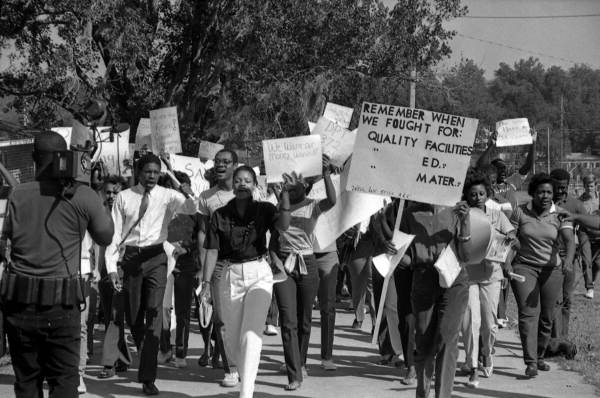 FAMU students protest – Tallahassee, Florida, 1984. (State Archives of Florida/Thomas)
In the November 1967 issue of The FAMUAN and beyond, students began to publish their criticisms of the administration, demands that were more inline of their newfound Black consciousness and pieces describing their distaste for the frequent proposal to merge their beloved university.
“The paper began to speak boldly on restrictive administrative measures, Black power, civil rights, group oppression, and also to demand greater emphasis on black history and culture in the curriculum as well as more black activist speakers on campus,” Neyland said.
‘Graduate of FAMU not quite finished’
“I was seen as being like a champion of a little guy, because I went up against Dr. Humphries and administration, and I won,” Zaccai Free said. Free, known as Larry Tait while attending FAMU, was Student Government Association president from 1994 to 1996.
Throughout 1996, James Harper of The Tampa Bay Times profiled and kept tabs on Florida A&M University SGA president of the time, Larry Tait, who he described as a “Florida’s best known student radical.” In leadership and making waves on campus during a time he describes as “FAMU’s Golden Era of Black Consciousness,” Free says that he didn’t initially want to be SGA president but became a voice on campus through his student zine, “THOUGHTS Magazine.”
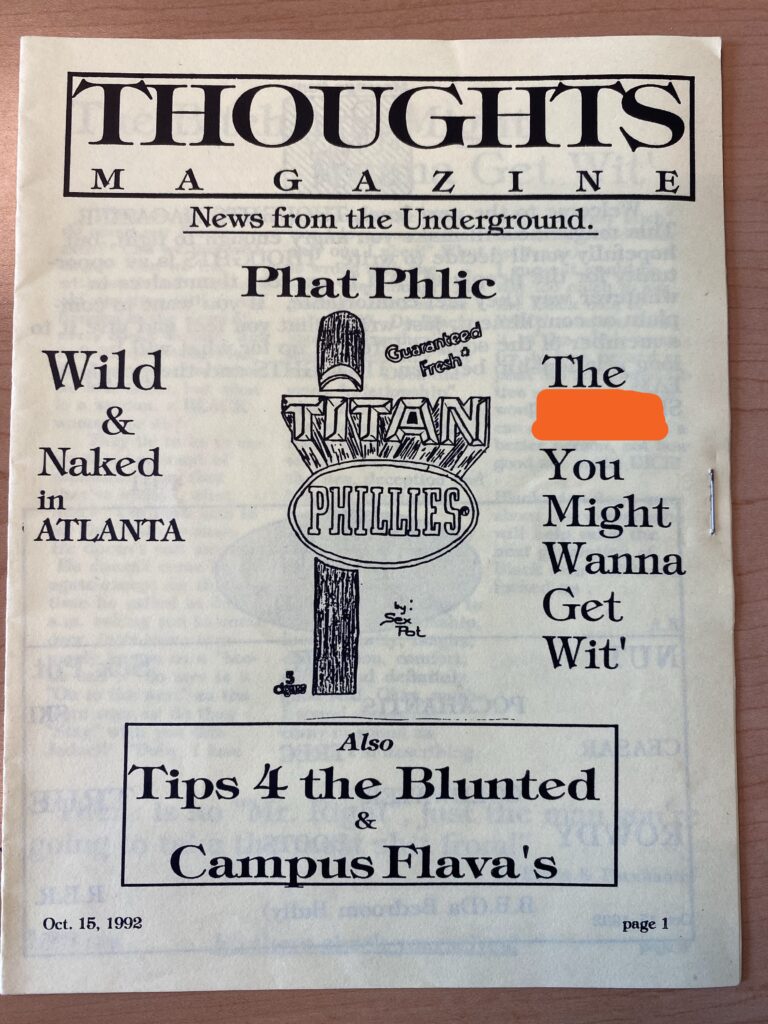 The first edition of “THOUGHTS Magazine” dated Oct. 15, 1992. (Zaccai Free)
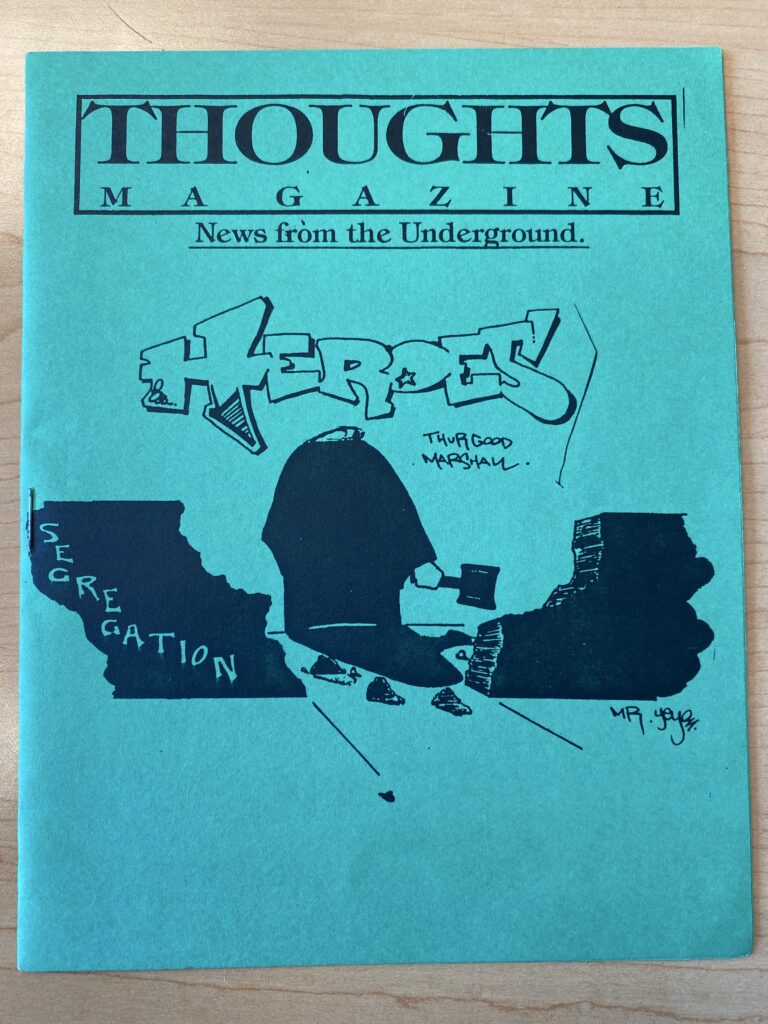 Black History Month edition of “THOUGHTS Magazine”, featuring a cartoon about Thurgood Marshall on the cover. (Zaccai Free)
“He was a very popular president of SGA,” said Corey Johnson. “He tried to bring a lot of consciousness and progressive type things to the university, and they fought President Humphries and administration, fought tooth and nail.”
Tensions on campus between administration and the student body were high following the tragic killing of student, Tamika S. Stewart in 1995 on campus in Palmetto South Apartments.
“Students started holding a bunch of forums and were inviting them to show up, and they wouldn’t show up,” Corey Johnson said. “And that ultimately led to a bunch of us marching on the administration and marching into President Humphries office.”
Indifference from administration partnered with subpar university operations brought the clash to a head.
“Over a period of three or four days, students all began to descend on Tucker Hall and held meetings that just grew and grew,” Johnson said. “At one point, there was a good 300 of us, and we just said we’re not going to class anymore.”
Free and Johnson both single this protest out as a “student uprising.” Students took over the WAMF (now known as WANM 90.5) radio station, at the time located inside Tucker Hall, taking turns on-air speaking about what had been taking place on campus.
Ultimately, the students’ efforts came to an end with police force and administration making the stride to come break the occupation up.
Administrations attempted to ease the tension that boiled over with on-campus implementations like a new parking garage.
“It forced the administration to have to make some lasting improvements to the university,” Johnson said. “But in the short term, after the dust settled, they arrested Larry Tait; they arrested a bunch of students. They kicked some students out of FAMU. It didn’t come without a cost.”
Free says he still has not been back to FAMU since graduating in 1996.
“Tait now faces felony and misdemeanor charges, stemming from a student protest he helped lead a month before graduating,” reads the article by Harper in The Tampa Bay Times following Free’s graduation.
“I really love FAMU; I love the experience I had there,” Free said. “I was very traumatized by the things that happened to me at the hands of the police chief and then later on when we had the student uprising and we took over the radio station.”
Free encourages current students to not let fear stop them from making a change.
“If you go around being scared of everything, you’re not going to live your life,” Free said. “I was afraid when they said they were going to kick me out of school. My parents did not send me there to start a magazine … but the anchor to me is always your spiritual strength.”
‘Students hit the streets after Anderson verdict’
A headline pulled from The FAMUAN chronicling the collective effort of FAMU, FSU and TCC after the acquittal of the guard who killed Martin Lee Anderson in January 2006 at a Panama City boot camp.
The march was an effort of student body president Phillip Agnew and word was spread through flyers and through Facebook, the only social media platform at the time.
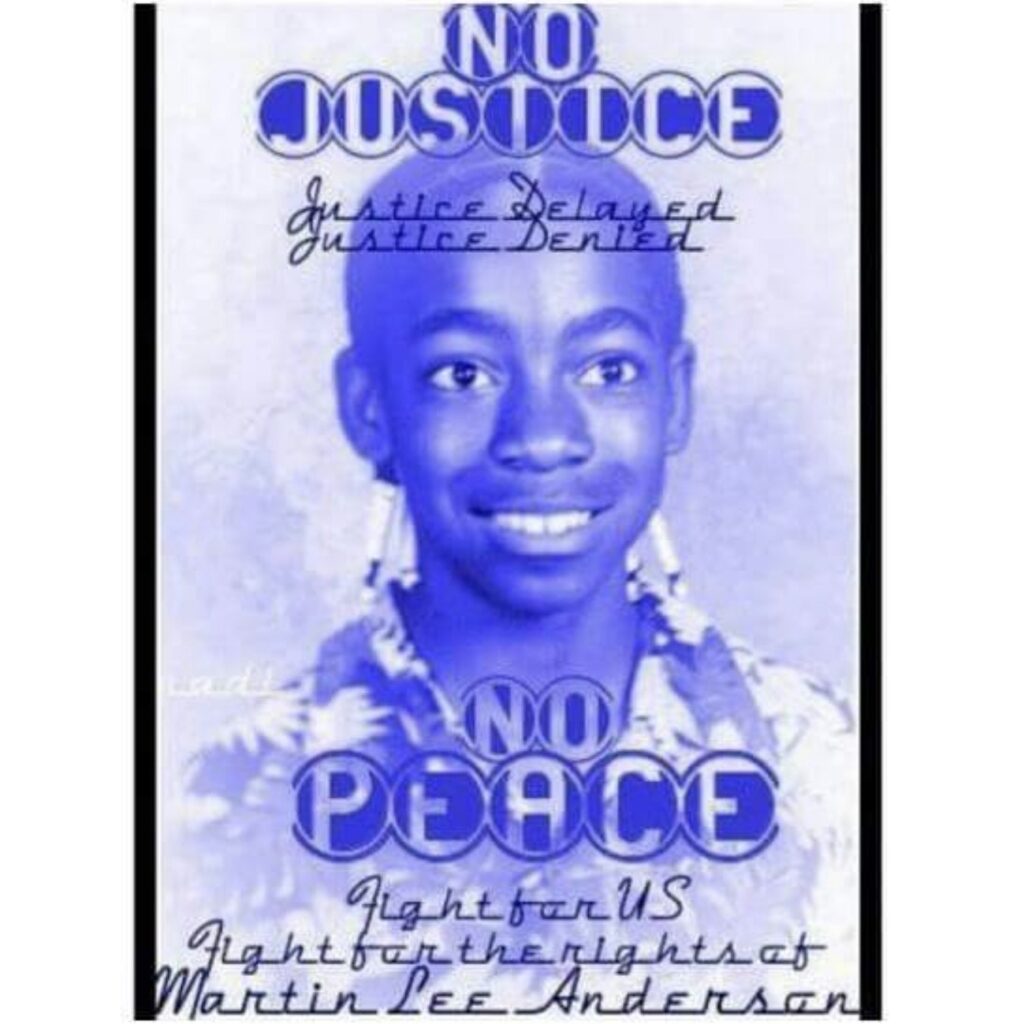 Flyer of Martin Lee Anderson for the 2007 Protest shared among the three campuses in Tallahassee. (Erica Baker)
“Thousands of students came,” said Erica Baker, activist and 2011 FAMU graduate. “We blocked those streets off; cars could not come either way. So, we gridlocked traffic, demanding justice for Martin Lee Anderson and his family.”
Baker chronicles her time as a young adult, finding herself through activism at FAMU in the late 2000s and early 2010s, citing the Martin Lee Anderson protest and an NAACP organized march to the Leon County Courthouse to vote for Barack Obama in fall 2008.
“We walked to pay homage to those who walked before us, those who gave their lives trying to vote, and to extend history by walking to vote for a Black man,” Baker said. “For many of us, like me, that was our first time ever voting in any election.”
Baker credits her time at FAMU with her urge to continue her work as an activist.
“We were acclimated to using our voice,” Baker said. “Knowing that you come from such a long lineage of standing up to issues and using your voice to be an instrument. I really bought into it. … So FAMU really was a pivotal point in that.”
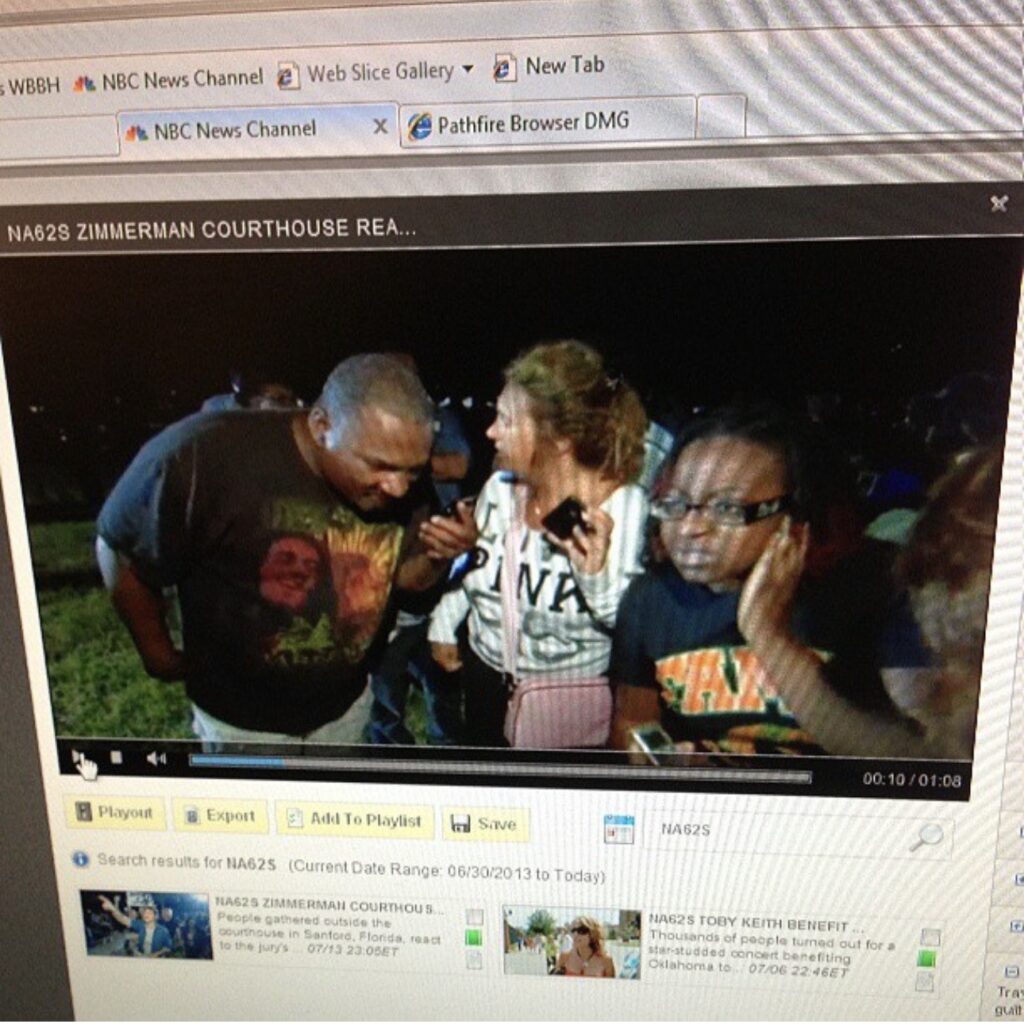 The image of Baker (far right) reacting to the George Zimmerman verdict in the NBC database in 2012. (Erica Baker)
Baker has gone on to participate in several direction action movements from Sanford, Florida, after George Zimmerman was found not guilty, where her reaction from outside the courthouse has become a moment frozen in history through museums and documentaries, to the 2020 Black Lives Matter movement in Atlanta on the frontlines with her students.
While retired from on-ground protesting, Baker has taken her activism to the business world with “Black & Bilingual”, publishing books and educational products for language learners.