
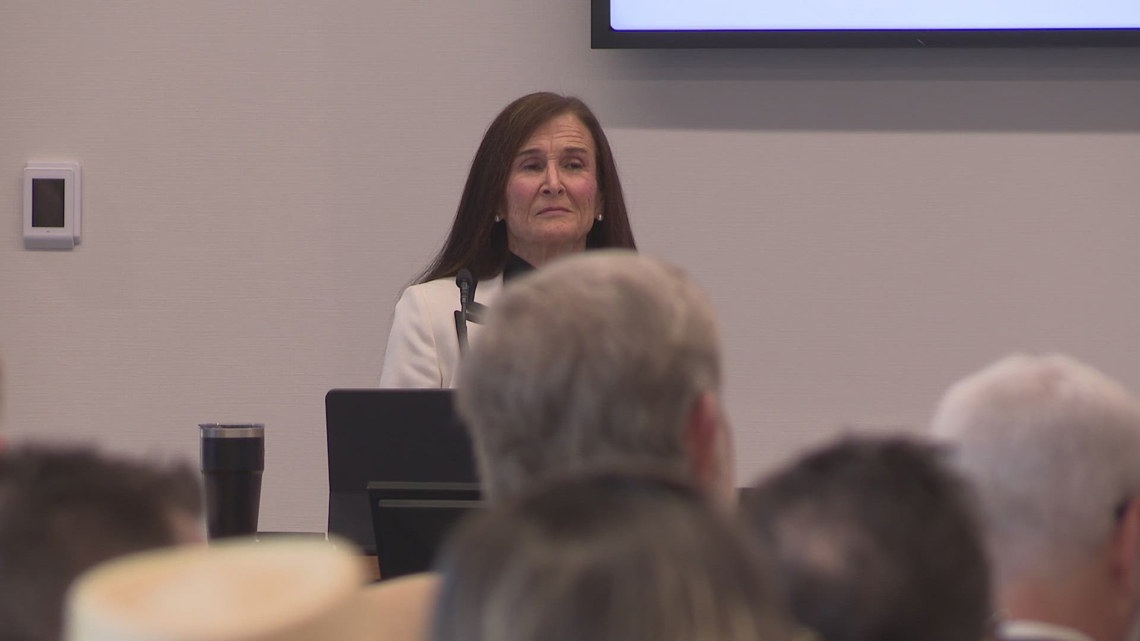
The JEA board has voted to back CEO Vickie Cavey amid allegations of toxic culture and political pressure.
JACKSONVILLE, Fla. — In a tense, high-stakes meeting on Tuesday, the JEA Board of Directors voted six to one to express confidence in JEA CEO Vickie Cavey, despite weeks of controversy surrounding claims of a toxic work environment and allegations of political maneuvering.
The drama unfolded in front of a packed room of employees, city leaders, and concerned citizens, many speaking out during public comment.
The conflict all traces back to a bombshell text message from City Council President Kevin Carrico, suggesting he wanted board member Arthur Adams replaced as a personal favor with Paul Martinez, who is Carrico’s boss at the Boys and Girls Clubs of Northeast Florida. The revelation ignited questions about nepotism, potential retaliation, and allegations of racism at JEA, putting Cavey in the crosshairs.
Kurt Wilson, the former JEA chief of staff, didn’t hold back. “As chief of staff, I spent more time with Vickie than most and watched systematically how she created a fear-based culture,” Wilson said. His position was eliminated shortly after he raised concerns about workplace morale, prompting accusations that the leadership is hostile toward those who speak up.
Vice Chair Rick Morales confirmed multiple senior leaders independently reported low morale, micromanagement, and a toxic environment, with some even considering resignation. Morales approached Cavey privately, urging her to resign. Instead, Cavey eliminated Wilson’s position, leaving Morales and the board with more questions than answers.
“I did approach Vickie and asked her to resign, and she said yes. She thanked me for bringing the concerns to her,” Morales explained. “Two days later, I received a phone call that said, I eliminated the chief of staff position, I’m not going to resign.”
Cavey, for her part, dismissed the accusations as politically motivated and unsubstantiated.
“The so far unsubstantiated accusations of systemic morale or culture problems seem false,” she said, asserting that any real issues would have surfaced in employee reviews, board feedback, or independent assessments long ago.
During the meeting, Morales pushed for an independent outside review to investigate leadership practices at JEA. His motion failed to get a second. Board silence meant no discussion, no investigation, and no accountability, leaving concerns unresolved.
City Council member Ron Salem voiced his frustration:
“There is a potentially serious issue here that the board doesn’t want to act upon. And I think the city council may act because of that, which is what I was trying to avoid.”
Salem criticized the board for shutting him down when he attempted to speak again after he first spoke, a move he said underscored the employees’ fear of retaliation.
Meanwhile, Chief Human Resources Officer Diane Moser refused to explain why Wilson was let go, offering only a “no comment” on the termination. She insisted that JEA is open to fact-finding and external review, but did not provide concrete assurances.
The meeting escalated as board members wrestled with the process and ethics. Morales defended his six-week internal inquiry, saying he acted to protect both employees and Cavey. Board members expressed frustration over his unilateral approach, highlighting the tension between protocol and moral responsibility.
Board Chair Joseph DiSalvo finally cut through the noise, calling for a vote of confidence in Cavey to end the spectacle.
“We’re not going to subject the JEA workforce or this community to unwanted drama brought on by external forces for whatever reason,” he said. The vote passed overwhelmingly, signaling the board’s backing of Cavey despite swirling controversy.
Since the controversy first erupted with the text messages, Paul Martinez has withdrawn his nomination to the JEA board. Mayor Donna Deegan reiterated her full trust in Cavey, echoing statements she made weeks earlier.
The next board meeting is scheduled for March 31, where unresolved questions about workplace culture, whistleblower protections, and leadership accountability are expected to resurface.