
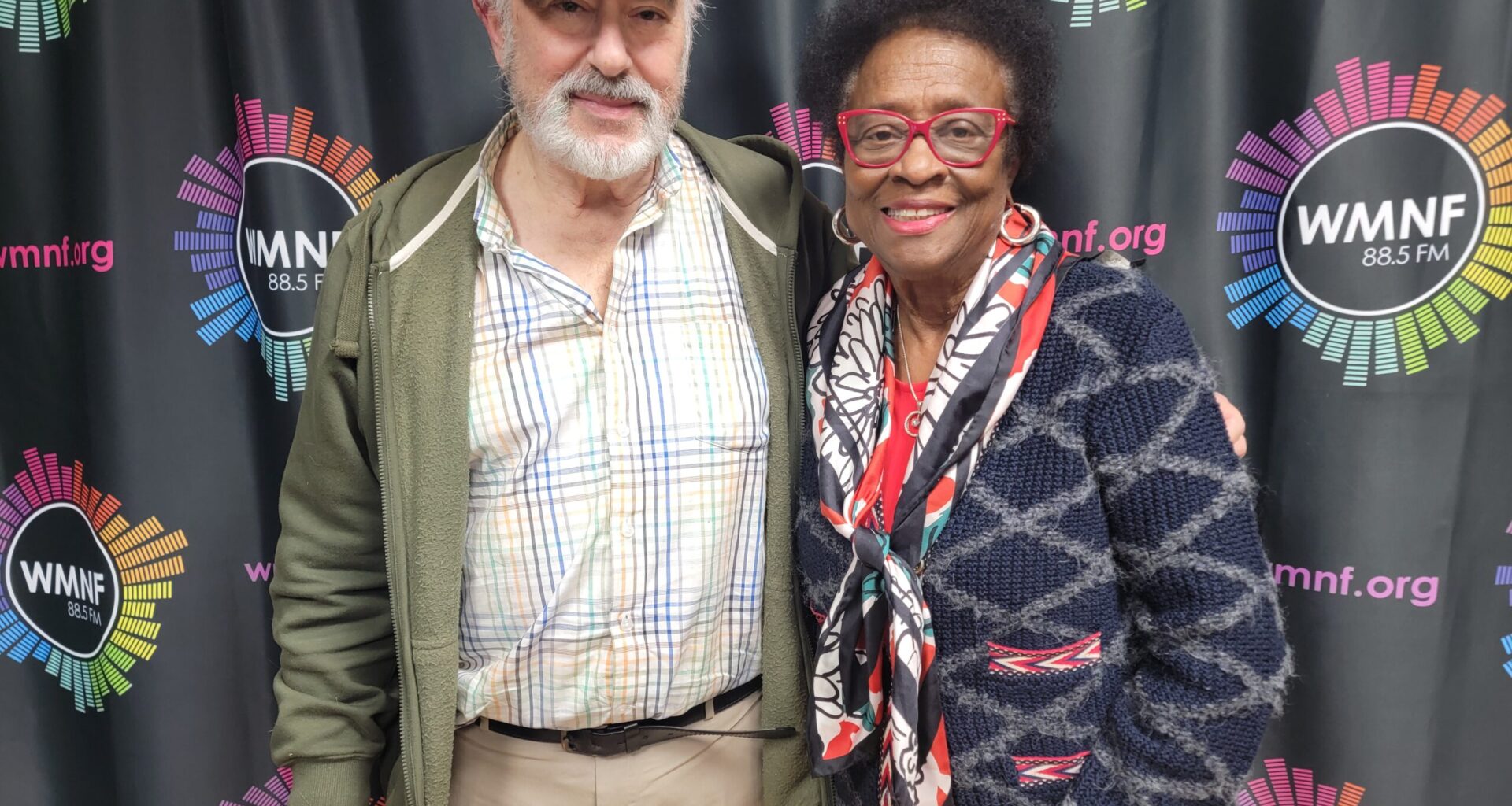
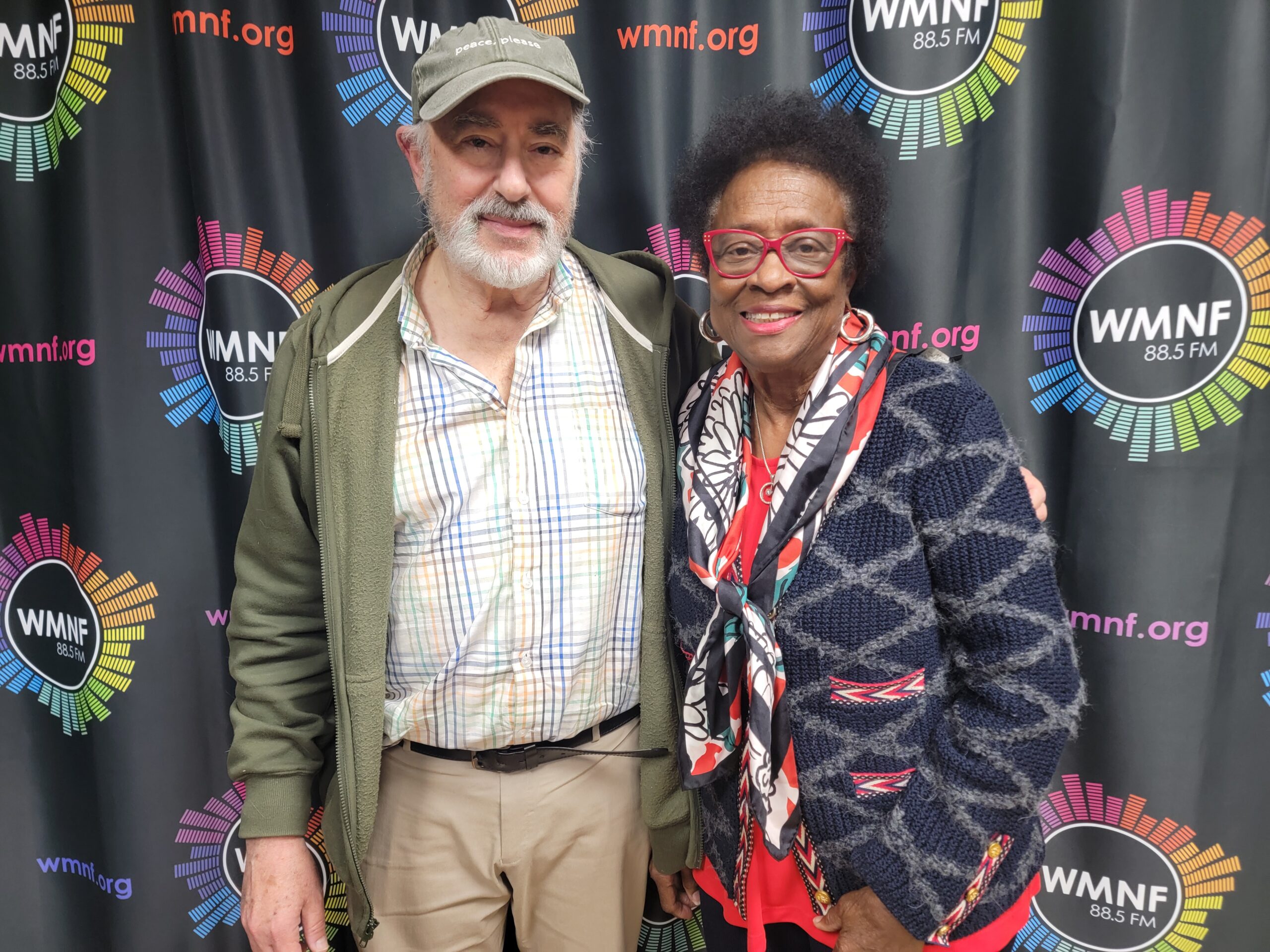
Mark E. Leib (L) & Arthenia Joyner
Black History Month is a time to reflect on pivotal moments in Tampa’s civil rights history. The play, When the Righteous Triumph, and the WEDU documentary on the desegregation of Tampa’s lunch counters powerfully bring Tampa’s civil rights story back to life. On Feb. 25, Arthenia Joyner, a legendary local activist and attorney; Mark E. Leib, playwright of When the Righteous Triumph; and former Congressman Jim Davis joined MidPoint to discuss the February 1960 Tampa lunch counter sit-ins, when students peacefully challenged segregation and changed the city’s civic landscape. Their successful, peaceful integration campaign came to be known as the Tampa Technique.
What is the Tampa Technique? It was a civil rights strategy that focused on peaceful negotiation to achieve desegregation without the violence commonly confronting activists throughout the South. It involved collaboration between Black student leaders affiliated with the NAACP and white business leaders and public officials to achieve desegregation without violence, and often with police protection. It was unique in the South, where the civil rights struggle was frequently confronted by violent resistance from the white community. On Feb. 29, 1960, a group of 40 Black high school students from Tampa’s Middleton High School and Blake High School organized peaceful sit-ins at the Woolworth lunch counter in downtown Tampa. Led by Clarence Fort, then president of the local NAACP Youth Council, these students challenged segregation with courage and discipline. One of the movement’s key figures was Arthenia Joyner, a Middleton High School student, who actively participated in the Tampa sit-ins as a teenager. Today, she is a civil rights activist, an attorney, and a politician who served in the Florida House and then the Senate, where she ended her political career in 2016 as Senate Minority Leader.
The first lunch counter sit-in in Tampa and its peaceful resolution were transformed into a play by Mark E. Leib, a playwright, theater critic, professor of fiction and screenwriting at the University of South Florida. His dramatization of the events, When the Righteous Triumph, spotlights Tampa’s significant yet often overlooked civil rights history. After a successful production was mounted at Stageworks theater in Channelside, Rep. Jim Davis, the grandson of then Tampa influential lawyer and civic leader Cody Fowler, raised funds to bring the production to a wider audience at the Straz Center in Tampa, ensuring that this important civil rights history could be shared with many more people, especially local schoolchildren.
On MidPoint, Arthenia Joyner describes the determination shared by students at that time. They understood the dangers and risks – arrests, intimidation, and social backlash- yet believed deeply in the power of peaceful protest. During the interview, former Congressman Jim Davis also discussed the influence of his grandfather, Tampa civic leader Cody Fowler. Davis notes that local leaders quietly worked with the activists, leaders in the Black community like the Reverend Leon Lowry, and white business owners to encourage discussion rather than confrontation. Their efforts were assisted by the then-Mayor, Julian B. Lane, who supported desegregation and ordered the police to protect the students at the sit-ins. These peaceful negotiations helped Tampa avoid the widespread violence seen elsewhere in the South during the same period. Our MidPoint guests emphasize that cooperation demonstrates what coordinated activism, dialogue, and courage can achieve.
The 1960 sit-ins show that students, leaders, and the community all influenced history. When the Righteous Triumph reconnects audiences to a time when unity and persistence reshaped a city. For Leib, Joyner, and Davis, the project is about more than preserving history. Davis, Joyner, and Leib agreed that revisiting Tampa’s peaceful integration offers lessons for today. It reminds new generations that major change starts locally, often with young people, with a commitment to peaceful activism. The Tampa Technique proved that dialogue and strong youth leadership can create change without violence. These events provide a model for civil rights movements addressing systemic inequity, emphasizing strategy, unity, and collaboration across communities.
As noted in the New York Times, this play, partly aimed at students, documents and highlights Tampa’s history in the civil rights movement, and comes at a time when the state of Florida is changing what schools can teach about race and history.
The WEDU PBS documentary adaptation about the making of the play broadens the story’s reach, featuring interviews, historical context, and the emotional impact of the events. You can watch When the Righteous Triumph and other documentaries for free through WEDU, the PBS Video App, on the PBS website, and via the PBS channel on Prime Video.
You can listen to this entire MidPoint show on demand from the archives here, on the WMNF app, or as a WMNF MidPoint podcast on Spotify or Apple Music.