
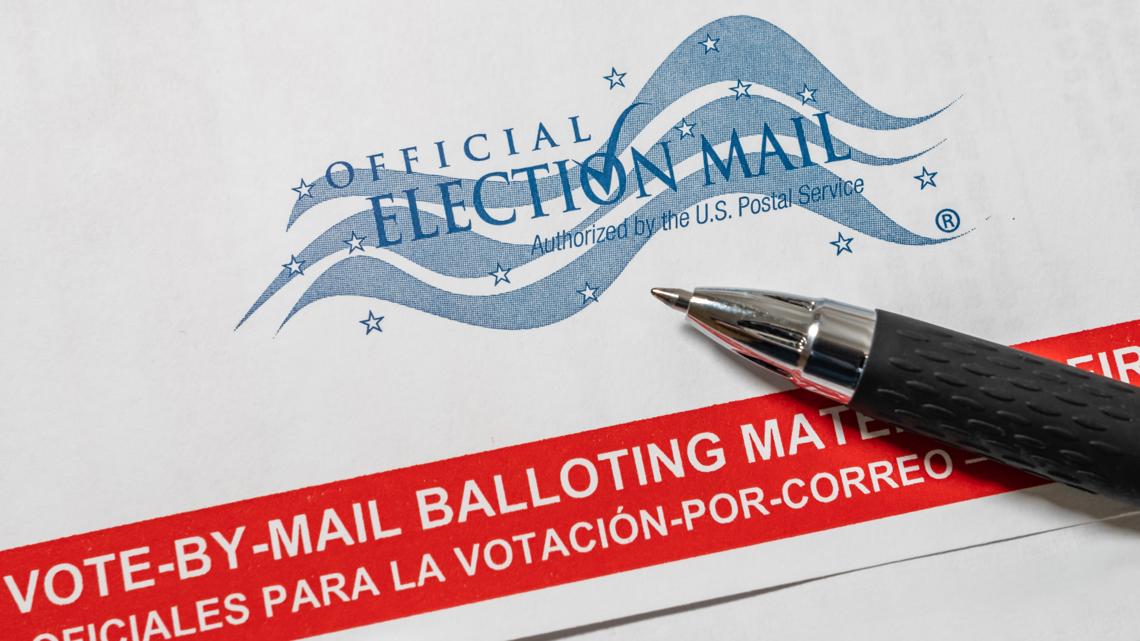
Among other changes, the bill would require a person’s citizenship status to be printed on their new or replacement Florida driver’s license or ID card.
TALLAHASSEE, Fla. — A bill making its way through the Florida legislature would require people to verify their legal status as U.S. citizens before casting their ballots — a move that critics say “will result in thousands of eligible voters being unable to vote.”
The Florida House approved HB 991 in an 83-31 vote on Wednesday, sending it to the Senate for consideration. The bill outlines sweeping changes to Florida’s election code, including new proof-of-citizenship requirements when registering to vote and a crackdown on the type of IDs accepted at polling locations.
Among other changes, the bill would require a person’s citizenship status to be printed on their new or replacement Florida driver’s license or ID card. It would also require new voters or those updating their voter registrations to prove their citizenship with a federal ID, like a passport or birth certificate.
Under the bill, that citizenship status will be verified through Florida Department of Highway Safety and Motor Vehicles records and through an audit by the Florida Department of State.
If someone’s U.S. citizenship status can’t be verified, they’ll be removed from the voter rolls and labeled an “unverified voter.”
“Florida is and will continue to be the gold standard in Election Integrity!” Republican Rep. Jenna Persons-Mulicka, the bill’s sponsor, wrote in a post.
While supporters say the bill strengthens the integrity of Florida’s elections, critics argue it will remove thousands of eligible voters from the rolls, especially those in historically disenfranchised groups.
In a statement, the ACLU said HB 991 and its Senate companion SB 1334, “will especially harm first-time voters, elderly Floridians, students, low-income and rural communities, and women who have changed their name upon marriage.”
This is largely due to a provision of the bill that would limit which valid photo IDs will be accepted at polling places. Student IDs, retirement home IDs or photo ID credit cards are currently accepted under Florida law, but won’t be if this bill is passed.
“We know the reality: many eligible voters don’t have ready access to an unexpired passport or an original or certified copy of their birth certificate because of logistical and financial barriers,” Bacardi Jackson, executive director of the ACLU of Florida, said. “More than 8 million Floridians do not have a valid passport, and because many women legally change their name upon marriage, more than 4.7 million women in Florida do not have a birth certificate reflecting their current legal name – documents this bill would require.”
Jackson argues that rather than making it easier for Floridians to participate in elections, lawmakers are intentionally “fast-tracking legislation” that would “silence communities that deserve to be heard.”
If Florida’s bill is passed by the Senate, it will go to Gov. Ron DeSantis’ desk for approval. If he signs it into law, most elements of it will take effect on July 1.
What is the SAVE Act?
Florida’s bill parallels similar efforts being made on the federal level with the Safeguard American Voter Eligibility, or SAVE America Act.
The SAVE America Act would require voters to provide documentation, such as a valid U.S. passport or birth certificate, when they register to vote. It would also require a valid photo identification before voters can cast ballots, which some states already demand.
Federal law already requires that voters in national elections be U.S. citizens, but there’s no requirement to provide documentary proof. Experts said voter fraud is extremely rare, and very few noncitizens ever slip through the cracks. Fewer than one in 10 Americans don’t have paperwork proving they are citizens.
The SAVE America Act was quickly approved by House Republicans but faces sharp blowback in the Senate.
The Associated Press contributed to this report.