
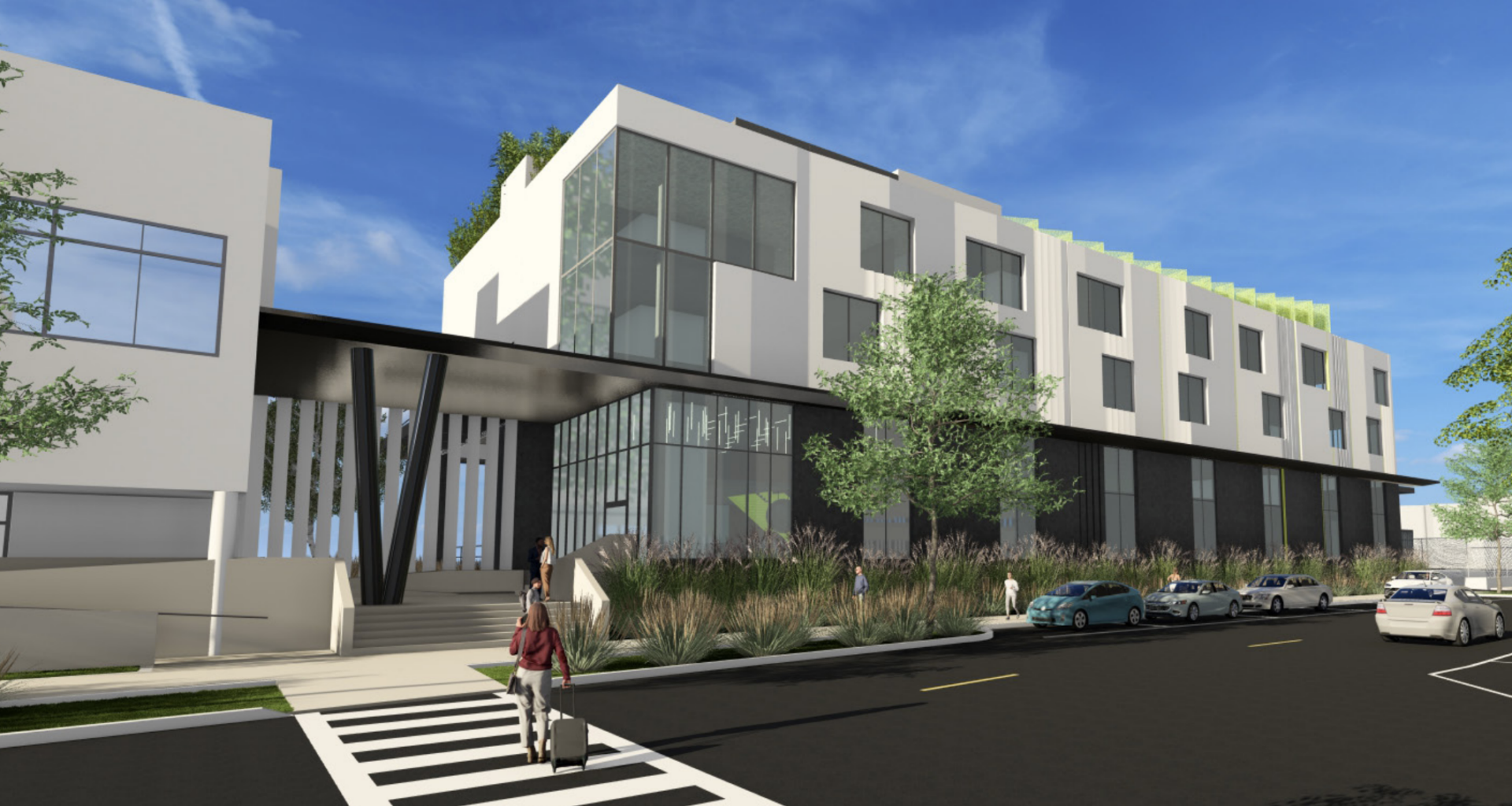
The Maritime and Defense Technology Hub – “The Hub” – in St. Pete’s Innovation District is inching closer to a massive overhaul in design (Hub 2.0) and an expanded footprint to accommodate the growing demand for space in marine tech, coastal resilience and ocean economy industries flocking to the area.
The estimated $34 million redevelopment represents a significant economic investment in positioning St. Petersburg as a leader in Florida’s rapidly expanding blue economy as well as facilitating new research and technology start-ups.
The Hub is located at Port St. Pete, one of only three commercial ports in Tampa Bay, providing St. Pete a unique opportunity for deep-water activities and marine testing. The Hub’s partnerships with government agencies like the Florida Fish and Wildlife Conservation Commission (FWC) and the National Oceanic and Atmospheric Administration (NOAA), along with its proximity to the University of South Florida’s College of Marine Science, place The Hub as a key component for economic and industry development in St. Pete’s marine sector.
But there’s still a crucial component St. Pete is missing. As Executive Director of the Innovation District Alison Barlow put it, “we need the other leg of the stool – private industry.”
While innovative businesses like Saildrone and Lone Star Lunar Holdings already occupy space in The Hub, expanding and renovating the existing building will increase its appeal to additional private companies and allow the Hub to accommodate its growing waitlist of interested parties.
The current Hub was retrofitted from a previously standing building. The new design will “add a lot of potential to expand the opportunity for our partners,” said Barlow. By partners, Barlow is referring to the “triple helix of innovation,” including government, academia and industry — and, as she noted, they’ve now added a fourth leg: non-profits. “[Expansion] will add a lot of potential for our partners,” she said.
The size of the current Hub building is 32,000 square feet. Hub 2.0 will total 52,000 square feet — a 62% increase in space to support continued job growth and industry expansion.
Beyond sheer size, the Hub 2.0 design adds dedicated high-bay waterfront workshops, significantly more private office space, and expanded collaboration areas, including flexible coworking space and loft-style work zones tailored to marine technology and research firms.
The new design also introduces a rooftop terrace for events and gatherings, stronger visual and physical connections to the waterfront through terraces and pedestrian access, enhanced communal spaces designed for social interaction and upgraded security and climate-resilience features such as layered access control and flood-proofing to better withstand future storm events.
Besides brick-and-mortar alterations, The Hub has also extended its lease terms, further benefiting current and future operations. Previously, the Hub operated under five-year leases, but the city was able to grant longer extensions, allowing companies to invest more confidently in customizing their spaces.
In addition, the city is helping The Hub pursue grant opportunities, including federal disaster relief and economic development funding, to help secure the necessary funds for redevelopment and ensure the project’s long-term sustainability.