
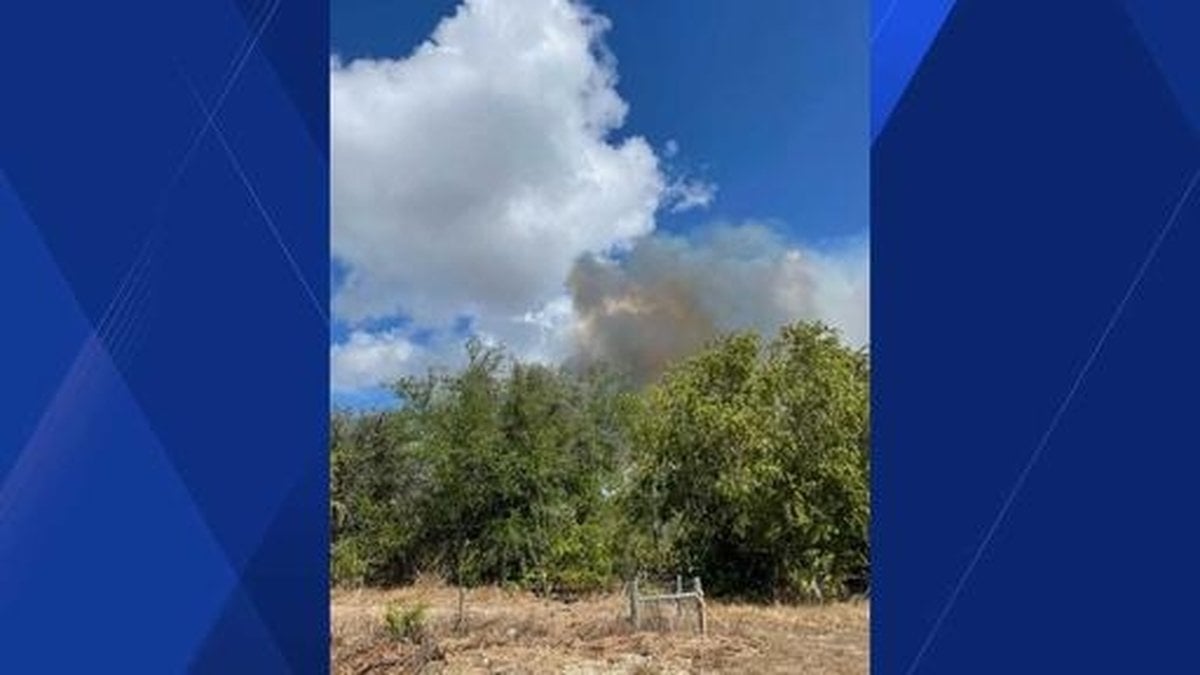
On Saturday, February 28, 2026, Cape Coral, Florida, found itself at the center of an escalating wildfire crisis that sent plumes of smoke billowing over neighborhoods and forced the closure of major roadways. What began as a four-acre brush fire in the Yellow Creek Preserve rapidly expanded, fueled by the region’s persistent drought conditions, and soon drew a multi-agency emergency response.
According to the Cape Coral Fire Department (CCFD), the first reports of smoke came in from the area near Kismet Parkway and Del Prado Boulevard. Residents and motorists quickly noticed the enormous clouds of smoke that filled the sky, a visual reminder of just how quickly wildfires can disrupt daily life in Southwest Florida. As the afternoon wore on, the fire’s footprint grew, with the Florida Forest Service reporting at 1:48 p.m. that the blaze had swelled to 14 acres and was only 20% contained.
By 3:00 p.m., the situation had become even more serious. The Florida Forest Service updated its figures, stating that the fire had burned 15 acres and was 65% contained. Meanwhile, the CCFD, working alongside the Florida Forest Service, the North Strike Team, and Cape Coral police, continued their efforts to bring the fire under control. Despite the intensity of the flames and the proximity to several subdivisions, officials confirmed that no evacuations had been ordered—a testament to the rapid and coordinated response of local emergency services.
In a statement posted on social media around 1:00 p.m., the Cape Coral Police Department announced the closure of Del Prado Boulevard from Kismet Parkway to the Coral Lakes community. The closure, which included the stretch of road between Del Prado Boulevard and Coral Lakes subdivision, was expected to last for several hours as firefighters battled the blaze and ensured the area was safe for the public. By 4:16 p.m., northbound Del Prado Boulevard was reopened, signaling progress in containment efforts and a gradual return to normalcy for area residents.
But the response to the fire wasn’t limited to road closures and firefighting. Out of an abundance of caution, nearby businesses—including the AdventHealth Cape Coral emergency room—temporarily shut their doors. The closures underscored the seriousness of the situation and the importance of prioritizing public safety, especially as heavy smoke reduced visibility and threatened air quality in the vicinity.
Despite the fire’s growth and the dramatic images of smoke-filled skies, the Cape Coral Fire Department reported that no structures had been damaged. This outcome was a relief for many, especially those living in subdivisions close to the Yellow Creek Preserve. The CCFD urged motorists to avoid the affected areas, both to ensure their own safety and to allow emergency vehicles unimpeded access to the scene.
The underlying conditions that made the fire so dangerous are part of a broader challenge facing Southwest Florida. According to the U.S. Drought Monitor map, Cape Coral was experiencing a severe drought at the time of the fire. The Weather Channel’s forecast offered little hope for immediate relief, predicting only a 15% chance of rain on the day of the fire and a slightly higher 17% chance the following day. These dry conditions, combined with ongoing drought throughout the region, have made the area especially susceptible to wildfires.
This vulnerability was further highlighted by events occurring elsewhere in Southwest Florida. At the same time as the Cape Coral fire, a massive 30,000-acre brush fire continued to burn in Collier County, and several smaller fires had sparked throughout the region. On the previous day, February 27, 2026, a separate fire in Charlotte County prompted evacuations—an indication of just how widespread and persistent the wildfire threat had become.
“We’re working closely with the Florida Forest Service and other agencies to contain the fire and protect our community,” a spokesperson for the Cape Coral Fire Department said. The multi-agency response was evident on the ground, with firefighters from the CCFD, Florida Forest Service, North Strike Team, and Cape Coral police all coordinating efforts. Their combined expertise played a crucial role in preventing the fire from reaching nearby subdivisions and in keeping residents informed and safe.
The Cape Coral Police Department kept the public updated through regular announcements, emphasizing the need for caution and patience. “Motorists are asked to avoid the area,” they stated, reiterating that the roadway between Del Prado Boulevard and Coral Lakes would remain closed for several hours. These proactive measures helped ensure that emergency crews could work efficiently and without unnecessary obstacles.
For residents, the fire was a stark reminder of the risks posed by Florida’s dry season. The sight of thick smoke hanging over familiar streets was unsettling, but the community’s resilience and the professionalism of local emergency services offered reassurance. No homes were lost, and no injuries were reported—a testament to both luck and well-practiced emergency protocols.
As the afternoon turned to evening, containment figures continued to improve. By 3:55 p.m., the Florida Forest Service reported that the fire was 36 acres and 95% contained. This significant progress reflected the tireless work of firefighters and the effectiveness of inter-agency cooperation. Businesses began to assess when it would be safe to reopen, and the Cape Coral Police Department prepared to lift remaining road closures as soon as conditions allowed.
Yet, the broader context remained sobering. The ongoing drought, combined with the frequency of brush fires across Southwest Florida, raised questions about the region’s preparedness for an increasingly volatile fire season. With climate patterns driving longer dry spells and higher temperatures, officials and residents alike are being forced to confront the reality that wildfires may become a more common feature of life in the region.
Looking ahead, local authorities emphasized the importance of community awareness and preparedness. “We urge everyone to stay informed and to follow guidance from emergency services,” said a representative from the Florida Forest Service. As the smoke cleared and life in Cape Coral began to return to normal, the lessons of the day lingered—underscoring the need for vigilance, cooperation, and a shared commitment to safety in the face of nature’s unpredictable power.
Saturday’s fire in Cape Coral will be remembered not just for the dramatic images and temporary disruptions, but for the way the community—and its first responders—rose to meet the challenge. With the fire largely contained and no major losses reported, residents could breathe a little easier, even as they remained mindful of the risks that lie ahead.