
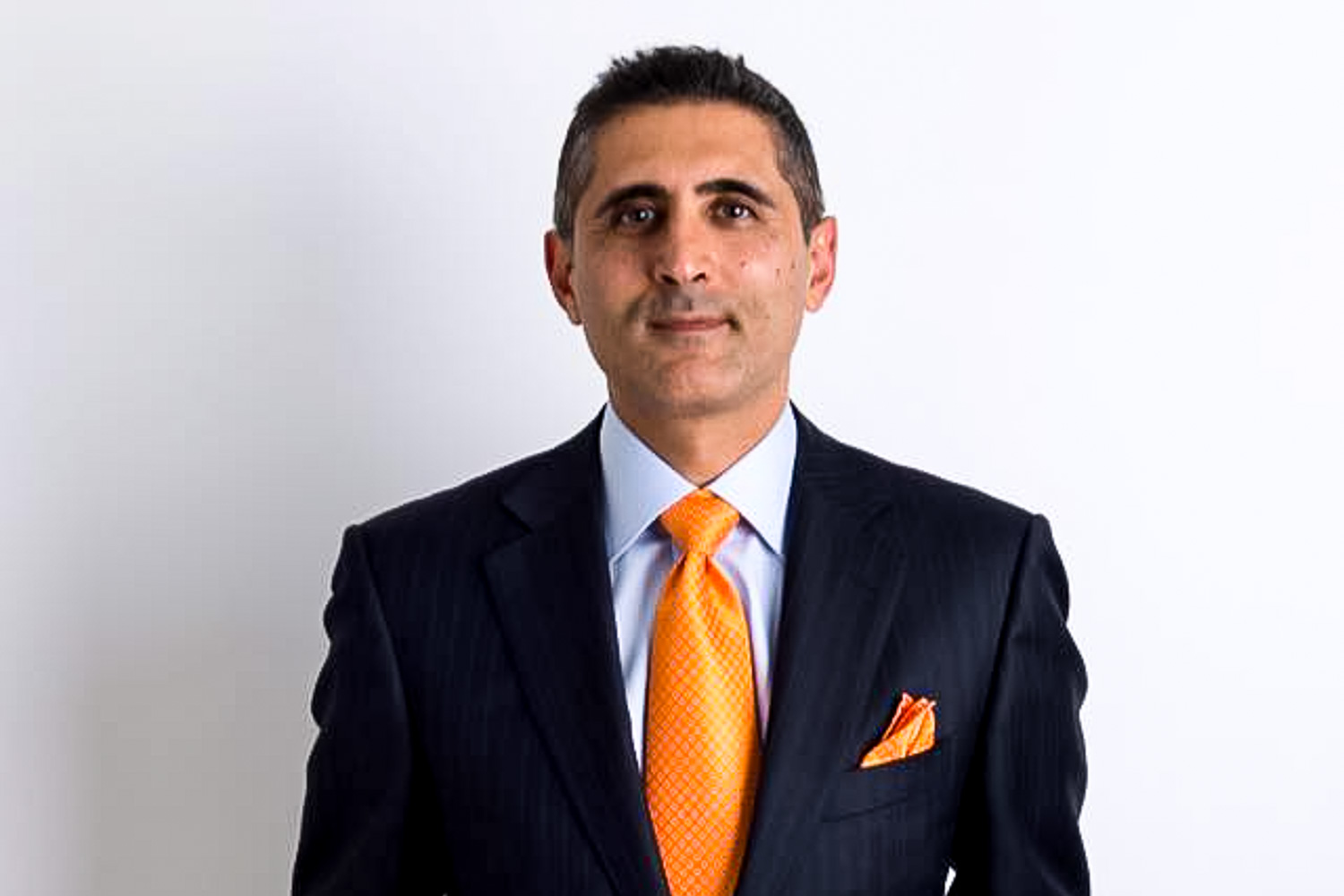
As the U.S. and Israeli war against Iran escalated over the weekend, a Key Biscayne physician, Dr. Hamid Keshvari-Rasti, expressed strong support for the attack that killed Iran’s leader, Ayatollah Ali Khamenei. Dr. Rasti, as he is known by patients, left Iran as a child. He spoke with the Independent Sunday.
The following interview is edited for length.
Dr. Rasti
I left Iran about 30-35 years ago, after the war ended, and I’ve been residing in the States and Canada since then, and my family still is in Iran. I have pretty much every investment into that country [to see it] turn around and get better, back to a democracy, or at least some form of prosperous situation.
Tony Winton
The watershed event in more recent times was the Iranian revolution in 1979. How did we get here? In your view?
Dr. Rasti
I was in fourth grade when the revolution happened. So it truly was the democratic uprising. For better and worse, there were mass demonstrations and people wanted change. It was a very democratic uprising, which literally was hijacked by the current administration and their proxies.
Later and throughout these 47 years, they have steered the country to a very militant, non- democratic Islamic country that is completely the opposite of what people wanted in 1979. Everybody…that was a technocrat at that time conceded the power to these mullahs, which had an agenda to take over and make the country the way it is today. So, this became a hijacked revolution. And now we see the result of it.
Tony Winton
Iran has become a pariah state. Why are we at the stage that we’re at now?
Dr. Rasti
Well, that’s a very good question. What is it, that the world is not seeing this? I mean, the Europeans have been dealing with Iran for many years. Unfortunately, sometimes the politics of the countries and the truth don’t align. We have had administration after administration in this country, we have had Europeans for their own benefit, dealing with Iran in different ways. They still deal with Iran despite the sanctions. Unfortunately everybody. The Europeans, the Americans, they have failed.
This regime has no intention to give up their nuclear ambitions, even if they say it today, even if they’re pushed to a corner. Even if they don’t own the atomic bomb, they want to have the power to make it, so that gives them a leverage to stay in power. And that’s what the world needs to understand.
A regime that goes out and kills thousands of people — let’s say 5,000 — what does that tell you? I mean, they’re willing to go to any extent to survive, and that is a red flag for the entire world.
And I just don’t understand how nobody sees this…This regime needs to change. That’s the ultimate goal.
Tony Winton
You’re in favor of the U.S. action, clearly.
Dr. Rasti
Favor of it, absolutely. But the end goal should be regime change. Throwing bombs on the country, it’s not going to happen. Eventually, this has to happen by the Iranians, through mass demonstrations and change in leadership.
Tony Winton
Are you concerned that it hasn’t been thought through enough?
Never miss a story! Sign up for our FREE newsletter
Dr. Rasti
They [U.S. and Israel] have been researching very well to be able to accomplish what they have accomplished. What happened yesterday would [be] close to a dream. We would have never thought that they would be able to take the Ayatollah Khamenei within a day. I mean, this was incomprehensible two days ago. The question is, have they thought through what’s going to happen next?
Tony Winton
What should happen next in your view? Because it looks like the remaining leadership in Iran has already taken steps to appoint the next generation.
Dr. Rasti
Well, Tony, I am not an expert in this area, but common sense is to push the regime, tighten the sanctions, true sanctions. Make sure their oil is not, not sold to any country. Make sure that these guys, their accounts in other countries, are completely discovered and sanctioned.
And then on top of that, to diminish their power so people can rise up and do what they need to do. Remember 40 days ago, there were mass demonstrations in the streets. These people are not afraid to go out there…If the regime is weakened, people are not afraid to go to the streets.
Tony Winton
Well, President [Trump] encouraged people. They encouraged the Iranian people to rise up.
Dr. Rasti
Encouragement is different from what they actually see on the ground, that there is no organization. Listen, the regime is still in power. I mean, yeah, you could kill the head of the IRGC (Islamic Revolutionary Guard Corps), but IRGC is still there. These guys are getting paid to protect the regime.
So we’re not naive to say that, ‘oh, wow, tomorrow it’s going to change ‘ by killing one or two people. But psychologically, when they see that every single one of them is under attack, psychologically, when they see that this regime is weakened, this will make them think twice, because they know this is the end.
So, this also will give people enough courage to go out there and fight them. How long it’s going to take, how are they going to do it? That’s the question that needs to be answered. But no other revolution, no other change in regime, has happened overnight.
Tony Winton
What would you say to people who are worried here in the United States about getting involved in another big, long war like Iraq or Afghanistan, and about Congress not voting on it? What would you say to those people who raise those concerns?
Dr. Rasti
Well, I sympathize with that, and I don’t think this should be a situation that America mobilizes troops in Iran. As Iranians, we don’t want that, because that would be a long, long, long fighting war. But the fact [is] that the U.S. has taken a position: that negotiating with these guys gets them nowhere.
This country and the whole world, including the region, will be much better off if this regime completely is gone and a more democratic Iran is in power. So yes, they could argue that this is not in the best interest of the United States at this moment, but it is in the best interest of the United States and the whole world in the long run.
Imagine a prosperous Iran. Imagine the relationships that you could have, the amount of resources that could fund this country. Yes, you might have casualties, which is sad, but that’s to secure a future for the region, [and] secure a future for the United States that is going to have a secure ally in that area. And that should be thought for.
Tony Winton
You mentioned you had family in the country. You must be concerned for them.
Dr. Rasti
They’re holding up. Right now, even simple communication, as much as a telephone [call] to Iran, is banned. Yes, we are absolutely concerned about bombs that are falling, that are going to have collateral damage. Yes, we are absolutely concerned about people [who] don’t have enough ability to go out, because of the disruption of infrastructure to get what they need. These are our worries. My dad had a stroke a few weeks ago, and it’s been delayed in health care and so forth. But you know, this is the reality: we are willing to deal with that, as far as the outcome is something more prosperous for us.
Tony Winton
Thank you for speaking with me.
EDITORS NOTE: Dr. Rasti is one of author’s physicians.
Invest in Local News for Your Town. Your Gift is tax-deductible

Editor-in-Chief
Tony Winton is the editor-in-chief of the Key Biscayne Independent and president of Miami Fourth Estate, Inc. He worked previously at The Associated Press for three decades winning multiple Edward R. Murrow awards. He was president of the News Media Guild, a journalism union, for 10 years. Born in Chicago, he is a graduate of Columbia University. His interests are photography and technology, sailing, cooking, and science fiction.