
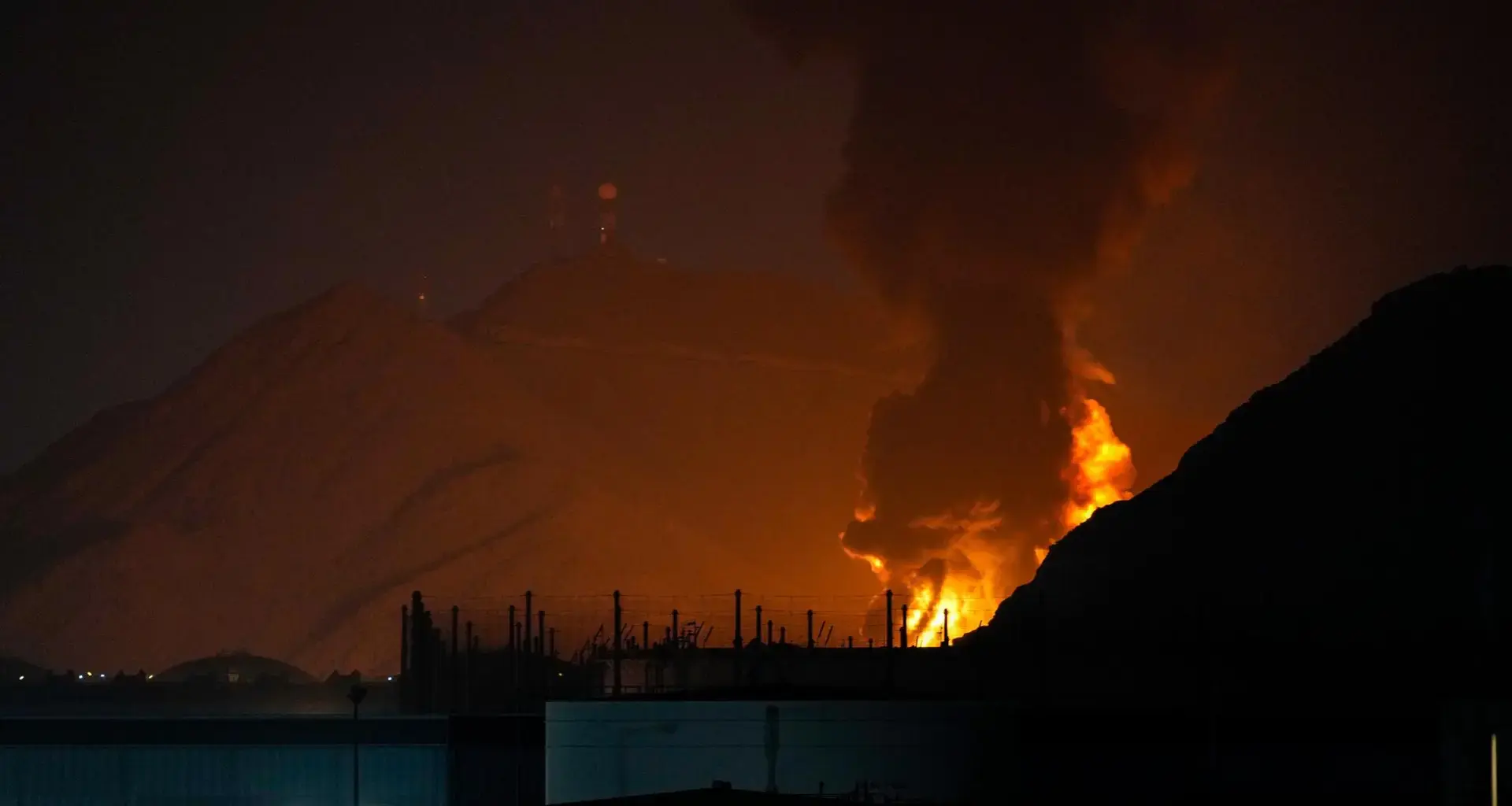
Tensions in the Middle East have officially reached a breaking point this week as the United States and Israel launched a massive joint military campaign against Iran, targeting its nuclear infrastructure and senior leadership, according to Associated Press.
This operation, dubbed “Epic Fury,” has triggered a wave of retaliatory strikes across the Persian Gulf, leaving the international community on high alert, raising economic concerns among UNF professors and fueling federal administration doubt among college students.
In one of the latest attacks, Iran launched attacks against the U.S. Embassy in Saudi Arabia on Tuesday, March 3.
Retaliation and Regional Escalation
According to Associated Press, the conflict intensified on Tuesday as Iran struck the U.S. Embassy in Saudi Arabia. This prompted the U.S. to begin a significant withdrawal of staff from the Middle East while the U.S. and Israel launched heavy airstrikes against Iran.
Due to the ground tanker traffic through the Strait of Hormuz, which borders Iran, coming to a halt, oil prices have soared. Disruption of tankers traveling through the strait, which carry oil and gas, significantly affects the oil trade, according to Associated Press reports.
The U.S. military has confirmed six deaths of American service members. In addition, three people were killed in the United Arab Emirates, and one in both Kuwait and Bahrain, according to reports from Associated Press.
Thoughts from the Osprey Community
While students and staff are preparing for Midterm Week, the UNF community is also feeling the effects of the conflict in Iran and considering the impacts of the disruption of the oil trade.
Political Science Professor Sean Freeder provided insight on the matter.
“Oil prices will certainly increase, though the amount depends significantly on how long the war lasts and how Iran chooses to respond,” said Freeder. “For instance, if Iran were to close the Strait of Hormuz, prices would heavily spike, but doing so would also harm Iran’s significantly economy, so there’s a trade off that will depend on how threatened leadership feels.”
According to Freeder, a rise in oil prices affects the prices of other goods, given that shipping and distribution are major components of most product prices.
“Depending on the war’s length, the federal budget could also be significantly impacted. Wars are expensive, especially as they drag on, so a prolonged conflict would lead to a noticeably higher debt and deficit,” Freeder said.
In Freeder’s opinion, the U.S. putting troops on the ground is “highly unlikely”.
“We have a large standing army; students probably don’t need to worry about the possibility of a military draft,” Freeder said. “That said, Trump has not ruled out the possibility of on-ground troop deployments.”
After Israel launched the “Twelve-Day War” in June 2025, UNF Assistant Professor Seema Shekhawat explained the Israel-Iran conflict to Spinnaker, noting that the U.S. involvement could heighten political polarization on college campuses.
She said this could, in turn, create challenges for university administration to balance free speech and safety.
“The Israel-Iran conflict and the U.S. involvement could lead to political division, activism, and polarization,” said Shekhawat.
UNF student Jae Castro expressed that the United States’ involvement with Iran is a testament to the current administration’s priorities.
“I personally feel as if this conflict could have been easily avoided and that the event’s unnecessary nature speaks to the current U.S. administration and Israel’s values fueling the current political climate by sparking more unnecessary division,” Castro said.
Conflict Origin
The conflict began in the early hours of Feb. 28, when U.S. and Israeli forces conducted airstrikes on over 2000 targets within Iran, according to NPR.
President Donald Trump, in a statement released on Feb. 28, said the operation was necessary to eliminate Iran’s ballistic missile and nuclear programs.
“The United States military is undertaking a massive and ongoing operation to prevent this very wicked, radical dictatorship from threatening America and our core national security interests,” Trump said in an 8-minute video posted on his Truth Social.
In June 2025, the U.S. reported three military strikes on Iran’s nuclear sites, in which Trump reported “Iran’s key nuclear enrichment facilities have been completely and totally obliterated.”
___
For more information or news tips, or if you see an error in this story or have any compliments or concerns, contact [email protected].