
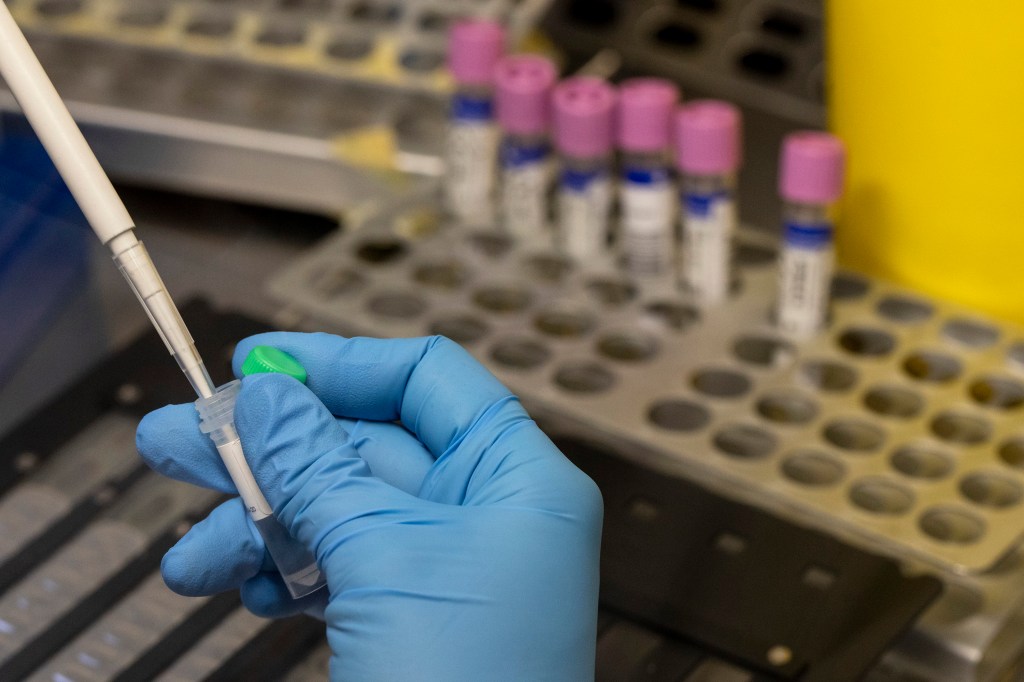
Last week, we Central Floridians witnessed some dramatic extremes, and not just temperatures swinging from biting 30s to sticky 70s. Like Americans everywhere, many of us watched the State of the Union speech, a divisive tirade. In contrast, at a genomics meeting held at Disney, called AGBT, which I attended, researchers gave inspiring speeches about their projects to improve medicine and ultimately save lives.
AGBT stands for Advances in Genome Biology and Technology. The projects described included studies of the ways that bats avoid ever getting cancer or covid, studies using a “smart toilet” that may one day replace colonoscopies, and work that is curing genetic diseases until now considered incurable.
Genomics is the study of all of an animal’s genes. Genomics, which relies heavily on computers, considers how genes interact with each other and with the creature’s environment. In contrast, genetics involves the study of specific genes or parts of genes.
Emma Teeling, PhD, from the University of Dublin, and her colleagues do bat research. Besides not developing cancer, bats also resist catching infections, such as COVID, from other animals. Furthermore, their hearing stays sharp all their long lives. If science can figure out how bats do these cool things, we may find ways to improve our own health prospects, including developing new drugs to prevent or cure human cancers.
And imagine a future without colonoscopies. Those uncomfortable tests, which involve risks, may soon be replaced by “smart bathroom” tech. Jack Gilbert, PhD, of the University of California San Diego, and his team have developed an AI-powered device that sits by your toilet. It reads your gut microbiome off used toilet paper. “The Data Dump,” as Gilbert, who is from England, called it, has real potential as a hassle-free, noninvasive diagnostic tool for colon cancer and other ills. The device can also help with personalizing diets to suit individual needs. The National Institutes of Health awarded $14.55 million for this research.
Please note that while the president keeps talking in gory detail about horrors caused by a few immigrants and while his policies drive down the enrollment of overseas students in U.S. colleges and universities, both of the above researchers and many of the other AGBT researchers hail from abroad.
With support from the National Cancer Institute, Elaine Mardis, PhD, of The Ohio State University, is curing diseases long deemed incurable, using personalized genetic treatments. These treatments employ a gene editing technique called CRISPR that lets scientists alter DNA in a living organism.
One year ago, the approach saved the life of an infant called KJ, born in Philadelphia with a rare liver disorder. The first person to receive a personalized gene editing therapy, KJ is thriving and reaching developmental milestones.
During the State of the Union, the top federal employee bullied, bragged and rambled for 107 minutes. In contrast, each scientist stuck to their allotted 30 minutes, and gave generous credit to their students, colleagues and funders.
Sophisticated medical research costs money. Traditionally federal agencies have been major funders of such work. But during his second term, this president has overseen massive funding cuts and layoffs within science-focused agencies. The American Institute of Physics recently reported that around 20% of jobs have been lost at the National Institutes of Health and more than 30% of jobs have been lost at the National Science Foundation.
The president appoints anti-science leaders with extreme, outlier views to head scientific agencies. There’s climate denier Lee Zeldin leading the Environmental Protection Agency. Zeldin supports policies that aggravate the already dire decline in bird and other animal populations. There’s anti-vaxxer Robert F. Kennedy, Jr. at the head of Health and Human Services, spouting disproven lies about vaccines while vaccine-preventable deaths keep climbing. These “leaders” hamstring the ability of those scientists who remain to do their jobs promoting research, protecting our health, and safeguarding the environment.
“Microbiology can solve the world’s greatest problems,” Gilbert said last week. To do so, it needs funding and broad support. Midterm elections are coming. Let’s send the MAGA crew packing, and vote for the candidates who stand up for science.
Milly Dawson lives in Maitland.