
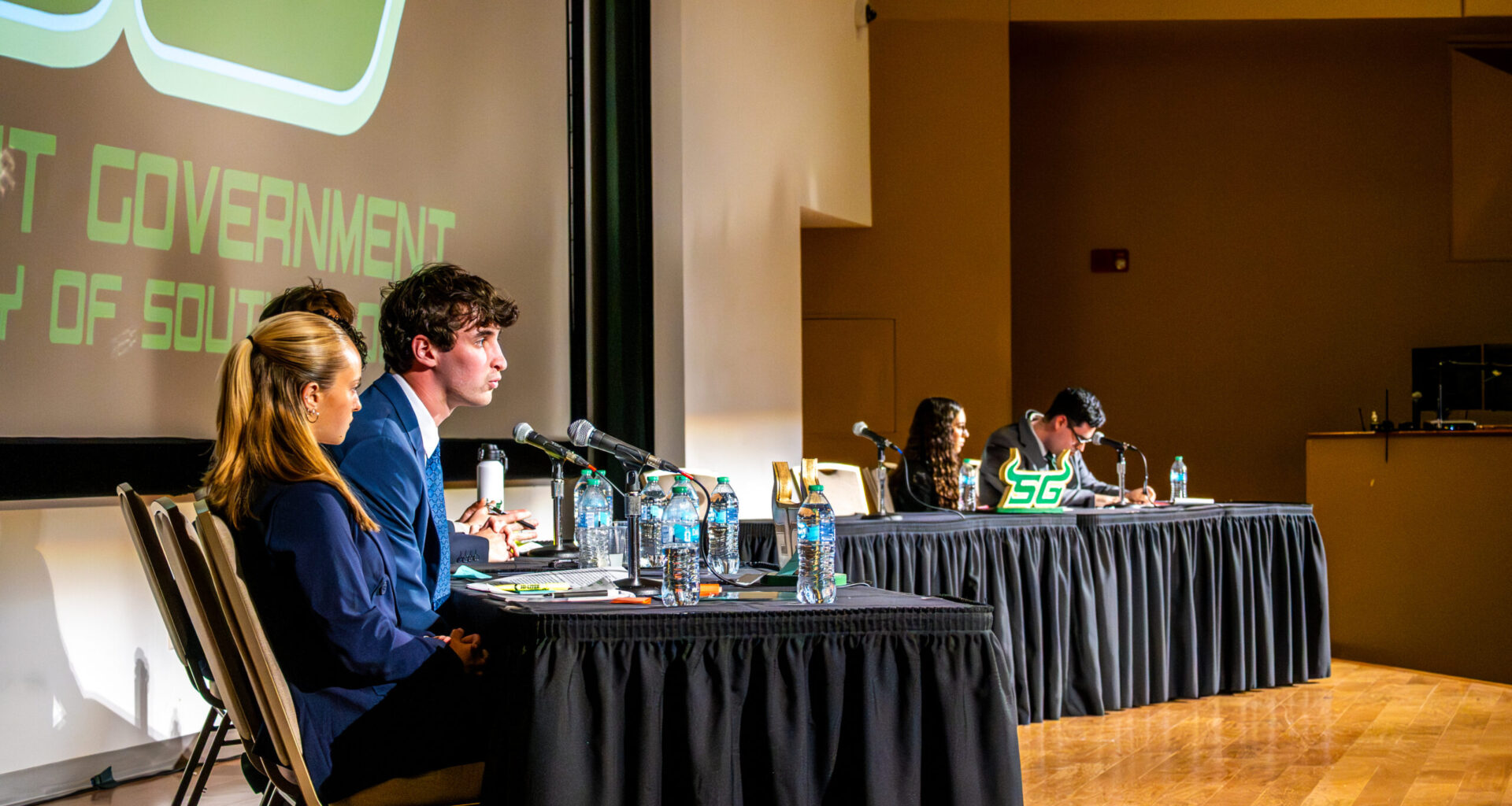
 A new 20-hour cap for USF Student Government positions will help ensure fairness and work-life balance. ORACLE PHOTO/DYLAN SABOL
USF’s Student Government will change its hour cap to 20 hours for elected and appointed student positions to help mitigate concerns about consistency, fairness and student success.
Dean of Students Danielle McDonald sent a memo to SG members on Jan. 12 outlining the hour changes.
McDonald told The Oracle that several SG job descriptions required more than 20 hours a week but had not been filling them at that hour requirement.
These positions included the student body president, student body vice president and campus governors, according to SG.
The memo stated that a majority of other colleges in the State University System of Florida have a maximum requirement of 20 hours per week for student workers.
Additionally, it stated that Student Success research showed that working more than 20 hours per week as a student could have negative impacts on their education and studies.
And while the change was made to apply to SG positions, McDonald said other Student Success departments could adopt and implement the policy if they have not yet done so.
USF has over 40 student success departments, which include USF’s Academic Advising, Counseling & Mental Health, Student Involvement and Residential Education.
“Student Success supervisors have agreed that 20 hours would be the standard for our student employees with some exceptions during particularly busy times,” McDonald said.
While the policy change means students will only work 20 hours in SG, some SG leaders said the change will be positive for education and work-life balance.
Related: USF SG presidential debate covers budget cuts, transparency and more
Emma Goodwin is the USF Tampa governor and a member of the Campus Allocation Funding Committee, which makes the annual budget for activity and service fee-funded Student Success departments and student organizations.
A&S fees are collected through tuition through a $7 flat fee and an additional $12.08 per credit hour, which are then used to fund services directly related to student activities, according to SG.
Goodwin said CAFC will now also be responsible for analyzing how the hour change will affect Student Success departments’ annual budgets — which include operating, payroll and programming expenses.
“What we decided to do is still give the [Student Success] departments the total amount of money they would have gotten, in case they want to go back and add a position due to the hour cap,” Goodwin said.
Although the budgets will not be released until July 1, Goodwin said SG officials elected in the 2026 general elections will be capped at 20 hours a week.
But Goodwin said the impact the hour change may have on the budget may not allow SG to offer the same services in the coming years.
Ethan Walsh, the USF Tampa lieutenant governor, said the changes may require SG to hire new positions, divide work between positions or cancel certain programs.
“This is coming at a time when there are other budget cuts happening, so it might be tough to find the root of where the actual effect is coming from because of the potential for positions overall to decrease,” Walsh said.
A $2.6 million A&S budget shortfall last year resulted in nearly 50% budget reductions to student organizations, while departments saw a 8% cut to programming and a 1% reduction to payroll.
Related: USF SG shares tips for submitting A&S budget requests as deadline nears
McDonald said it is important that students in SG are consistent in their work and education, adding that the hour cap will help them succeed in both areas.
“As the human resources accountable officer for Student Government, it is my responsibility to ensure student government positions comply with employment requirements and Student Success values,” McDonald said.
Walsh said the policy change will ensure that students in SG prioritize their education instead of their work.
“Our main job is to be students, and as student leadership elected positions, we want to be as much servants to the student body as we can be, but what comes first is our education and being role models in that regard,” Walsh said.
Walsh said he believes the policy change will have a positive impact on SG members, emphasizing that, even in their positions, their main job is to be students.
“I think that change will potentially help student leaders or anyone in those positions with work-life balance, where they are giving attention to their role but also make sure they are leaving time to be a student,” Walsh said.