
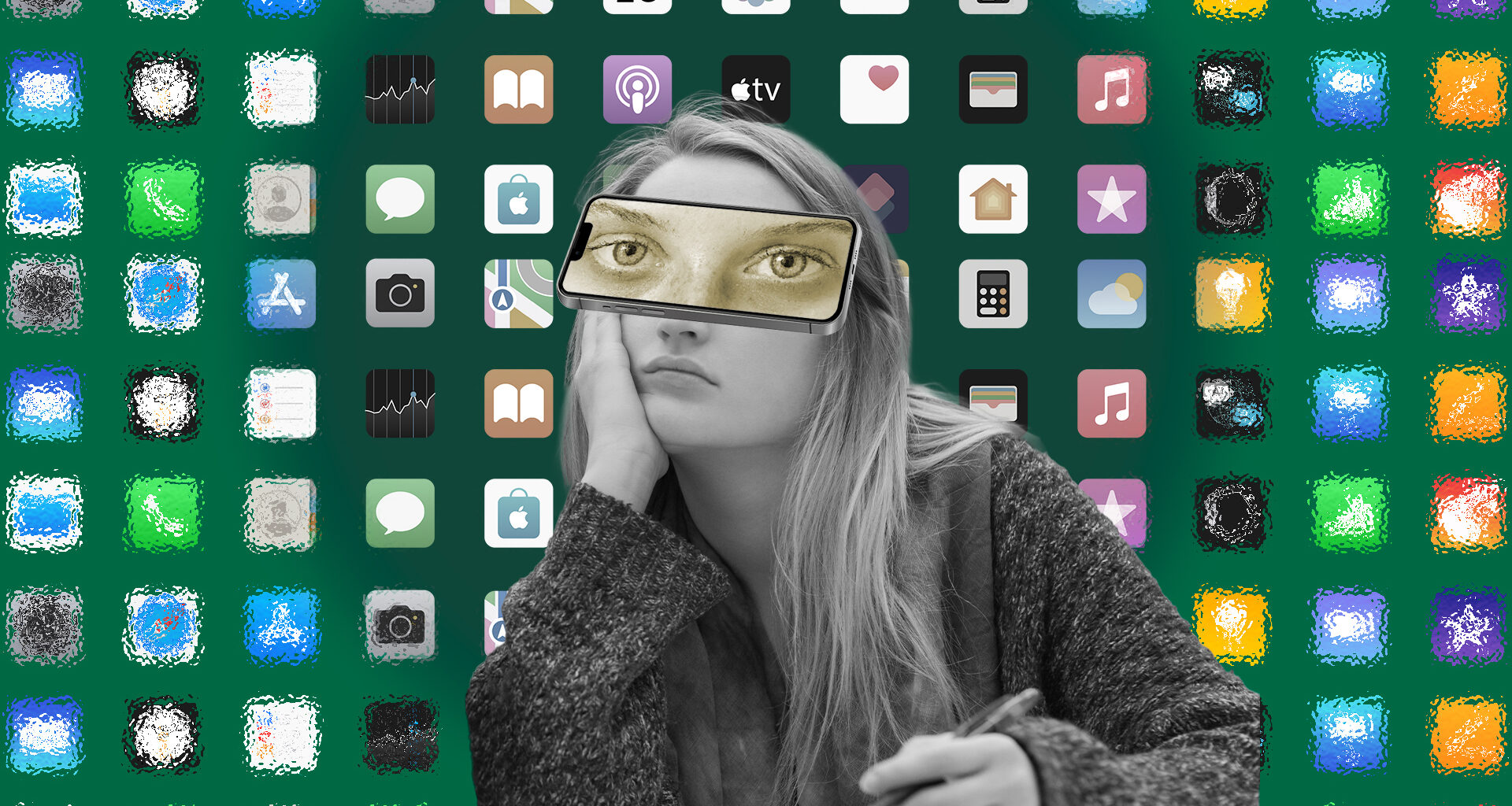
 What USF professors wish students knew — from the “Gen Z stare” to the importance of reliable sources. ORACLE GRAPHIC/THOMAS MARRS
Many things have surprised me at USF. One of these things is the rapid pace at which students move, and what that speed may be making us miss.
In each of my classes, I have seen students pack up their bags in unison to leave while the professor is mid-lecture. I have been shocked by this eagerness to get away, as there are usually a few minutes of class left.
This made me wonder what we miss when we view our relationship with professors as just a chore to speed through.
I began to wonder how professors, who have made it their life’s work to teach these classes, see students. I wanted to know what hopes they had for USF and how students could help make those hopes a reality.
After speaking with some USF professors, I realized that there are characteristics unique to our generation that we are often unaware of.
Related: OPINION: Grades aren’t feedback. Students need more from USF professors.
Mark Pezzo, a psychology professor who has been teaching at USF since 2000, said he is often impressed by Generation Z’s sense of fashion and amazed at how fast our language changes.
But Pezzo also said he is frustrated by “the Gen Z stare” — which he described as a blank stare students give while someone is speaking.
Pezzo explained that he and his colleagues initially perceived this “Gen Z stare” as indicating that students do not care. He then started a conversation with his students about it.
“That was actually a really good experience because [the Gen Z stare] was very frustrating, but then we turned it into something we could talk about,” Pezzo said. “Students were fascinated with it. They were coming up with research ideas and all kinds of things.”
This shift from frustration to positivity highlights an important point — college is a place for meaningful and productive discussion.
Misunderstandings between students and professors can be a part of those discussions.
Frustrations, when communicated, questioned and explored, can be valuable learning experiences for both students and professors.
“With the students, I rather enjoy challenging their beliefs,” Pezzo said. “This questioning is a process crucial for the pursuit of knowledge.
Still, Pezzo said the lack of attention should not be attributed to a particular generation — but to the reality of a modern digital age where phones are a distraction for everyone.
“You might actually be better at maintaining attention because you have so many distractions, and if you can still somehow manage to get through college, that actually says something positive,” Pezzo said.
Related: USF professors worry about international students amid political pressure
Professors also seem optimistic about Generation Z students’ access to knowledge in 2026, especially in terms of more efficient technology compared to other generations.
Doug Rohrer is a psychology professor who has been teaching at USF since 1998.
Rohrer sais the way students utilize technology is impressive.
“Students nowadays are much more tech savvy than in the past, of course”, Rohrer said.
The “real” issue regarding access to technology, Pezzo said, is determining which sources are the most trustworthy.
Perhaps if we put more effort into determining reliability, the significant number of sources of information our generation has access to can become one of our biggest strengths.
But college is not just about information. Connections to professors and other students can bring opportunities that define a students’ college experience.
College seems to reward those who believe in high-agency — the ability to shape outcomes rather than passively accept circumstances.
This is especially true when it comes to building relationships with professors.
Pezzo explained that the vast majority of his students have taken the initiative to speak to him and ask him about opportunities.
Showing initiative, digging deeper, speaking more and questioning ideas are all skills that will make a student’s learning experience in college as rich as possible.
Related: USF professors alarmed by DOGE’s review of academic research
And professors are deeply invested in this learning experience.
“Some students might not realize that most professors are frustrated when their students perform poorly,” Rohrer said. “This is not entirely unselfish because we want to see that our effort had some effect.”
It is clear to me from these conversations that professors hope that students interact with them more, showing curiosity and desire for intellectual growth.
The biggest takeaway I have from speaking to these professors is that it is always worthwhile to knock on their door. College moves fast, and it is tempting to treat it as something to get through.
If we slow down long enough, we may find that the most valuable parts of our education happen outside of class.
I will be knocking on professors’ doors more often, and I hope other USF students do as well.