
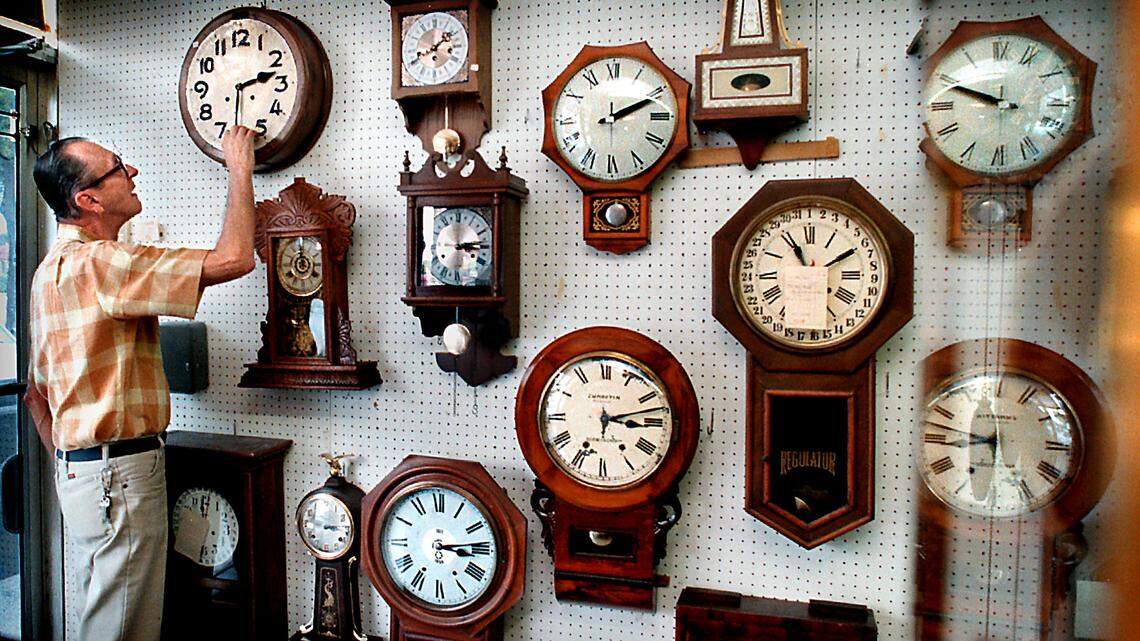
March is the time to change the time. And it’s almost time to spring ahead for the start of daylight saving time.
Here’s what to know about changing the clock:
When does daylight saving time start and end?  A street clock in Homestead. Miami Herald File
Time change: Daylight saving time starts at 2 a.m. Sunday, March 8, 2026.
Sleep: Springing ahead means you’ll lose an hour of sleep when the time changes. You can make it up on Nov. 1, when we turn the clocks back again.
Pro tip: Move your manually controlled clocks ahead an hour before going to sleep on Saturday night, March 7. That means giving attention to your microwave, watch and decorative clocks.
What does the time change do to morning and evening light?  Get ready to spring ahead in March. Miami Herald File
Sunrise and sunset when we change the clocks:
▪ When we move the clocks forward at 2 a.m. Sunday, March 8, sunrise in Miami will be at 7:37 a.m. and sunset will be at 7:26 p.m.
Monthly sunrise and sunset times until November:
▪ April 8: 7:04 a.m. sunrise, 7:40 p.m. sunset
▪ May 8: 6:39 a.m. sunrise, 7:55 p.m. sunset
▪ June 8: 6:28 a.m. sunrise, 8:11 p.m. sunset
▪ July 8: 6:35 a.m. sunrise, 8:15 p.m. sunset
▪ Aug. 8: 6:50 a.m sunrise., 8:01 p.m. sunset
▪ Sept. 8: 7:03 a.m. sunrise, 7:32 p.m. sunset
▪ Oct. 8: 7:16 a.m. sunrise, 6:59 p.m. sunset
When does daylight saving time end?
▪ Nov. 1: 6:29 a.m. sunrise, 5:39 p.m. sunset.
How does time change affect your health?
Health experts warn that these time shifts can disrupt circadian rhythms, potentially leading to adverse health effects such as weakened immune systems and increased fatigue.
Doctors liken the time change to jet lag, noting that the shift can affect cognitive, emotional, and physical well-being, particularly for those already sleep-deprived. The adjustment period varies, with most people needing about a day to adapt, though infants and older adults may find it more challenging due to their sensitivity to light changes.
To ease the transition, experts recommend adjusting sleep schedules gradually, limiting caffeine intake, and using light exposure strategically to help the body adapt to the new time.