
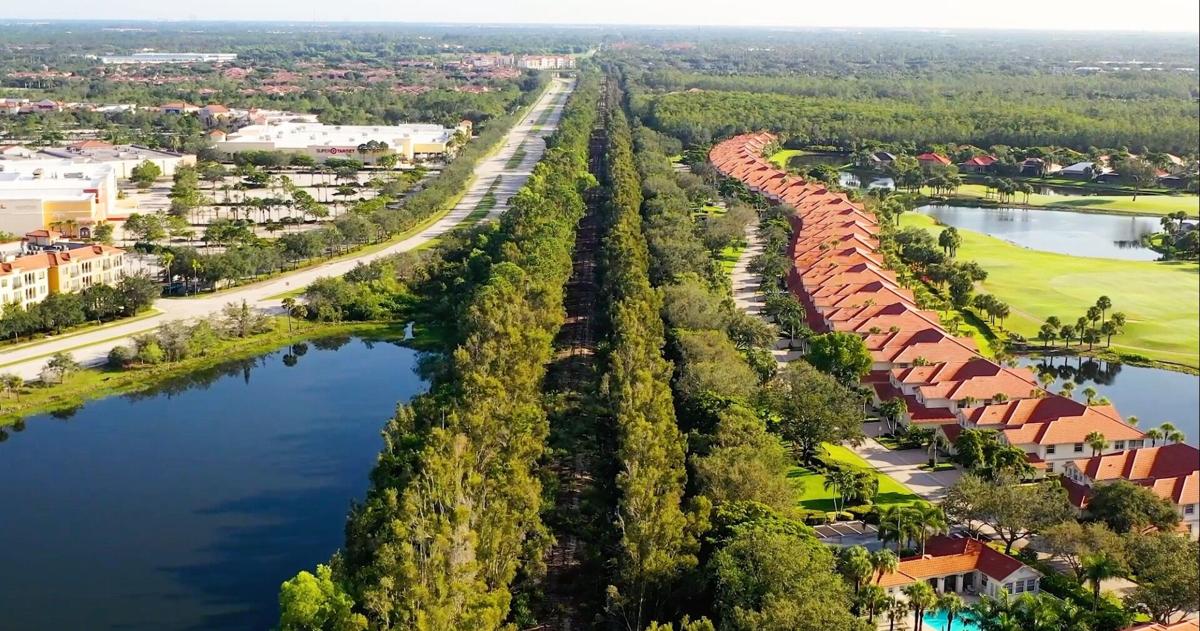
Estero Village Council authorized a purchase and sale agreement March 4 for its share of an 11.4-mile, $60 million railway corridor acquisition in partnership with Bonita Springs and Collier County.
Bonita Springs and Collier County are expected to formally approve the deal later this month, which would begin a joint due diligence process and could lead to a closing as early as October. The three governments would still be able to withdraw from the agreement during that period.

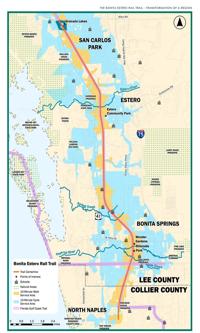
A map highlights the proposed Estero portion of the Bonita Estero Rail Trail, a planned multiuse path along a former rail corridor. Estero’s 4.1-mile segment would run through the village as part of the larger 11.4-mile regional trail connecting Bonita Springs and Collier County.
Trust for Public Land
The corridor is planned to become the Bonita Estero Rail Trail, a multiuse public trail running from Estero Parkway to the eastern end of Wiggins Pass Road along a former rail corridor. The trail would connect to the larger Florida Gulf Coast Trail, a partially completed pathway stretching from Pinellas County to Collier County.
The purchase agreement was negotiated by the national nonprofit Trust for Public Land with Seminole Gulf Railway, a family-owned rail operator based in Fort Myers.
“The village of Estero’s action today moves the Bonita Estero Rail Trail one step closer to becoming a transformational reality for Southwest Florida,” said Doug Hattaway, Southeast region conservation director for the Trust for Public Land. “This project will create new opportunities for outdoor recreation, improve safety for people walking and biking and connect communities throughout the region.”
After years of intermittent negotiations, the Trust and Seminole Gulf announced in February that they had reached the current agreement. Once the sale is completed, Seminole Gulf is expected to take up to two years to remove the rail tracks before trail construction can begin, Estero officials said.
Estero Village Council meets March 4 to approve a purchase and sale agreement for the village’s portion of the proposed Bonita Estero Rail Trail corridor. The agreement begins a due diligence process for acquiring part of the former railway that could become a regional multiuse trail.
Estero government
Under the agreement, Estero would pay $19.8 million for its 4.1-mile segment. Collier County would pay $11.6 million for 1.5 miles, and Bonita Springs would pay $28.6 million for a 5.8-mile portion. Bonita Springs officials estimate annual maintenance costs for their section could range from $87,000 to $200,000 depending on amenities.
The corridor also would enter the federal railbanking system under the National Trails System Act, preserving the route for public use while allowing the federal Surface Transportation Board to restore rail service if it is ever deemed economically justified.
Hattaway and Village Attorney Robert Eschenfelder said that outcome is unlikely. In addition to potential public opposition, Eschenfelder said the government would need to reimburse the purchase price adjusted to the Consumer Price Index, pay the depreciated value of improvements and cover the cost of removing the trail and rebuilding the railway.
Each government is considering options to finance the corridor acquisition and the separate cost of building the trail.
Bonita Springs City Council discussed the proposal during a special meeting March 4 and held a preliminary vote showing unanimous support. Council plans to formally authorize the agreement March 26. Members also authorized staff to explore a potential ballot measure asking voters whether they support city financing for the trail, noting the total construction cost remains uncertain.
Close
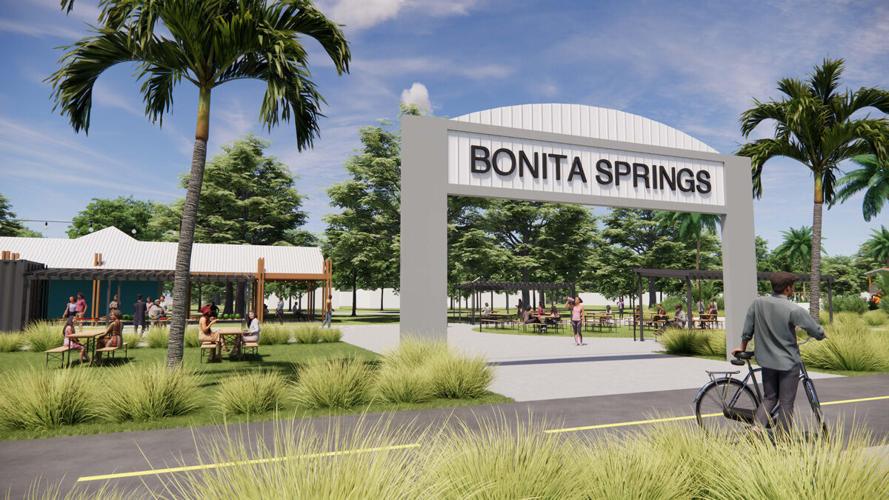

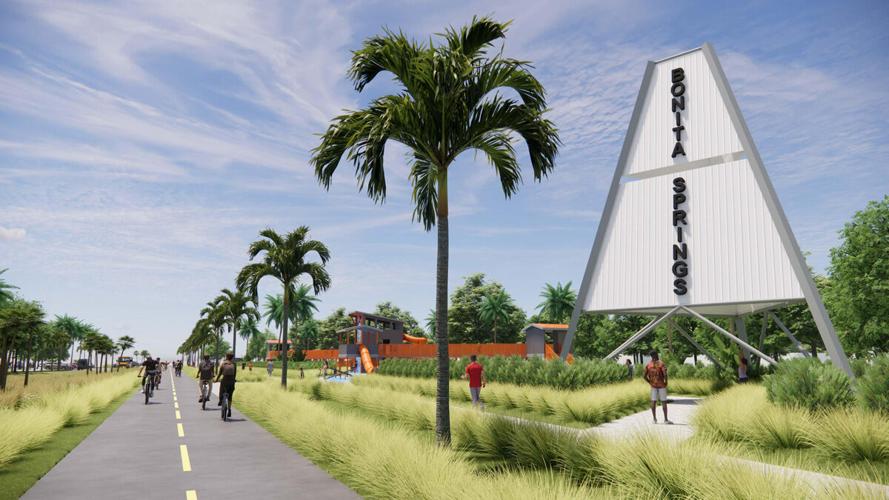
A rendering shows a proposed gateway entrance to the Bonita Estero Rail Trail in Bonita Springs. The trail is planned as part of the larger Florida Gulf Coast Trail network connecting communities across Southwest Florida.
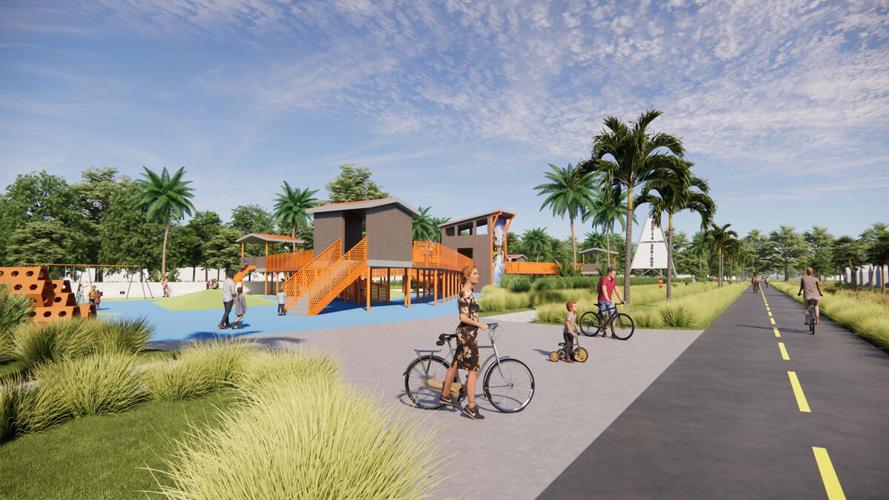
A rendering shows a play structure and viewing platform integrated into the Bonita Estero Rail Trail design. Community gathering spaces and recreation areas are planned along the route.
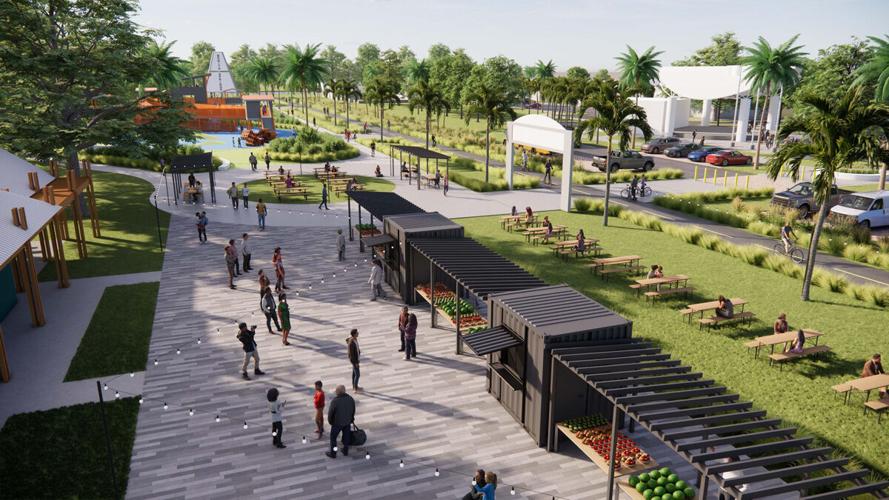

A conceptual rendering shows a market-style plaza and gathering area along the Bonita Estero Rail Trail. Officials say the trail could provide recreational space and economic opportunities for nearby businesses.
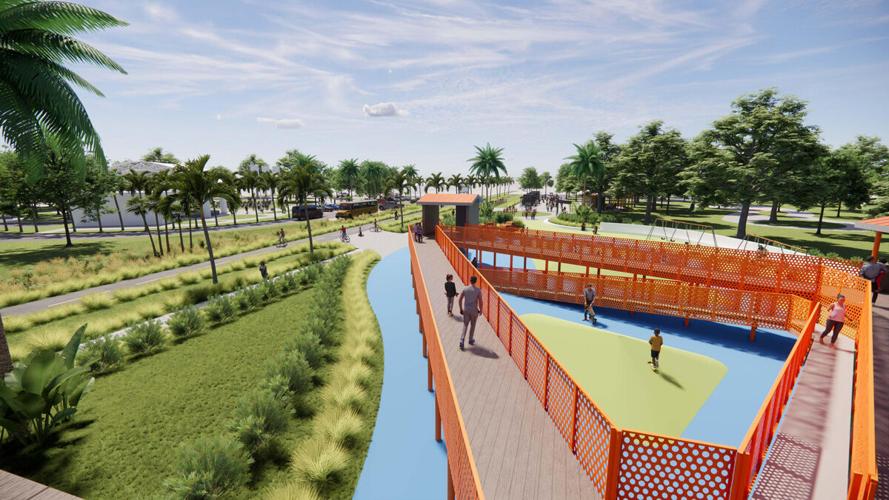
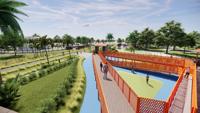
A rendering shows a play area and elevated walkway planned along the proposed Bonita Estero Rail Trail corridor. Estero officials recently approved a purchase agreement for their portion of the former rail corridor that could be converted into the 11.4-mile multiuse trail.

A rendering shows cyclists traveling along a landscaped section of the Bonita Estero Rail Trail. The trail would follow a former railway corridor and connect to the broader Florida Gulf Coast Trail system.


A rendering shows an elevated walkway along the proposed Bonita Estero Rail Trail corridor. The project would convert an unused railway line into a public trail for biking, walking and outdoor recreation.
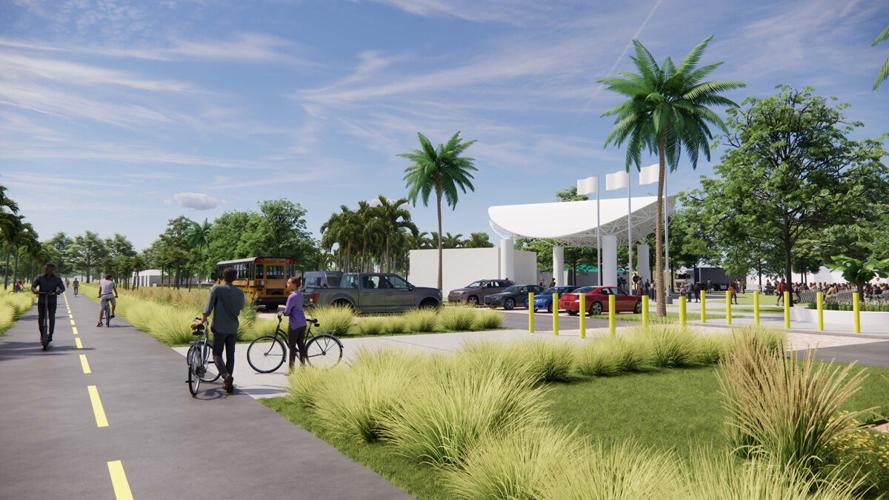

A rendering shows a section of the Bonita Estero Rail Trail with a multiuse biking and walking path beside a small amphitheater and gathering space in Bonita Springs. The trail would repurpose a former rail corridor for public recreation.
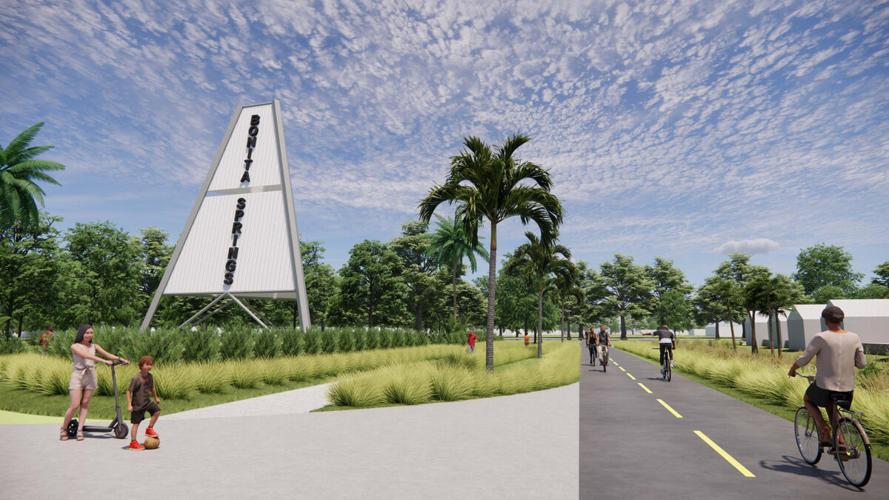

A rendering shows a gateway marker along the proposed Bonita Estero Rail Trail corridor in Bonita Springs. Local governments are negotiating to acquire the rail corridor for conversion into a public trail.
A rendering shows a proposed gateway entrance to the Bonita Estero Rail Trail in Bonita Springs. The trail is planned as part of the larger Florida Gulf Coast Trail network connecting communities across Southwest Florida.
A rendering shows a play structure and viewing platform integrated into the Bonita Estero Rail Trail design. Community gathering spaces and recreation areas are planned along the route.
A conceptual rendering shows a market-style plaza and gathering area along the Bonita Estero Rail Trail. Officials say the trail could provide recreational space and economic opportunities for nearby businesses.
A rendering shows a play area and elevated walkway planned along the proposed Bonita Estero Rail Trail corridor. Estero officials recently approved a purchase agreement for their portion of the former rail corridor that could be converted into the 11.4-mile multiuse trail.
A rendering shows cyclists traveling along a landscaped section of the Bonita Estero Rail Trail. The trail would follow a former railway corridor and connect to the broader Florida Gulf Coast Trail system.
A rendering shows an elevated walkway along the proposed Bonita Estero Rail Trail corridor. The project would convert an unused railway line into a public trail for biking, walking and outdoor recreation.
A rendering shows a section of the Bonita Estero Rail Trail with a multiuse biking and walking path beside a small amphitheater and gathering space in Bonita Springs. The trail would repurpose a former rail corridor for public recreation.
A rendering shows a gateway marker along the proposed Bonita Estero Rail Trail corridor in Bonita Springs. Local governments are negotiating to acquire the rail corridor for conversion into a public trail.
The project also represents a milestone for the advocacy group Friends of BERT, which works to build public support for the trail and the broader Florida Gulf Coast Trail network. Supporters hope the system will eventually exceed 420 miles, though it is currently about halfway complete. The BERT segment represents a key missing link.
Friends of BERT President Deb Orton said the organization has gained support from residents, homeowners associations and local businesses by promoting the trail’s health, safety and economic benefits. After the corridor purchase is finalized, the group plans to support the transition from rail corridor to public trail.
Next steps include due diligence, such as property appraisals, boundary surveys and environmental assessments of the 11.4-mile corridor. Estero officials estimate their share of the due diligence could cost up to $250,000.
“Upon a successful sale, BERT will be a legacy project that will provide significant benefits to our citizens,” village council member Jon McLain said. “BERT is a great example of how government entities, nonprofits and our citizens through an all-volunteer nonprofit Friends of BERT can work together to accomplish great things.”