
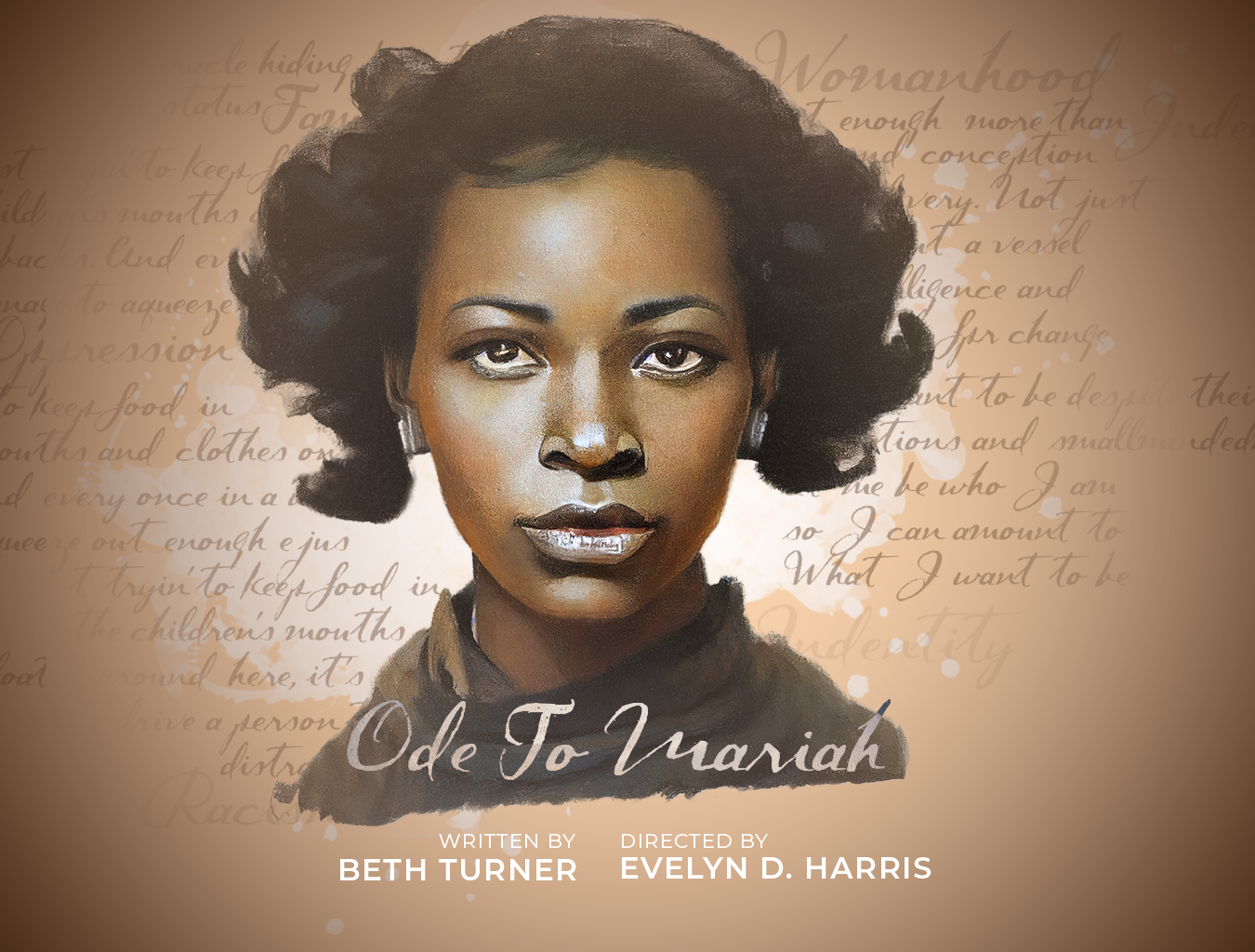
Poster for “Ode To Mariah.” (FAMU Essential Theatre.)
All seats were sold out.
“Ode to Mariah,” written by Beth Turner and directed by Evelyn D. Harris, opened Feb. 5 at the Ronald O. Davis Acting Studio and closed four nights later after selling out every show. Once the lights went down, the room got quiet, the kind of quiet where you could feel people paying attention.
Set in 1898, the story centers on 17-year-old Mariah, a young Black woman who dreams of going to college and becoming a teacher during a time when that path was far from normal. Inspired by her African grandfather, she pushes against racial barriers, gender roles, and financial hardship. That dream becomes harder to hold onto after her mother’s death.
Jakyra Aliyah Estiverne, a third-year theatre student from Broward County, plays the narrator and said carrying Mariah’s story came with responsibility.
“As a narrator, it was more about honoring their history,” Estiverne said. “It was a very deep struggle for Black women, especially in the 1800s, to grow up to be successful due to family responsibilities and societal expectations. I was telling her experience every tear she had, every moment of uncertainty.”
When Mariah’s mother dies, she must help raise her younger siblings. From there, the story feels heavier.
Estiverne said she relates to that weight in her own life as the eldest in her family.
“Even when I had my moments where I wanted to break down and cry, I wanted to show them that I’m a strong Black woman,” she said. “As Black women, we have higher expectations placed on us.”
A moment that changed the mood in the theatre was when Mariah was blamed while everyone was still grieving. Estiverne said the audience reacted almost immediately. “I heard every emotion they felt,” she said. “It wasn’t just me. It was the whole room.”
Kara Mullings, a second-year theatre student from West Palm Beach who plays Aurelia, said her character is the one holding the family together.
“She was the mediator,” Mullings said. “She controlled the chaos.”
Aurelia supports Mariah’s dream, even when money makes it seem out of reach. When her grandfather finds jewelry that could help pay for school, there’s a moment of hope. After Aurelia’s death, though, Mariah is forced to grow up quickly.
For Essential Theatre, the show is part of a bigger commitment to telling African American stories while preparing students for the stage.
Director Evelyn D. Tyler said protecting the emotional truth of the story was her top priority.
“What I felt most important to protect throughout this journey was truth itself,” Tyler said. “Having the actors tell this story in truth was key and highly important to me.”