
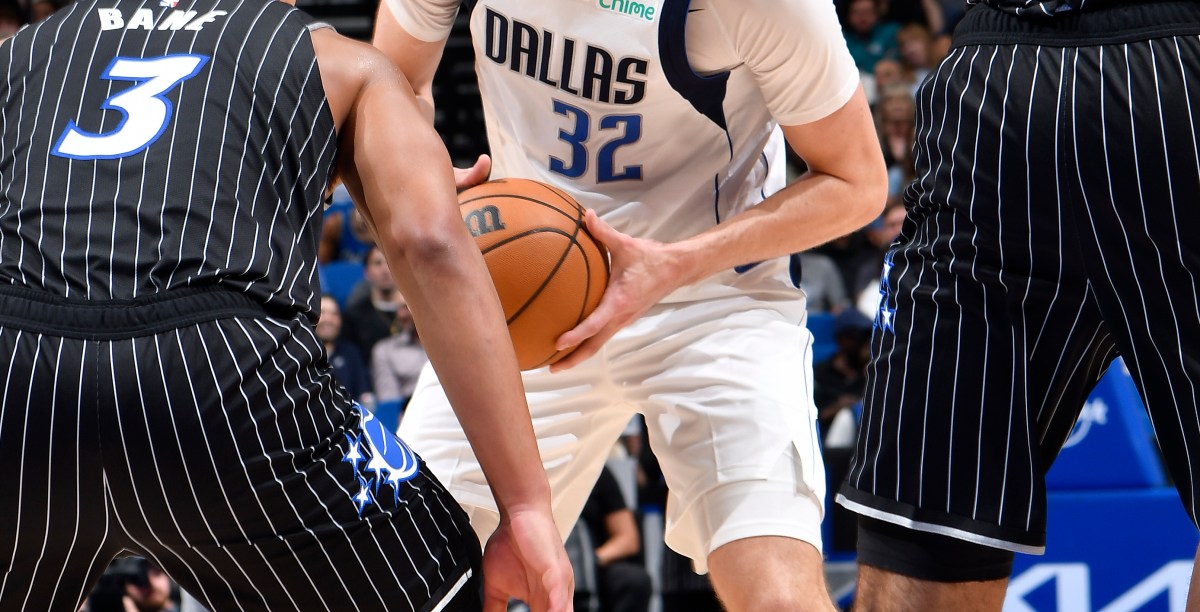
The Mavericks fought valiantly in Orlando before dropping a tough 115-114 loss to the Magic Thursday night.
Dallas opened the game with strong early energy, jumping ahead behind a Khris Middleton pull-up three and quick interior activity from Daniel Gafford and Cooper Flagg. Flagg added a putback and set up Max Christie for a three, while Gafford finished an alley-oop that helped Dallas build an early cushion. Orlando slowly worked back into the game behind Paolo Banchero and Wendell Carter Jr., who generated points inside and on second-chance opportunities to keep the Magic close. Klay Thompson provided a late first-quarter boost with a pair of threes, including a deep one in the closing seconds that gave Dallas a 33–26 lead after one. The second quarter stayed tight, with Gafford continuing to impact the paint and Flagg attacking the rim while PJ Washington added a transition layup, a three, and free throws during a mid-quarter run. Orlando countered through Banchero’s midrange scoring and a Tristan Da Silva three, trimming the margin multiple times. Despite those pushes, Dallas held on to a narrow 62–60 lead at halftime, thanks to timely threes and consistent interior scoring.
The second half turned into a momentum swing that ultimately slipped away from Dallas. The Mavericks briefly stayed in control early in the third quarter with interior scoring from Daniel Gafford and a Cooper Flagg dunk and three. Still, Orlando flipped the game with a decisive 17–5 run late in the period behind shot-making from Jalen Suggs and Paolo Banchero that erased the Dallas lead and gave the Magic control heading into the fourth. From there, the final quarter became a back-and-forth shootout. Orlando repeatedly pushed its lead with timely buckets from Goga Bitadze and Tristan Da Silva. At the same time, Dallas answered through Khris Middleton’s midrange scoring and a pair of Klay Thompson threes that kept the Mavericks within striking distance. Daniel Gafford’s rebounding and interior presence helped Dallas generate extra chances as they chipped the deficit down possession by possession. In the closing minutes, Middleton continued to hit tough jumpers to keep Dallas alive, but Orlando consistently had a response, allowing the Magic to hang on for a narrow 115–114 win.
Klay Thompson looked like vintage Klay for long stretches of this game, finishing with 24 points on 7-of-12 shooting from three and 8-of-14 from the field overall. Every time Dallas needed a scoring jolt, it seemed to come from Thompson sprinting into a catch-and-shoot triple or rising for one of his quick-release jumpers. His shooting was the primary reason the Mavericks stayed within striking distance for most of the night, especially during the second half when Dallas struggled to generate consistent offense elsewhere. When Klay gets hot like this, the entire offense opens up, and tonight felt like one of those classic “Klay heater” games where every clean look felt automatic.
Beyond the scoring impact, the night also carried historical significance. Thompson’s seven threes allowed him to tie and then pass Ray Allen for the most three-pointers made in NBA history when combining regular-season and playoff totals. This milestone speaks to just how elite and consistent a shooter he has been throughout his career. At the same time, there is a slightly bittersweet element to watching performances like this in Dallas right now. Thompson is still capable of explosive shooting nights that swing games, yet those performances come for a team far from contention. Seeing flashes of prime Klay while the Mavericks sit in a transitional season makes it feel like one of the league’s greatest shooters is spending these late-career heaters on games that ultimately do not matter in the standings.
Cooper Flagg returned to the lineup after missing the previous nine games and looked surprisingly comfortable for someone coming off an injury layoff. His shot was not particularly efficient, finishing 7-of-22 from the field and 1-of-5 from three, but the overall production was still there as he ended the night with 18 points, 5 rebounds, and 6 assists in just under 26 minutes. Even on a night when the jumper did not fall consistently, Flagg was able to score by attacking the rim, finishing through contact, and getting to the line, which helped stabilize the Mavericks’ offense in several stretches.
What stood out most, though, was everything he did outside of scoring. Flagg was constantly making plays on both ends of the floor, finishing with six assists while repeatedly creating opportunities for teammates when Orlando collapsed on his drives. Defensively, he was even more impactful, recording five stocks with four blocks and one steal while flying around as a weakside rim protector and help defender. For a player returning from injury, that level of activity and playmaking was an extremely encouraging sign. The efficiency will come back with rhythm, but seeing him immediately influence the game as a passer, rebounder, and defensive playmaker was the most important takeaway from his return.
42%: Mavericks 3 point shooting
Dallas’ offense stayed competitive in this game largely because of its perimeter shooting. The Mavericks finished the night shooting 42 percent from three as a team, finishing 14-of-33, which repeatedly allowed them to answer Orlando runs and keep the game within a possession deep into the fourth quarter. Klay Thompson’s seven threes headlined the performance, but he was not alone. PJ Washington knocked down three triples of his own and Max Christie added two, helping Dallas stretch Orlando’s defense and open up driving lanes and paint touches for players like Cooper Flagg and Daniel Gafford. Without that outside shooting, this game likely gets away from Dallas much earlier.
Performances like this also highlight something that has become increasingly clear about the Mavericks’ roster construction moving forward. If Cooper Flagg is going to be the centerpiece of the offense, the team must prioritize shooting around him this offseason. Flagg thrives when the floor is spaced, and defenders cannot collapse into the paint on his drives. Nights when Dallas shoots well from three make the offense look functional and dynamic, while poor shooting nights tend to stall the attack completely. Adding more consistent perimeter shooting this summer would not only raise the offensive ceiling of the roster but also make life much easier for Flagg as a primary creator.