
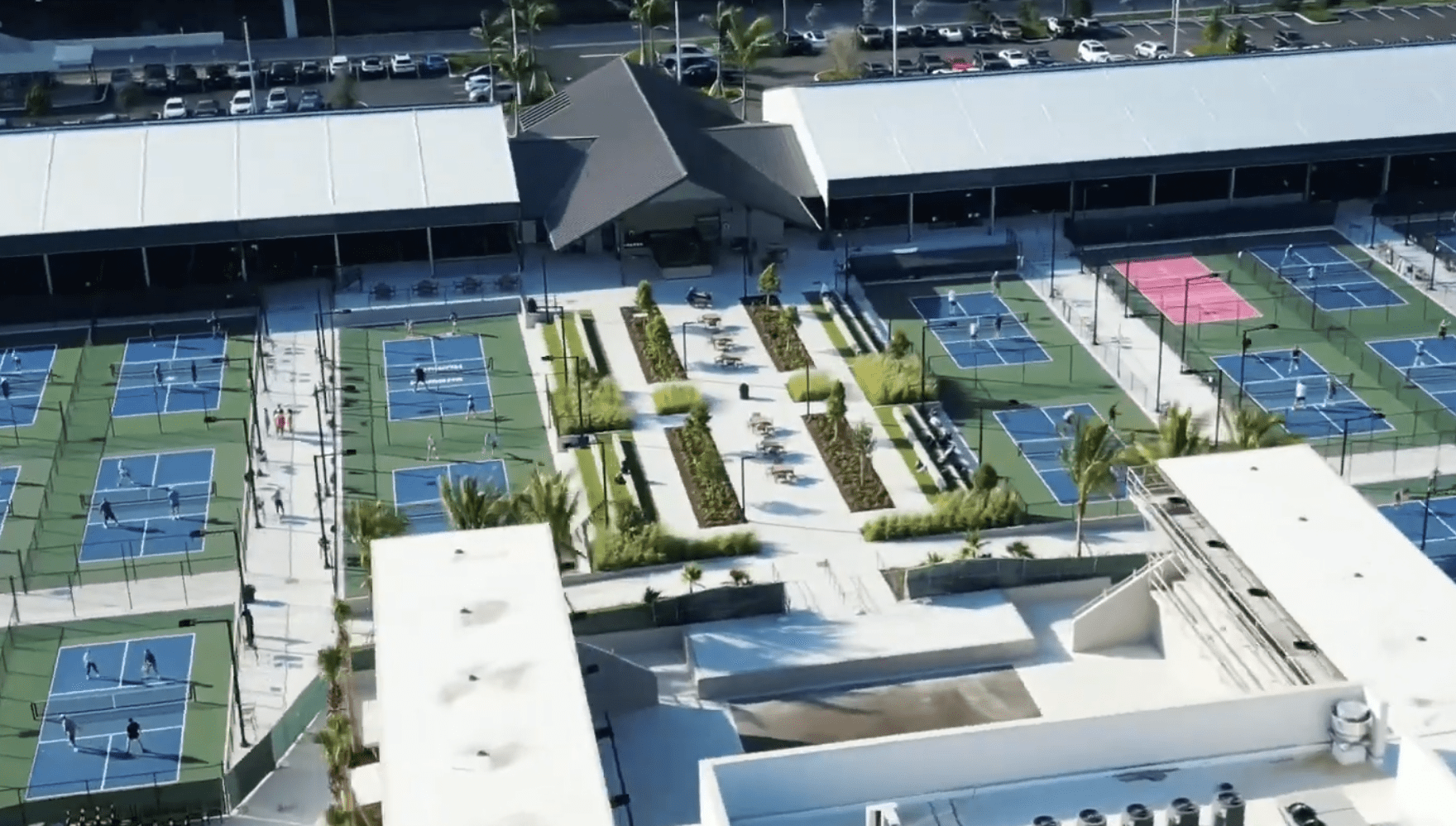
“Only in Fort Lauderdale do we spend thirty million on a sport that’s already losing the match.”
The $30 Million Pickleball Empire No One Asked For
Commissioner Steve Glassman has a passion project, and it’s not public safety, transit reform, or affordable housing. It’s pickleball. Lots and lots of pickleball. Glassman has personally championed The Fort, a sprawling $30 million pickleball complex at Snyder Park, hailed as one of the largest in the country. The complex, packed with courts, concessions, and branding deals, is Fort Lauderdale’s newest monument to middle-aged recreation or as one critic put it, “the world’s most expensive hobby park.”
That would be eyebrow-raising enough, but Glassman isn’t stopping there. He’s also linked to a second pickleball project on Fort Lauderdale Beach, where public basketball courts at Bahia Mar are slated for demolition to make room for, you guessed it, more pickleball. Local residents have pushed back, calling it an elitist land grab and questioning how a city facing skyrocketing rents, decaying infrastructure, and constant flooding can find millions to spend on paddle sports. But Glassman seems undeterred.
“The city chose pickleball because it is the fastest-growing sport in the country and more accessible for the population overall.” — Steve Glassman
Unfortunately for Glassman, it might not be.
The Future Arrived and It’s Called Padel
While Fort Lauderdale is just now pouring concrete for more pickleball, the rest of the world has already moved on. The fastest-growing racquet sport on the planet right now isn’t pickleball, it’s padel, a high-speed hybrid of tennis and squash played in enclosed glass courts.
According to global data from Padel Court Quotes and Padel.fyi, there are now 25 million padel players across 110 countries and over 40,000 courts worldwide with that number expected to double by 2026. Europe, the Middle East, and Latin America are already in full padel frenzy, while new luxury developments in Miami, Los Angeles, and Austin are pivoting to padel facilities instead of pickleball.
By comparison, the U.S. pickleball scene, while large domestically, is slowing down. The sport had roughly 19.8 million players in 2024, and though it remains big in suburban America, international growth has plateaued. Padel, by contrast, is going global at warp speed, backed by celebrity investors like David Beckham, Lionel Messi, and LeBron James, and viewed as the next premium sport for resorts, private clubs, and affluent cities.
And that’s where the irony cuts deep: Fort Lauderdale just spent tens of millions building a monument to a trend that may already be peaking.
A Costly Case of Civic FOMO
Fort Lauderdale’s pickleball spending spree started as an easy win, a way to show “active-lifestyle” investment without tackling real problems. But critics argue it’s a symbol of the city’s misplaced priorities.
“Thirty million dollars for pickleball, while sewer pipes collapse and housing prices skyrocket,” one local advocate told South Florida Media. “It’s like the city’s playing games while Rome floods.”
And it’s not just about cost, it’s about vision. The Snyder Park facility is built for pickleball alone, meaning if padel continues its meteoric rise, the city will need to retrofit or rebuild to stay relevant in the racket-sport arms race.
Developers are already shifting gears: Miami’s Reserve Padel complex, backed by Beckham’s group, just raised millions to expand across Florida. In other words, the “next big thing” is already happening just not on Steve Glassman’s watch.
From Pickleball to Padel: A Tale of Two Futures
Pickleball may still dominate neighborhood parks, but globally, padel has taken the lead. It’s faster, flashier, and fits the luxury branding developers crave. Meanwhile, Glassman’s grand pickleball vision is starting to look like a multimillion-dollar relic, a symbol of a city that loves to chase fads but rarely leads them.
“We call it The Fort,” joked one local business owner, “but it’s really just The Fork because taxpayers got stuck with the bill.”
While Steve Glassman builds his pickleball paradise, the rest of the world is already playing a different game. The data is clear:
Fort Lauderdale’s $30 million investment might soon be the most expensive “retro” court system in America. The city wanted to build something “world-class,” but it may have picked the wrong paddle.
The Problem With Betting Big on Fads
To be fair, Steve Glassman may mean well. He’s not the first city leader to see a popular new sport and try to build momentum, literally. But when you’re dealing with tens of millions of taxpayer dollars, good intentions don’t erase bad planning. Investing that kind of money into a single-trend sport like pickleball is risky. Recreational fads rise fast and fall faster, leaving behind expensive, underused infrastructure. Smart cities don’t build around a moment, they build for the future.
If Glassman had taken a broader view instead of going all-in on pickleball, Fort Lauderdale could’ve had something truly evergreen: multi-use courts and fields that adapt with the times. A facility blending tennis courts, batting cages, a driving range, or even flexible event spaces would have given the city long-term value, no matter which sport was trending next. Instead, Glassman’s pickleball complex is locked into a single cultural moment, one already showing signs of plateau. In chasing a fad, he may have built a monument not to Fort Lauderdale’s future, but to its short attention span.
Sources:
SFL Media – Steve Glassman Sure Does Love Pickleball
Sports Business Journal – Inside The Fort Pickleball Complex
Padel Court Quotes – Padel Court Statistics Report 2024