
A federal appeals court will hear arguments on a Florida law limiting teenagers’ access to social media, which the group challenging the law says limits users’ access to content lawfully protected by the First Amendment.
Specifically, the three-judge panel of the 11th U.S. Circuit Court of Appeals will determine whether a federal judge in Tallahassee was correct in blocking enforcement of the law in a June order. They convene March 10 in Jacksonville.
Gov. Ron DeSantis approved the law in question (HB 3) in 2024, barring anybody under 16 from using some social media platforms, except for 14- and 15-year-olds who obtained parental permission. It also requires websites that publish adult content to verify that visitors are 18 or older using a reasonable age-verification method.
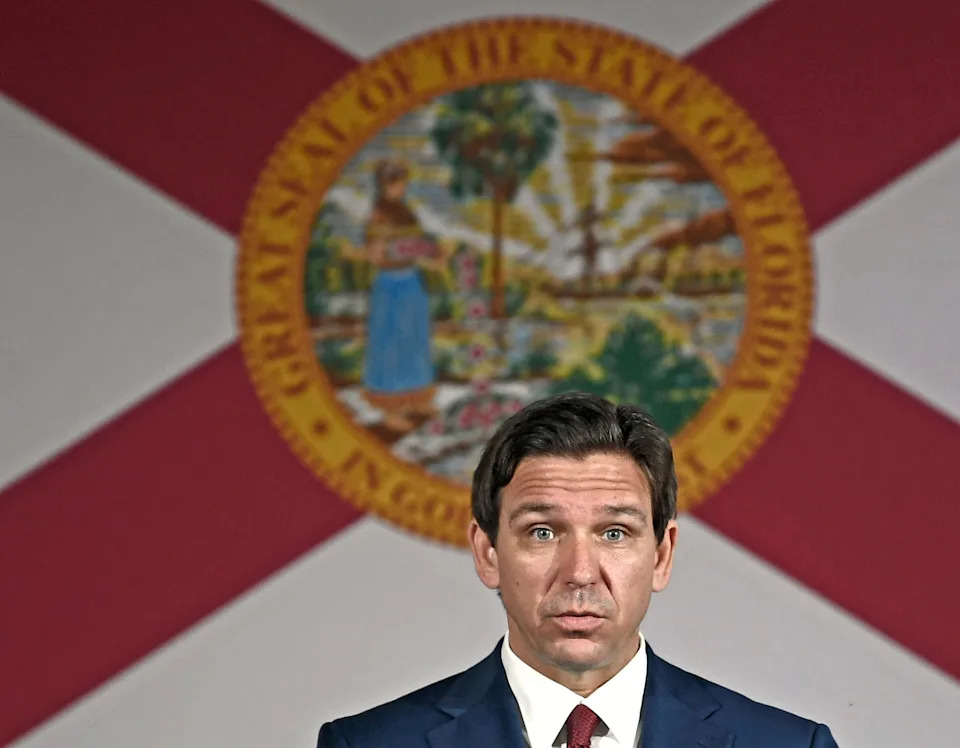
Gov. Ron DeSantis approved the law in question (HB 3) in 2024.
Soon after the governor’s signature, the associations representing platforms like Google, YouTube, Meta and Snapchat filed a federal lawsuit.
The Computer & Communications Industry Association’s president Matt Schruers said in a statement that the group supports protections for younger users online, but that’s a decision for families to make themselves.
“Florida’s statute violates the First Amendment by blocking and restricting minors – and likely adults as well – from using certain websites to view lawful content,” Schruers said.
NetChoice, a co-plaintiff in the case, said in a separate statement that the law creates a security risk by “mandating the surrender of sensitive information.”
“The government cannot set the rules of the road when it comes to accessing protected speech. That is a job best left to parents who can make individualized decisions to suit the needs of their family,” said Paul Taske, co-director of the NetChoice Litigation Center.
A request for comment is pending with the Florida Attorney General’s office, but Attorney General James Uthmeier spoke in Orlando March 9 about the measure, saying tech companies would have 30 days to implement age restrictions on social media and 60 days for parental consent options to be available.
If not, his office will start filing lawsuits, he said: “It is the law of the land,” Uthmeier added.
The initial intent of the measure was to combat addictive features in social media platforms, like push notifications and infinite scrolling. Additionally, the DeSantis administration framed the measure as combating Big Tech from “exploiting and harming” minors.
At first, the measure wasn’t enforced since the state was holding off until U.S. District Judge Mark Walker ruled on a preliminary injunction, a temporary court order issued early in a case that, in this case, would have blocked enforcement of the law.
Then Walker ruled, saying the law was “likely unconstitutional” in a June order. That order was halted in November after two Trump-appointed appellate judges sided with the state, saying the law promotes the government’s interest in “protecting minors.”
This reporting content is supported by a partnership with Freedom Forum and Journalism Funding Partners. USA Today Network-Florida First Amendment reporter Stephany Matat is based in Tallahassee, Fla. She can be reached at SMatat@gannett.com. On X: @stephanymatat.
This article originally appeared on Tallahassee Democrat: Florida social media law for minors goes to court