
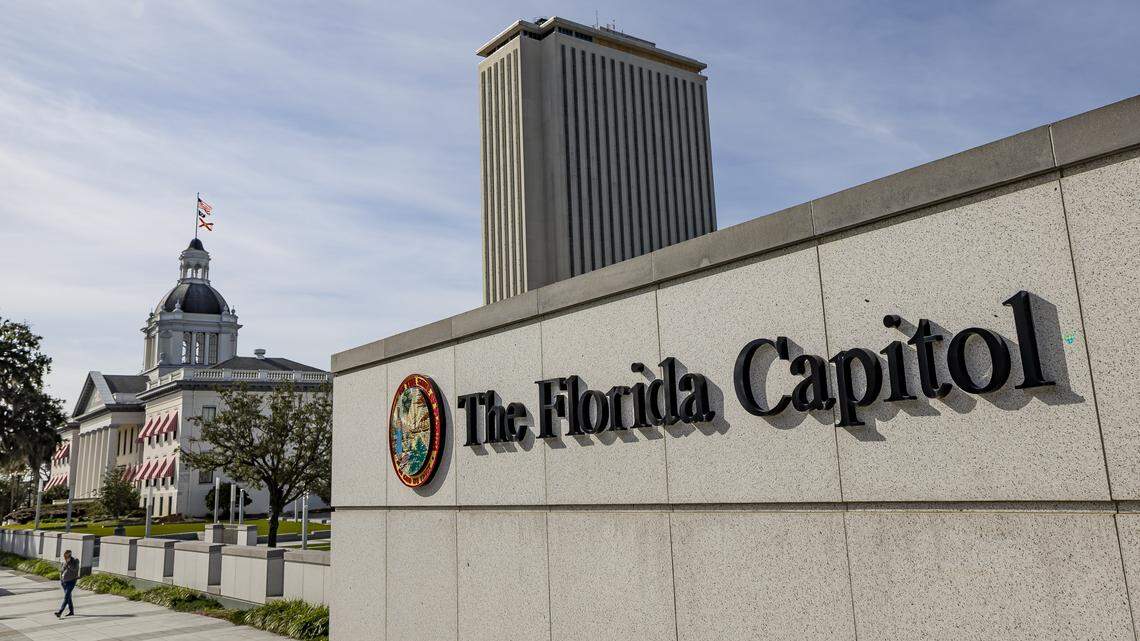
A general view of the Florida Capitol on Monday, Jan 12, 2026, in Tallahassee, Fla.
Photo by Matias J. Ocner
mocner@miamiherald.com
TALLAHASSEE
A week after Florida cut nearly 12,000 people off the state program providing affordable access to life-saving HIV/AIDS medication, state senators are making a last-minute move to fund the program in full for the next few months.
The Florida Department of Health blindsided lawmakers in January when it announced a plan to significantly restrict the state’s AIDS Drug Assistance Program, citing funding shortfalls.
Since then, lawmakers in the House and Senate have proposed additional funding for the program — at different levels — in the 2026-2027 state budget to fill the gap left by the cuts.
But as the legislative budgeting process drags on for the second year in a row, and with the Florida Department of Health using emergency rules to push through its changes faster, patients risk going months without access to their medicine.
Now, that could be averted through the Senate’s proposal, so long as the Florida House and Gov. Ron DeSantis sign on.
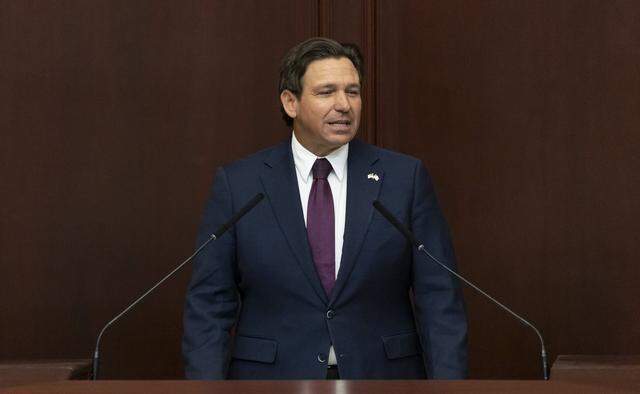 Florida Governor Ron DeSantis delivers his State of the State address during the first day of the legislative session at the Florida State Capitol on Tuesday, Jan. 13, 2026, in Tallahassee, Fla. Photo by Matias J. Ocner mocner@miamiherald.com
On Tuesday, Sen. Jason Brodeur, R-Lake Mary, proposed an amendment to allocate around $31 million for the AIDS Drug Program through June 30, the end of the fiscal year.
The amendment would also restore the income eligibility level for the program to its previous level during that time.
Previously, people making 400% of the federal income level qualified, but the Department of Health this year moved to reduce eligibility to those making 130% or less, or roughly $20,000 a year for one person.
The amendment, the work of a bipartisan group of senators, would also have the Department of Health submit monthly reports “providing a detailed accounting” of the AIDS drug program to the governor, Senate and House budget offices.
The Senate’s amendment will have to go back to the House for approval before it can be sent to DeSantis. If he signs it, it would go into action immediately.
Brodeur said he wouldn’t speak for the House, but said they were aware the amendment was coming and said he thought they were in “pretty good stead.”
Sen. Carlos Guillermo Smith, D-Orlando, said the amendment wasn’t a perfect solution, but that it should give people some hope. And he said the stopgap measure gives the state more time to explore less-drastic changes to the program.
“We in the Legislature did not ask for this to be dumped on our laps by the Department of Health, who has offered zero solutions beyond drastic eligibility cuts,” Smith said.
And Sen. Alexis Calatayud, R-Miami, said the Senate’s work will continue as they look toward long-term sustainability for the program.
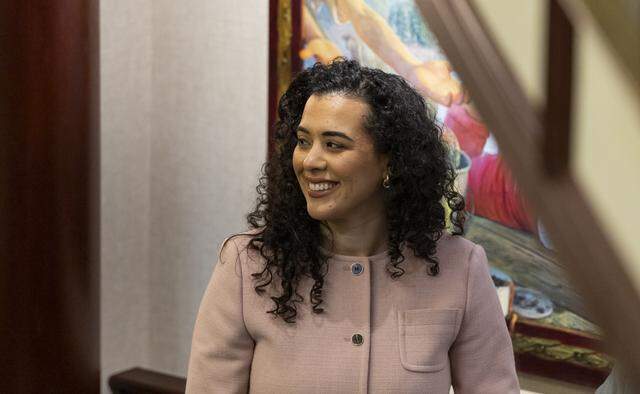 Sen. Alexis Calatayud, R-Miami, attends the first day of the legislative session at the Florida State Capitol on Tuesday, Jan. 13, 2026, in Tallahassee, Fla. Photo by Matias J. Ocner mocner@miamiherald.com
Calatayud said the goal was to move to a “future for this specific population that doesn’t have cracks, that doesn’t have holes, so people can live the life that they’re meant to live.”
“There’s no lack of moral clarity on the importance of this issue,” Calatayud said. “It’s not a partisan question.”
House Speaker Daniel Perez on Tuesday said he was “considering” the Senate language.
Sen. Rosalind Osgood, D-Fort Lauderdale, said DeSantis gave her his word that he would work to get care for Florida’s HIV/AIDS population.
 Sen. Rosalind Osgood, D-Tamarac, attends the first day of the legislative session at the Florida State Capitol on Tuesday, Jan. 13, 2026, in Tallahassee, Fla. Photo by Matias J. Ocner mocner@miamiherald.com
Surgeon General Joseph Ladapo in January acknowledged the state’s cuts could lead to a “crisis.” But the health department justified the change by saying it would help avert a $120 million budget deficit.
A spokesperson for the Department of Health said the state had to make changes to the program because of rising health insurance premiums.
But the state’s planned changes to the AIDS Drug Assistance Program kneecap it far beyond what may be necessary to deal with rising costs, according to former Department of Health employees, health experts and AIDS advocates.
Though other states have moved to cut their drug assistance program to deal with rising costs, no other state has made cuts to Florida’s level.
In Pennsylvania, for example, the state is reducing income eligibility from 500% to 350%, affecting about 1,600 people compared to Florida’s estimated 12,000.
Along with changing the income eligibility requirement, Florida plans to eliminate the part of the program that paid for health care premiums.
That component brings in the majority of the program’s budget, around $200 million, through rebates from drug companies.
Nearly all other AIDS Drug Assistance Programs across the U.S. offer premium assistance. And no other state has moved to entirely end the health insurance program.
Calatayud noted that the state could still receive some rebate money from AIDS Drug Assistance Program participants who have other forms of insurance.
For people who still qualify for the program, the state is planning to remove Biktarvy, a once-a-day pill that is popular among people with HIV, from the available formulary.
The Senate’s proposed stop-gap fix does not address making Biktarvy accessible again.
Michael Rajner — a participant in the AIDS Drug Assistance Program who brought the cuts to the attention of lawmakers in January — said he trusts that Perez will take up the Senate language.
The Legislature’s regular session ends on Friday. After that point, any bill not included in an extension would be dead.
The AIDS Healthcare Foundation is challenging the state’s emergency rules in court, with a hearing scheduled for March 17.