
Every day, thousands of vessels quietly vanish.
They do not sink or trigger alarms. They simply switch off their tracking systems and disappear from view, creating blind spots across waters where visibility matters most. For military operators and coast guards, that silence creates risk. For Space-Eyes, it defines the mission.
From its growing headquarters in Brickell, the company is building software designed to close those gaps across maritime monitoring, disaster response, and a rapidly expanding drone threat landscape.
The decision to base the company in Miami came early and stuck.
“We came to Miami in 2020 and never looked back,” COO Dylan Monroe told Refresh Miami. Since then, the team has expanded from 15 to 35 employees with backgrounds spanning military, intelligence, and big tech.
Monroe said Miami’s value goes beyond talent.
“Miami’s also a natural hub for the missions we support,” he said, pointing to proximity to Southern Command, the Coast Guard, and maritime activity across Latin America and the Caribbean. The company recently added a Washington presence as well.
“Miami is where we build; D.C. is where we engage,” Monroe continued.
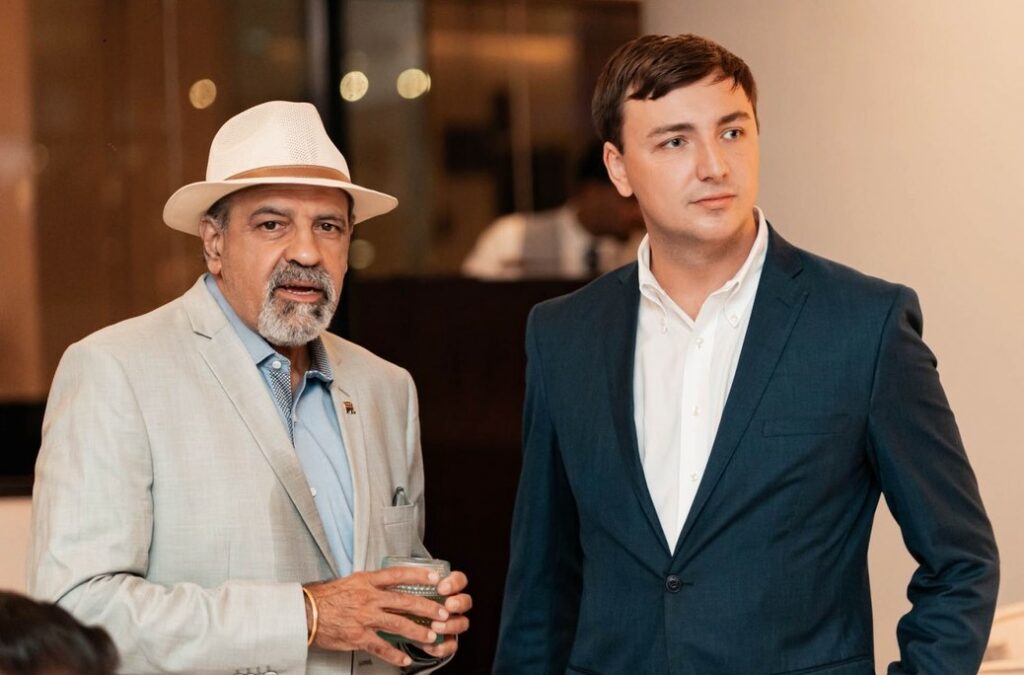 Space-Eyes co-founders Jatin S. Bains (CEO), left, and Dylan Monroe (COO).
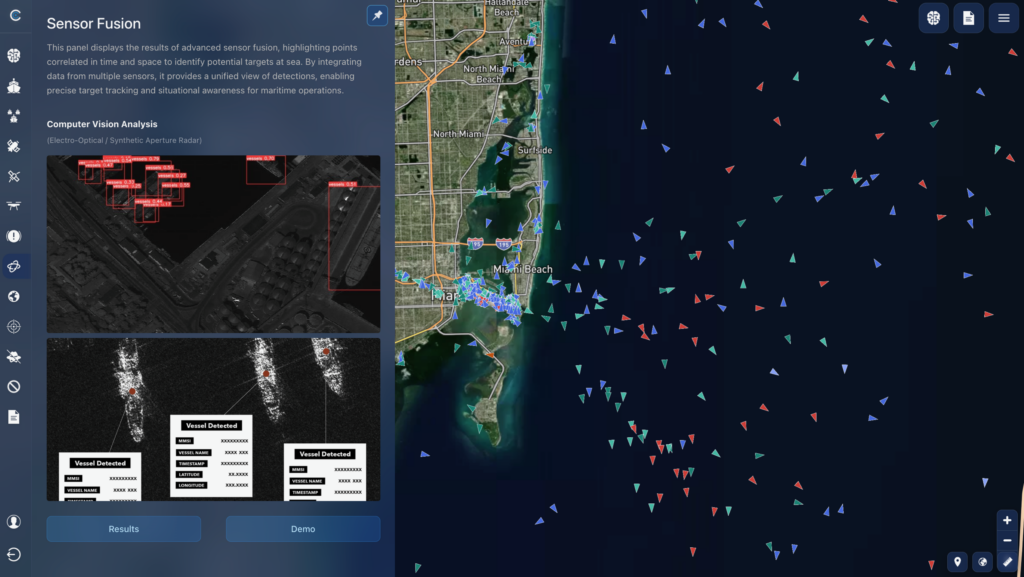
The core challenge Space-Eyes is addressing is not a shortage of sensors, but a lack of connection between them.
“Operators are flying blind, on the water and in the air,” Monroe asserted. Analysts often juggle satellite imagery, radar data, and ship tracking feeds that exist in separate systems, slowing decision-making when time matters most.
“It takes hours when it should take minutes,” he said.
Space-Eyes fuses data from more than 75 sources into a single operational picture powered by AI, highlighting anomalies and helping operators anticipate potential threats rather than react to them.
While the maritime use case was the starting point, Monroe said the company is placing increasing focus on counter-drone operations. “The drone threat has changed the operational landscape,” he said, noting the growing accessibility of surveillance-capable drones and the risks they pose to infrastructure and large-scale events.
Despite the influx of detection hardware entering the market, Monroe believes intelligence remains the missing layer. “There’s plenty of hardware hitting the market… but no one is solving the intelligence layer,” he said.
That gap is where Space-Eyes positions its technology. “Hardware detects. We make sense of it,” Monroe said.
The company has raised $5.76 million to date and is now preparing to operationalize its counter-UAS capabilities throughout 2026 while exploring a mix of growth capital, strategic partnerships, and government contracts. Monroe said the goal is to find partners aligned with the mission as the company works toward a potential IPO window in mid-2026.
As invisible activity across water and air becomes harder to ignore, Space-Eyes is betting that clarity – delivered fast – will matter more than ever.
READ MORE IN REFRESH MIAMI:

I am a Miami-based technology researcher and writer with a passion for sharing stories about the South Florida tech ecosystem. I particularly enjoy learning about GovTech startups, cutting-edge applications of artificial intelligence, and innovators that leverage technology to transform society for the better. Always open for pitches via Twitter @rileywk or www.RileyKaminer.com.
Latest posts by Riley Kaminer (see all)