
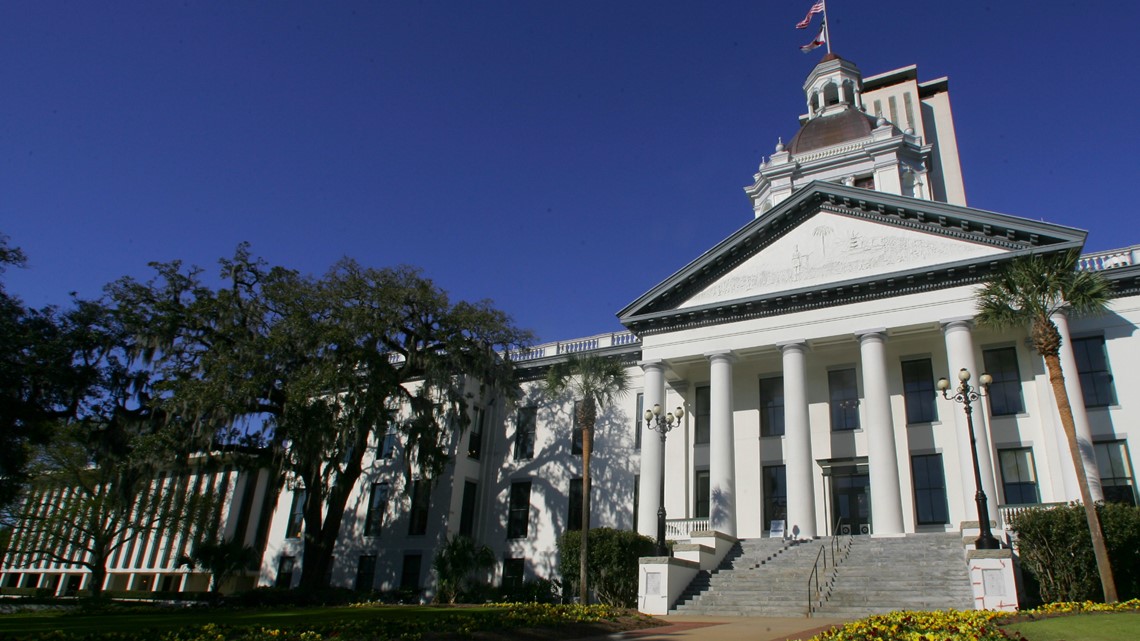
While supporters say it will cut down on wasteful spending, opponents say the bill’s language is too vague and encroaches on local governments’ rights.
JACKSONVILLE, Fla. — A bill aimed at bringing state and federal restrictions on Diversity, Equity and Inclusion to the local level in Florida is one step closer to becoming law.
A divided House passed its version of the bill 77 – 37 on Tuesday, sending it to the governor’s desk following passage by the Senate earlier this legislative session.
Under the proposed bill, local governments would be barred from spending money on or promoting DEI efforts in an official capacity. County or city leaders who violate the law could face charges of misfeasance or malfeasance in office, and potentially be removed from office by the governor. Residents would also be able to file lawsuits for violations of the bill.
“Diversity, equity, and inclusion initiatives don’t see Floridians as Floridians,” Rep. Dean Black, the Jacksonville Republican who introduced the House bill, said on social media Tuesday. “Our state deserves better and I’m honored by the support of my House colleagues who delivered today for Florida’s public employees, recognizing their character & quality of their work instead of blatantly discriminatory practices stemming from DEI.”
The bill does not stop local governments from promoting legal holidays like Martin Luther King, Jr. Day and Juneteenth, or events celebrating observances recognized by federal law, like Black History Month and Hispanic Heritage Month.
When asked what this would mean for events celebrating the LGBTQ+ community, like Pride Month, Rep. Dean Black told First Coast News that local governments can still issue permits but not promote them.
Opponents have argued that the state would be overreaching into local government decisions and that the bill is too vague to be clearly enforced.
One lawmaker pointed out that the bill could have a chilling effect on local governments, causing them to refrain from allocating funding and making public statements due to the vague nature of what would be a violation and the potential threat of lawsuits.
“It could mean that you can’t even have an immigrant heritage month. It could mean you can’t have a proclamation for Jamaican Independence Day or you could be removed from office,” Rep. Christine Hunschofsky said on the House floor. “Or Diwali, or Chinese New Year or Easter. This is insane. And if we want to talk about wasting tax dollars, I would argue that this discussion is a waste of our tax dollars. And if we want, if we have to make so many exceptions to the rule, perhaps the rule is the problem.”
Similar concerns were brought up in debate over Jacksonville’s current city budget last September, when a council member proposed amendments to ban local spending on undocumented immigrants, abortions and DEI. The amendments were ultimately voted down after intense debate during the marathon 13-hour meeting.
If the state bill becomes law, the City of Jacksonville may change several areas of its budget. In a Florida DOGE report, the state alleged that the city spent nearly $2 million for grants through the Cultural Council of Greater Jacksonville, which went to organizations that “made DEI their central mission.” The report specifically named funding given to the Jacksonville Area Sexual Minority Youth Network (JASMYN), the Jacksonville Symphony, Hope at Hand, and the Cathedral Arts Project.
Unless vetoed by the governor, the bill will become law and take effect in January 2027.